TRENDING

Friday, 6 November 2026
----------------------
26 Jumada Al-Awwal 1448 AH
In a significant shift, the United States announced a deal with Israel to end $4 billion in annual funding by 2026, citing changing needs and domestic political pressures. This move redefines a long-standing alliance amidst plummeting US public support for Israel.
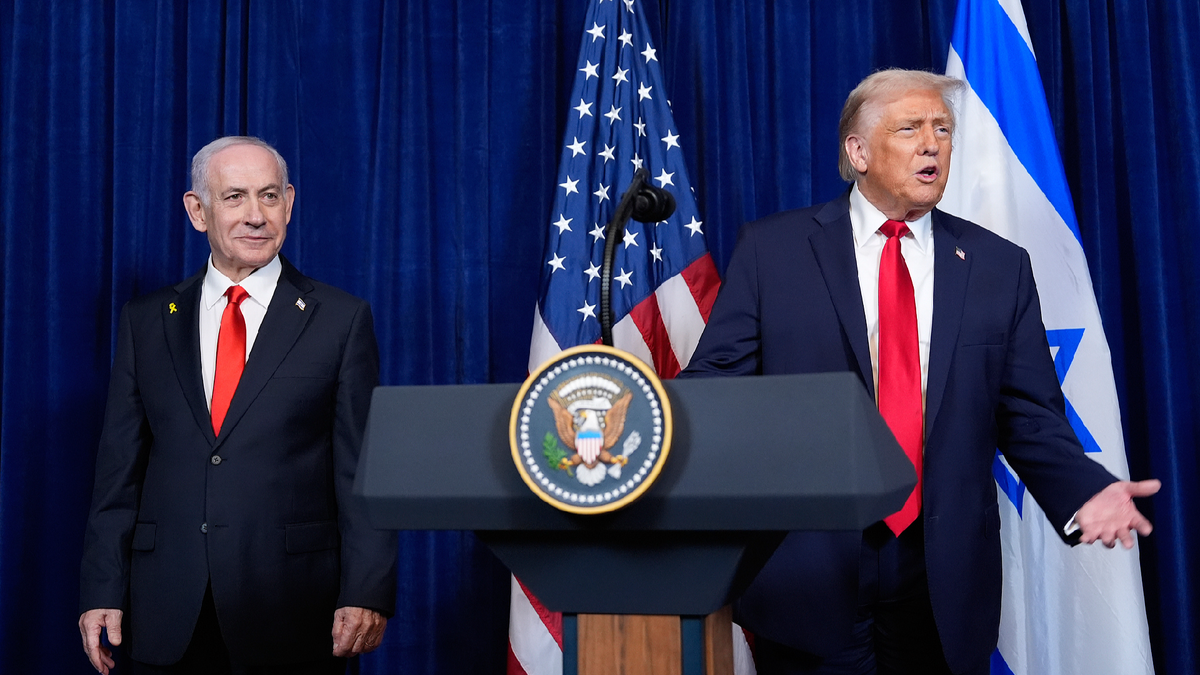
In a landmark announcement on November 3, 2026, US President Donald Trump declared a deal with Israeli Prime Minister Benjamin Netanyahu to cease $4 billion in annual US funding to Israel by the end of the year. Speaking to Fox News, Trump asserted that Israel no longer required the financial assistance, claiming the aid had become a political weapon for Democrats and left-wing politicians to attack Republicans. This decision follows a dramatic decline in US public support for Israel since the Gaza war began in 2023.
The decision to cut $4 billion in annual aid to Israel is not merely a financial adjustment; it represents a profound recalibration of power dynamics that have underpinned the US-Israel relationship for decades. This move is a confluence of shifting domestic political currents in the United States, evolving strategic calculations in Israel, and the enduring influence of the global arms industry.
The most immediate driver for this decision appears to be the dramatic shift in US public opinion. The Gaza war of 2023 served as a critical inflection point, eroding decades of bipartisan consensus on unconditional support for Israel. Polling data from 2026 reveals a significant portion of US voters, and a supermajority of Democrats, now believe the United States is excessively supportive of Israel. This erosion of support translates directly into electoral pressure.
For President Trump, framing the aid as a political tool for Democrats serves multiple purposes. It appeals to his base, which often views foreign aid with skepticism, and allows him to present himself as a leader willing to challenge established norms, even with a close ally. It also positions him as responsive to a segment of the electorate tired of what they perceive as endless foreign entanglements and expenditures. On the Democratic side, the shift in sentiment has empowered candidates critical of Israel, forcing even moderate lawmakers to reconsider long-held policy positions. The power of the ballot box is compelling a re-evaluation of how US taxpayer money is allocated and the political costs associated with maintaining the status quo.
For decades, US military aid, formalized through various memoranda of understanding (MOUs), has been a cornerstone of Israel's defense capabilities. The current MOU, providing $3.8 billion annually, is set to expire in 2028, meaning discussions about its future were already underway. Prime Minister Netanyahu's past statements, expressing a desire to wean Israel off US military support within a decade and transition from an
US President Donald Trump announced the cut, stating Israel no longer needed the money and that Democrats were weaponizing the aid. This decision followed a significant decline in US public support for Israel after the 2023 Gaza war.
Before the 2026 decision, the United States provided approximately $4 billion in annual funding to Israel, primarily through a Memorandum of Understanding for military assistance.
The 2023 Gaza war dramatically shifted US public opinion, with a majority of voters and Democrats believing the US was too supportive of Israel. This public sentiment created significant political pressure, contributing to the decision to cut aid.
Editor's Note: The raw intelligence is dated November 3, 2026. This analysis treats the event as having occurred on that future date, as per the prompt's instruction to use the intelligence as factual.
Source referenced: CGTN
This brief was synthesized by our Editorial Engine and reviewed by The Ground Narrative team.


