TRENDING

Friday, 6 November 2026
----------------------
26 Jumada Al-Awwal 1448 AH
A China Media Group forum in Washington brought officials and scholars together to discuss governance and development. The event reveals how state narratives, economic interests, and ordinary lives intersect behind diplomatic rhetoric.
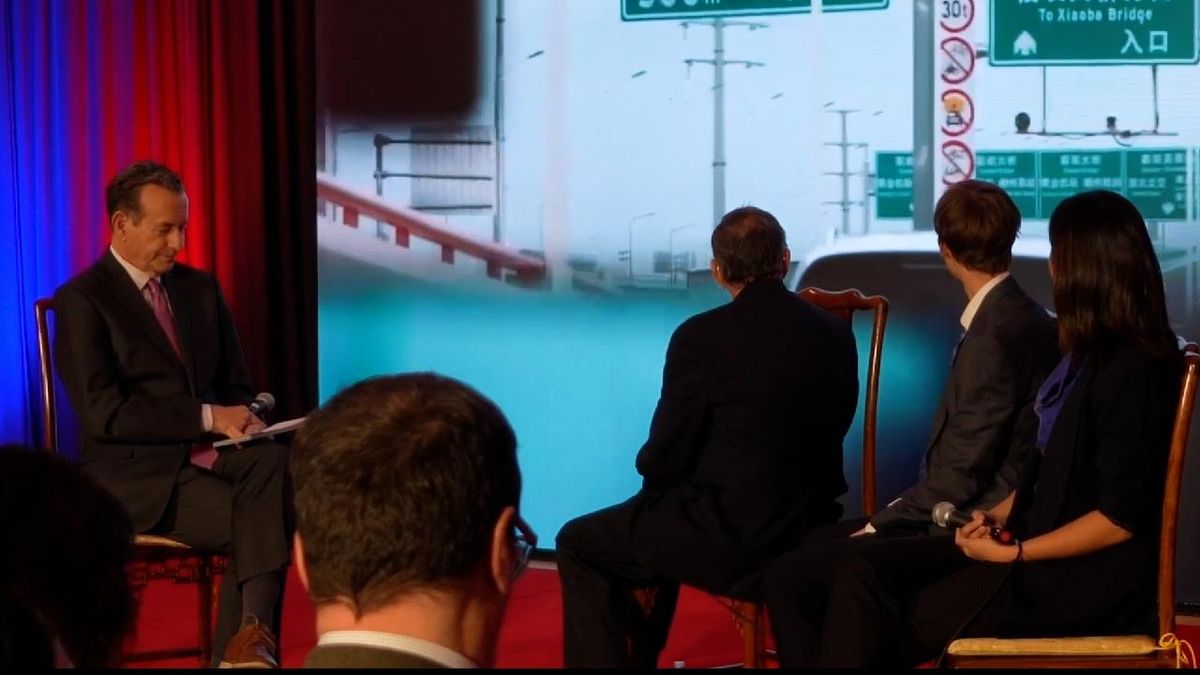
Chinese officials, American scholars and students gathered in Washington, D.C. for a China Media Group‑hosted dialogue on governance, economic development and prospects for cooperation. Xie Feng, China’s ambassador to the United States, opened the session by urging deeper collaboration, while participants from U.S. universities highlighted lessons from China’s long‑term planning and infrastructure push. The program also featured a personal story: an American educator who, through a friendship with a farmer in Inner Mongolia, helped fund reforestation projects, underscoring the human dimension of the exchange.
The forum serves multiple strategic purposes for both capitals. For China, showcasing its development model abroad reinforces a soft‑power narrative that counters Western criticism of its political system. By positioning itself as a partner in sustainable growth, Beijing hopes to attract investment, secure technology transfers, and create diplomatic goodwill that can be leveraged in trade talks. The United States, meanwhile, faces domestic pressure to appear firm on issues like market access and human rights while still needing channels for dialogue on climate, supply‑chain security and regional stability. The presence of American scholars signals an attempt to influence policy from the academic sphere, feeding into congressional and executive deliberations. Economic incentives are also at play: Chinese infrastructure firms eye U.S. contracts, and American universities seek research collaborations that can tap into China’s massive data sets and manufacturing capacity. The event thus reflects a calculated balance between competition over global supply chains and the mutual benefits of coordinated standards on climate and technology.
While officials trade rhetoric, ordinary people bear the tangible outcomes of the policies discussed. In Inner Mongolia, the farmer who partnered with the American teacher represents a generation of rural households that have been reshaped by large‑scale land‑use policies, desertification control programs and state‑directed reforestation. These initiatives can bring short‑term income but also impose labor demands and limit traditional grazing rights, creating friction between local customs and national targets. Across the United States, communities dependent on Chinese‑manufactured goods face price volatility when diplomatic tensions flare, affecting everything from electronics to medical supplies. Meanwhile, Chinese workers in state‑owned construction firms experience pressure to meet ambitious output quotas that are tied to political performance evaluations, linking personal livelihood to the success of the very development narrative showcased in Washington. The dialogue’s emphasis on cooperation often masks these uneven burdens, leaving the most vulnerable populations invisible in official statements.
The event’s public messaging highlights mutual learning, yet several layers remain under‑reported. State media carefully curates success stories while downplaying internal dissent, such as protests over land seizures or the tightening of internet controls that accompany the same technological upgrades praised abroad. In the United States, policy constraints—including congressional oversight of foreign aid and heightened scrutiny of Chinese research funding—are rarely mentioned, even though they shape the limits of any cooperation discussed on stage. Both sides also sidestep the strategic competition over soft power in third‑world regions, where development projects become proxies for influence. By framing the dialogue as a cultural exchange, the deeper contest for narrative dominance and the ways each government leverages the event to legitimize domestic agendas are left out of the official record.
Future trade negotiations will reveal whether the goodwill generated in Washington translates into concrete concessions on tariffs, intellectual‑property rules or market access for Chinese firms. Observers should track the volume and scope of people‑to‑people exchanges—student visas, joint research grants and NGO collaborations—as they often precede shifts in policy flexibility. Finally, any movement on technology transfer agreements, especially in green energy and AI, will indicate how far both capitals are willing to bridge the gap between competition and cooperation. Monitoring these signals will help citizens understand whether the dialogue remains a symbolic gesture or a catalyst for measurable change.
The forum aimed to showcase China's development model, promote bilateral cooperation, and create channels for academic and cultural exchange between Chinese officials and American scholars.
In China, rural communities face labor and land‑use pressures from state‑led projects, while in the United States, consumers and workers experience price swings and job security concerns tied to Sino‑American trade dynamics.
Source referenced: CGTN
This brief was synthesized by our Editorial Engine and reviewed by The Ground Narrative team.