TRENDING

Friday, 6 November 2026
----------------------
26 Jumada Al-Awwal 1448 AH
Accurate climate science predicts El Nino's dual crises of floods and droughts in Africa months in advance. Yet, bureaucratic inertia and financial structures prevent timely action, turning predictable hazards into humanitarian catastrophes.
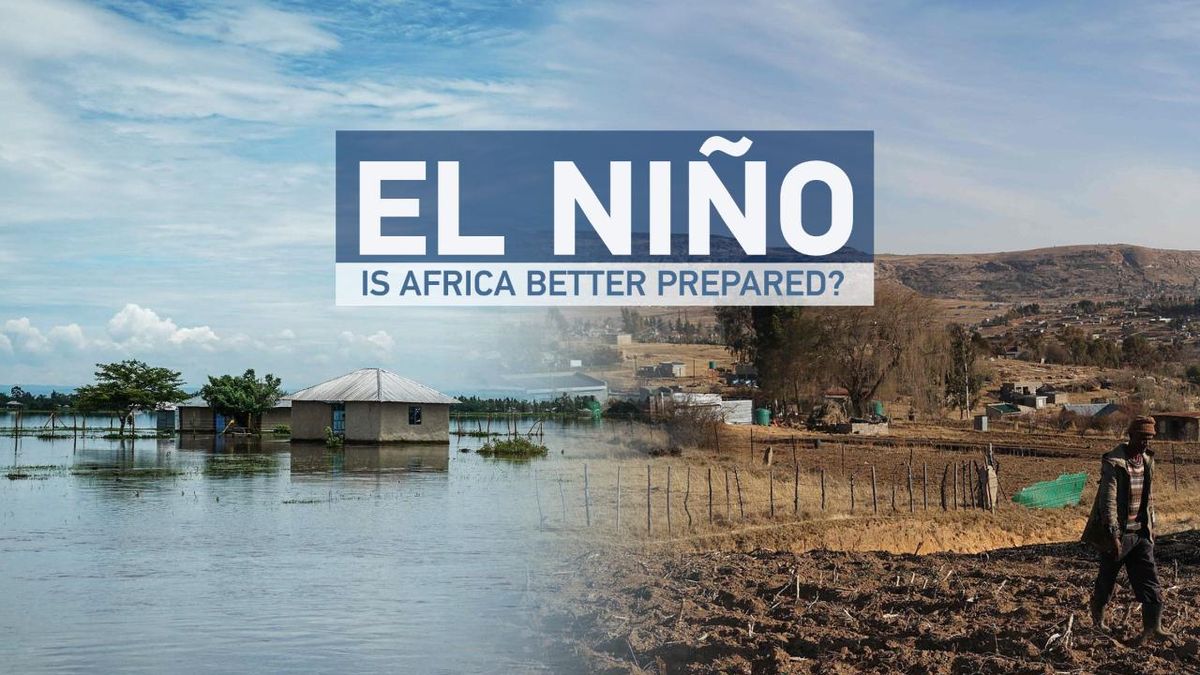
Sub-Saharan Africa is currently grappling with a severe El Nino weather phenomenon, manifesting as a dual crisis across the continent. East Africa faces devastating floods, displacing communities and destroying infrastructure, while Southern Africa endures parched droughts, threatening food security and livelihoods. Modern climate science provides accurate forecasts of these extreme weather patterns months ahead of time, offering a crucial window for preparation. However, despite these clear early warnings, a critical gap exists between knowing what is coming and taking effective, pre-emptive action, leading to preventable human suffering and economic devastation.
The disconnect between early warning and early action in Africa is not a failure of science, but a stark illustration of entrenched power dynamics and structural rigidities. At its core, the problem lies in how power is allocated and exercised within national governments and international aid systems, often prioritizing reactive measures over proactive resilience-building.
Governmental and administrative structures across Africa are largely designed for post-disaster response and recovery. This institutional inertia means that funds and personnel are typically earmarked for emergency aid *after* a crisis hits, rather than for mitigation *before* it occurs. Reallocating these funds for pre-emptive measures, even with clear scientific forecasts, is a slow, cumbersome process. The administrative timelines for budgetary approval and disbursement often exceed the narrow action windows provided by climate predictions. This creates a systemic barrier, where the power to act is trapped within rigid financial and bureaucratic pipelines that cannot adapt to the dynamic demands of climate change.
The global architecture of climate finance further exacerbates this problem. Historically, international aid and climate funding have leaned heavily towards humanitarian response rather than long-term adaptation and prevention. While African nations are increasingly bearing the brunt of climate change impacts – a phenomenon disproportionately driven by industrial emissions from developed nations – the financial support for them to build resilience remains inadequate and often conditional. The raw intelligence notes that
Africa's struggle stems from an 'early action gap,' not a lack of warnings. Bureaucratic hurdles, slow financial reallocation processes, and a focus on post-disaster response rather than pre-emptive action prevent timely interventions. Additionally, global climate funding often falls short of what is needed for proactive resilience building.
The human costs include widespread food insecurity due to crop failures from droughts and floods, leading to malnutrition. There is also significant displacement of communities, loss of livelihoods for farmers, and increased health crises such as waterborne diseases and malaria, all disproportionately affecting vulnerable populations.
Experts propose deploying scalable social protection networks, pre-emptive defense for productive economies, and pre-arranged contingency financing. There is also a call for Africa to create its own 'African transformation fund' to diversify resilience finance, alongside better integration of localized impact data with climate forecasts.
Source referenced: CGTN
This brief was synthesized by our Editorial Engine and reviewed by The Ground Narrative team.