TRENDING

Friday, 6 November 2026
----------------------
26 Jumada Al-Awwal 1448 AH
Israel's recent election is being called a deadlock, but a closer look at the numbers reveals a potential opposition majority if Palestinian-led parties are included. This exposes a deep-seated political exclusion with significant human costs.
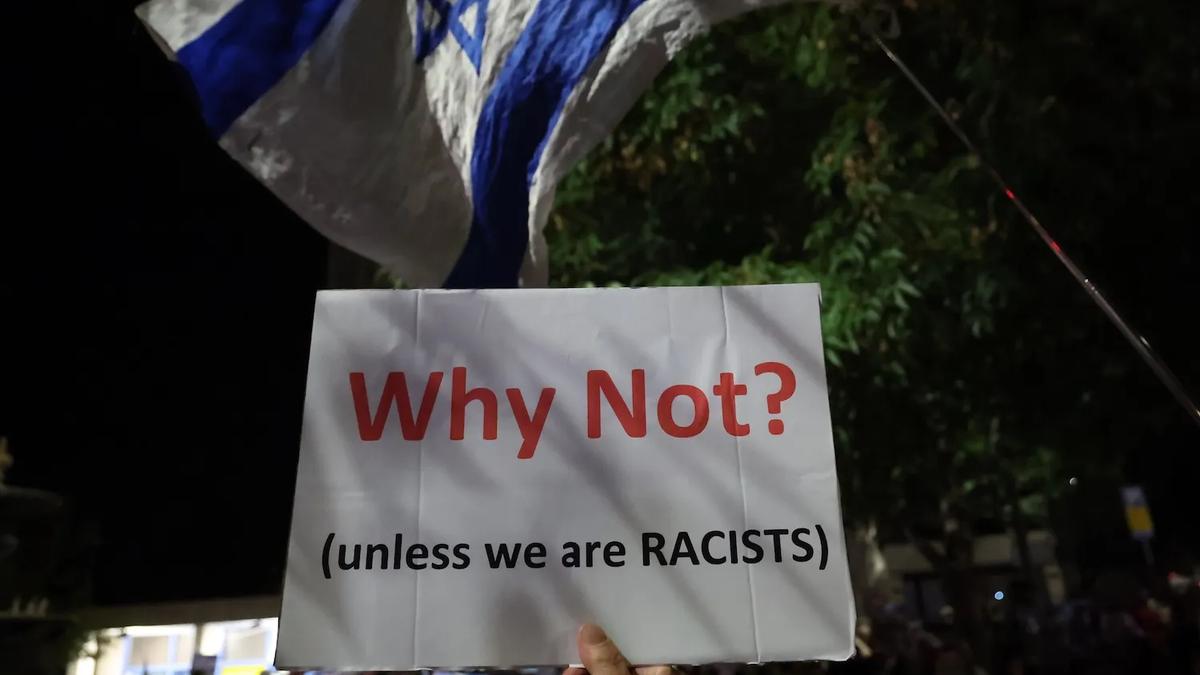
Israel's recent general election, held on October 27, 2026, has been widely described as a political deadlock. Official tallies suggested neither the bloc led by Prime Minister Benjamin Netanyahu nor the opposition bloc, spearheaded by Gadi Eisenkot, secured a clear majority in the 120-member Knesset. Netanyahu's coalition garnered 53 seats, while Eisenkot's bloc secured 48. However, this common interpretation omits a crucial demographic: the Palestinian citizens of Israel, who constitute roughly 20 percent of the population. Their unprecedented voter turnout resulted in Palestinian-led parties winning a record 19 parliamentary seats. When these seats are added to the opposition's tally, the anti-Netanyahu bloc reaches 67 seats, a clear majority that challenges the narrative of a stalemate.
The perception of a deadlock is not merely a statistical oversight; it is a reflection of deeply entrenched power structures and political taboos within Israeli society. The fundamental mechanism at play is the historical and systemic exclusion of Palestinian-led political parties from meaningful participation in governing coalitions. For 78 years, since the state's founding, a Palestinian-led party has been part of a governing coalition only once, for a single year in 2021. This precedent sets a powerful, if unspoken, rule: Jewish-majority parties dictate the terms of governance, often sidelining or demonizing Palestinian political representation.
The 2018 Jewish nation-state law provides a legal and ideological underpinning for this exclusion. By enshrining the right to national self-determination solely for Jews, it legally formalizes a two-tiered citizenship, inherently marginalizing Palestinian citizens and their political aspirations. This law reinforces the narrative that Palestinian-led parties, by virtue of representing a non-Jewish national identity, are somehow external or even antithetical to the state's foundational values, regardless of their commitment to democratic participation.
For Gadi Eisenkot's opposition bloc, the decision to include or exclude Palestinian-led parties is a complex calculation of political survival and perceived public acceptability. While some within his bloc, like the left-wing Democrats led by Yair Golan, openly welcome a partnership, others, such as Naftali Bennett's Beyachad and Avigdor Lieberman's Yisrael Beiteinu, have vehemently ruled it out. Their stated reason often cites the aftermath of the Hamas attack of October 7, 2023, claiming such a partnership would be
Source referenced: FOREIGNPOLICY
This brief was synthesized by our Editorial Engine and reviewed by The Ground Narrative team.