TRENDING

Friday, 6 November 2026
----------------------
26 Jumada Al-Awwal 1448 AH
Hundreds of thousands of citizens have taken to the streets across France in response to a nationwide strike called by five major unions, leading to significant clashes with police. This widespread unrest signals a deep-seated public discontent with governmental policies and the perceived erosion of the nation's social contract.
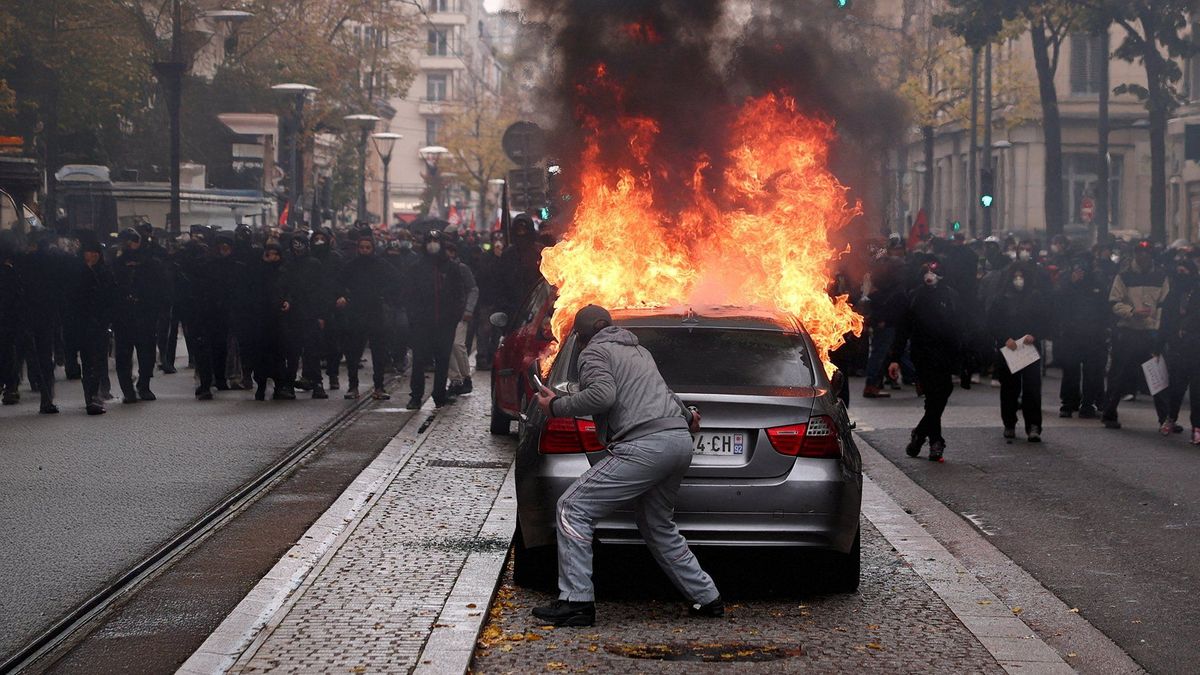
On a recent Thursday, hundreds of thousands of French citizens participated in mass protests across the nation, responding to a call for nationwide strike action issued by five prominent labor unions. The demonstrations saw significant mobilization, with over 70,000 police officers deployed to manage the crowds. Despite the heavy police presence, violent clashes erupted in several cities, underscoring the intensity of public frustration and the government's firm stance against the dissent.
The widespread French protests are not merely spontaneous outbursts but the culmination of deeply entrenched power dynamics, where the state's drive for economic reform collides with a populace accustomed to robust social protections. At its core, this struggle highlights the tension between a government committed to fiscal discipline and a citizenry demanding a dignified standard of living.
The French government, like many of its European Union counterparts, operates under increasing pressure to manage public debt, enhance economic competitiveness, and adhere to Eurozone fiscal rules. These imperatives often translate into policies such as pension reforms, austerity measures, and efforts to streamline public services. For the current administration, implementing these reforms is framed as essential for the nation's long-term economic health and stability, attracting foreign investment, and maintaining its standing within the EU. Backing down from these policies carries a significant political cost, potentially signaling weakness and undermining the government's reform agenda, which could jeopardize future legislative initiatives and electoral prospects. The power here lies in the state's monopoly on legitimate force and its control over legislative processes, allowing it to push through unpopular measures.
Conversely, France's powerful labor unions represent a formidable counter-force. With a rich history of social activism and the ability to mobilize vast segments of the workforce, French unions have historically played a critical role in shaping public policy. Their power stems from their capacity to disrupt economic activity through strikes, drawing public attention to grievances and exerting pressure on the government through collective action. The unified front of five major unions amplifies their voice and organizational strength, making it difficult for the government to dismiss the protests as fringe movements. This collective bargaining power, rooted in the constitutional right to strike, serves as a vital check on governmental authority, forcing a dialogue that might otherwise be ignored.
Underlying these immediate clashes is a broader economic context marked by persistent inflation, a rising cost of living, and stagnant wages for many. This economic squeeze erodes the purchasing power of ordinary French citizens, making existing social safety nets feel increasingly inadequate. The government's economic policies, while perhaps aimed at long-term stability, are perceived by many as exacerbating immediate hardships. The power dynamic thus becomes a contest over resource allocation and the definition of economic fairness, with the government prioritizing macroeconomic indicators and the unions championing the daily struggles of workers and families.
While official statements often focus on economic indicators or the necessity of reform, the true burden of these ongoing disputes falls squarely on the shoulders of ordinary French citizens. The human cost manifests in various forms, from immediate financial strain to long-term societal anxieties.
For the workers participating in the nationwide strikes, the decision to protest comes with an immediate financial penalty: lost wages. While this is a deliberate sacrifice made in pursuit of broader goals, it places significant strain on household budgets already stretched thin by rising prices. Many of these workers are fighting against policies that directly impact their future security, such as proposed changes to the pension system that could extend working lives or reduce retirement benefits. For families, this means not only the immediate loss of income but also the specter of a less secure future, potentially leading to difficult choices about healthcare, education, and daily necessities. The psychological toll of constant economic insecurity and the need to repeatedly take to the streets to defend basic rights is immense.
The very nature of a nationwide strike means widespread disruption to public services. Commuters face cancelled trains and buses, students miss school due to teacher strikes, and even essential services like healthcare can be impacted. While some view this disruption as a necessary evil to achieve change, it imposes significant inconvenience and stress on the general public, including those who may sympathize with the protesters' cause but are not directly participating. This disruption can also disproportionately affect vulnerable populations who rely heavily on public transport or services, further exacerbating existing inequalities.
Beyond the direct participants, small businesses often suffer collateral damage. City centers, typically bustling with commerce, can become ghost towns during major protest days, leading to lost revenue. Supply chains can be interrupted, and consumer confidence may wane, impacting local economies already struggling to recover from broader economic challenges. While large corporations might have the resilience to absorb such shocks, independent shops, restaurants, and service providers often operate on thin margins, making them highly vulnerable to prolonged periods of unrest and reduced foot traffic.
Perhaps the most insidious human cost is the erosion of social cohesion. When a government and a significant portion of its citizenry are locked in a protracted battle, it deepens societal divisions. Trust in institutions can decline, and the political discourse can become increasingly polarized. This environment can foster a sense of alienation and powerlessness among those who feel their voices are not being heard, potentially leading to more radical forms of protest or a general disillusionment with democratic processes. The very fabric of the French social contract, built on a shared understanding of rights and responsibilities, is tested and strained.
While governments and official narratives often frame these protests as domestic disputes over specific policies, much of the deeper context, underlying grievances, and external pressures remain downplayed or entirely omitted. The powerful actors involved – the French government, European Union institutions, and even large corporations – often control the narrative, shaping public perception to suit their agendas.
The most significant untold story is the quiet, incremental erosion of the French social contract. For decades, France has been defined by a robust welfare state, strong public services, and significant social protections, often referred to as the 'French model.' This model, born from post-war consensus, promised citizens a cradle-to-grave safety net in exchange for social solidarity and civic participation. Recent reforms, particularly those targeting pensions, labor laws, and public sector employment, are not just isolated policy changes; they represent a fundamental shift away from this historical understanding. Governments often present these reforms as necessary modernizations or fiscal adjustments, but they rarely acknowledge the profound psychological and cultural impact of dismantling elements of a cherished social security system. The public's anger stems not just from the specifics of a new law but from a perceived betrayal of this foundational agreement, where the state is seen as reneging on its historical commitments.
Another often downplayed factor is the subtle, yet significant, influence of European Union fiscal policies and recommendations. While the French government presents its reforms as sovereign decisions, Brussels exerts considerable pressure on member states to maintain fiscal discipline, reduce public debt, and implement structural reforms to enhance competitiveness. These recommendations, often framed as technical advice, frequently translate into austerity measures and deregulation that are deeply unpopular domestically. Governments are reluctant to highlight this external pressure, preferring to maintain the illusion of complete national autonomy in policy-making. Admitting the extent of EU influence might fuel Eurosceptic sentiment and complicate the domestic political narrative, making it easier to blame internal forces rather than external directives.
Official statements tend to localize the causes of economic hardship, attributing them to national productivity issues or specific budgetary challenges. What is often omitted is how France's internal struggles are part of a broader global economic squeeze. Rising global inflation, driven by supply chain disruptions, energy price volatility, and geopolitical events, impacts every nation. However, governments frequently frame these as purely domestic issues, implying that national reforms alone can solve them. This framing deflects attention from the systemic vulnerabilities of the globalized economy and shifts responsibility entirely onto national populations, demanding sacrifices without fully acknowledging the external forces at play. Corporations, too, benefit from this narrative by avoiding scrutiny over their pricing strategies or profit margins, which contribute to the cost-of-living crisis.
Finally, governments often downplay the legitimacy and depth of public dissent. Protests are frequently characterized as disruptive, violent, or the work of a radical minority, rather than a genuine expression of widespread frustration. The sheer numbers involved in the France nationwide strike protests contradict this narrative, yet official communication often focuses on the inconvenience caused or the need to maintain order, rather than engaging with the core grievances. By framing protests as obstacles to progress, authorities seek to delegitimize the movement and reduce public sympathy, thereby maintaining their own power to implement unpopular policies without significant concessions.
The coming weeks and months will be critical in determining the trajectory of France's current period of unrest. Observers should focus on several key indicators to understand how these power dynamics will evolve and who will ultimately bear the consequences.
First, watch the government's response. Will the administration stand firm on its reform agenda, risking further escalation and social unrest, or will it seek to de-escalate through negotiation and potential concessions? Any significant shift in policy or a willingness to engage in genuine dialogue with the unions could signal a turning point. Conversely, a continued hardline stance will likely provoke more intense and prolonged protests.
Second, pay close attention to the strategy and unity of the labor unions. Can they maintain the momentum of the France nationwide strike protests? Sustained, coordinated action across multiple sectors is difficult to achieve over time, and any cracks in their united front could weaken their bargaining position. Their specific demands will also be crucial – are they seeking minor adjustments, or a complete reversal of policies? The clarity and consistency of their message will determine their ability to keep public support.
Third, monitor the broader economic indicators and public sentiment. If inflation continues to rise or economic growth falters, public frustration will only deepen, potentially fueling further protests. Conversely, any signs of economic improvement, even if marginal, might temper some of the anger. Public opinion polls on the government's handling of the crisis and support for the protests will offer insights into the sustainability of the movement.
Finally, consider the long-term political implications. Prolonged social unrest can significantly impact a government's approval ratings and the political landscape, potentially strengthening opposition parties or giving rise to new populist movements. The outcome of these protests could shape future electoral cycles and the direction of French politics for years to come, influencing how other European nations approach similar challenges. The question remains whether the streets or the ballot box will ultimately dictate the future of France's social contract.
Source referenced: ALJAZEERA
This brief was synthesized by our Editorial Engine and reviewed by The Ground Narrative team.