TRENDING

Friday, 6 November 2026
----------------------
26 Jumada Al-Awwal 1448 AH
A surprising US midterm election outcome has sent ripples through Israeli politics, undermining Prime Prime Minister Benjamin Netanyahu's core appeal and forcing a re-evaluation of the long-standing US-Israel alliance. The shift reflects growing US public discontent with Israeli policies, with profound implications for both nations.
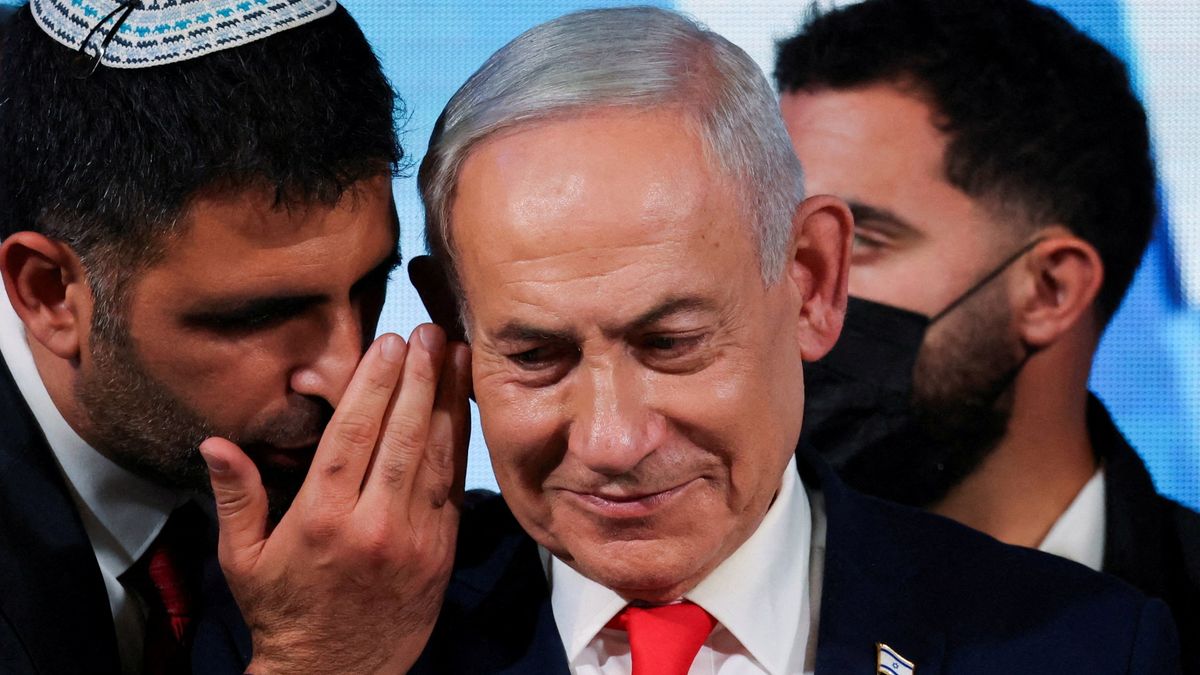
The recent US midterm elections delivered a significant blow to former President Donald Trump and his Republican Party, with early analysis attributing the poor performance partly to the United States' involvement in a war with Iran and its relationship with Israel. This outcome has directly impacted Israeli Prime Minister Benjamin Netanyahu, whose political brand has long been built on his perceived ability to maintain strong ties with Washington. His recent endorsement from Trump, intended to bolster his standing ahead of Israel's parliamentary elections, now appears to have backfired, with opposition leaders arguing that Netanyahu's policies have made Israel "politically toxic" in the US.
Simultaneously, Israel is grappling with its own political deadlock following inconclusive parliamentary elections on October 27. Netanyahu's right-wing bloc secured 53 seats, falling short of the 61 needed to form a government. The opposition, led by former army chief of staff Gadi Eisenkot, holds 48 seats and is actively seeking to unseat Netanyahu, blaming him for the perceived deterioration of the US-Israel relationship. Amidst this, a bombshell claim emerged from opposition leader Avigdor Lieberman, suggesting that Trump's election-day announcement to end US military aid to Israel, a staggering $3.8 billion annually, was the price for his endorsement of Netanyahu.
The traditional bedrock of the US-Israel alliance has been a complex interplay of shared strategic interests, robust lobbying efforts, and bipartisan political support within the United States. For decades, Israel has been viewed as a crucial partner in the Middle East, receiving substantial military and economic assistance. Benjamin Netanyahu masterfully cultivated this relationship, particularly with the Republican Party and figures like Donald Trump, positioning himself as the indispensable guarantor of Israel's security through his unique access to Washington's corridors of power. His political survival has often hinged on this perceived strength, allowing him to navigate domestic challenges by pointing to unwavering US backing.
However, the recent US midterm elections signal a significant shift in these power dynamics. The Republican Party's poor showing, partly attributed to the Iran war and the United States' relationship with Israel, indicates a growing segment of the American electorate is questioning the costs and benefits of current US foreign policy. Vice President JD Vance's comments highlighting these issues underscore a nascent but powerful domestic political force challenging the historical consensus. This is not merely a rejection of a specific leader, but a broader re-evaluation of the alliance's terms, driven by evolving public sentiment.
Within Israel, the political landscape is equally fractured. Netanyahu's inability to form a government, despite his bloc holding the most seats, exposes the limits of his long-standing strategy. The opposition, particularly Yair Lapid and Gadi Eisenkot, are seizing on the narrative that Netanyahu's policies—including the Gaza war, the Iran war, and settler violence—have alienated a crucial ally. Lapid's emphasis on his own ties to US Congress members is a direct challenge to Netanyahu's claim of unique influence. The alleged cut in US military aid, if confirmed, would represent an unprecedented rupture, forcing Israel to confront the financial realities of its defense budget, which already stands at 7 percent of its GDP. This potential withdrawal of funds, a cornerstone of Israel's military superiority, would fundamentally alter the strategic calculus for both nations.
Furthermore, the defection of United Torah Judaism (UTJ), a longtime ultra-Orthodox ally, from recommending Netanyahu to form a government, highlights the internal fragility of his support base. This move, unprecedented since 2009, empowers the opposition and demonstrates that the domestic political costs of Netanyahu's policies are now outweighing the benefits for some traditional allies. The potential for Eisenkot to form a government with external backing from Arab-led parties, despite previous rejections of such alliances, further illustrates the desperate scramble for power and the willingness of factions to break with convention in the face of a perceived crisis in the US-Israel relationship.
The shifting sands of US-Israel relations and Israeli domestic politics carry profound human costs, disproportionately borne by ordinary citizens and marginalized communities. At the forefront are the Palestinians, who continue to endure the direct consequences of the policies being debated in Washington and Jerusalem. The raw intelligence explicitly mentions a "genocidal war in Gaza" and "settler violence," which are not abstract concepts but daily realities of displacement, death, and deprivation for millions. For Palestinians, the political maneuvering in Israel and the United States often translates into intensified occupation, restricted movement, and a deepening humanitarian crisis, with little agency in the outcomes that dictate their lives.
For Israeli citizens, the potential loss of US military aid, which amounts to $3.8 billion annually, represents a significant economic threat. As Ahron Bregman, an Israeli security analyst, noted, the country's defense budget already consumes 7 percent of its GDP. A sudden cessation of this aid would necessitate a substantial increase in domestic defense spending, directly impacting the pockets of ordinary Israelis through higher taxes or cuts to social services. This financial strain could exacerbate existing economic inequalities and fuel public discontent, particularly among those already struggling with the cost of living.
Beyond the financial implications, the erosion of "unquestioned support" from the United States could lead to a perceived decline in Israel's security. While Israel possesses a formidable military, the psychological and strategic assurance provided by its alliance with the world's superpower has been a cornerstone of its defense doctrine. A weakening of this bond could foster a sense of vulnerability among Israelis, particularly in a volatile region. Furthermore, the perception of Israel becoming "politically toxic" in the US not only impacts diplomatic ties but also its broader international standing, potentially isolating it on the global stage and making it harder to garner support for its actions.
Internally, Israel is facing a period of heightened political instability. Netanyahu's tactic of "turning one segment of the population against the other," specifically by attempting to delegitimize Arab voters, deepens societal divisions. This rhetoric undermines the democratic process and marginalizes a significant portion of the Israeli populace, fostering resentment and distrust. The prolonged struggle to form a government, coupled with such divisive tactics, creates an environment of uncertainty that affects public confidence, investment, and the overall social fabric of the nation. Ordinary Israelis are left navigating a fractured political landscape that struggles to address their fundamental needs and aspirations.
Powerful actors, whether governments or political leaders, often frame narratives in ways that serve their immediate interests, downplaying or omitting inconvenient truths. In the context of the US-Israel relationship and Israeli domestic politics, several critical aspects are being obscured or strategically ignored.
The most significant untold story is the long-term, structural erosion of US public support for Israel, which extends far beyond Benjamin Netanyahu's tenure. While Netanyahu's actions and rhetoric have undoubtedly accelerated this trend, the idea of "unquestioned support" was always conditional, albeit deeply entrenched. Shibley Telhami, director of the University of Maryland Critical Issues Poll, highlighted that US public attitudes are as negative towards Israel as they are towards Netanyahu, and that "most Americans would not change their view of Israel, even if there is a new government without Netanyahu." This suggests that the problem is not merely a personality clash but a deeper ideological and generational shift within the US, particularly among younger and progressive voters who increasingly scrutinize Israeli policies through a human rights lens. Governments in both Washington and Jerusalem have long relied on the inertia of historical alliance, failing to acknowledge the growing divergence between their policies and the values of a significant portion of the American populace.
Ahron Bregman's blunt assessment—"you can’t be a rogue state and expect things to continue as before"—cuts through the diplomatic niceties. This statement implies that Israel's actions, particularly its conduct in the "genocidal war in Gaza" and its expansionist settlement policies, have crossed a threshold that even its staunchest allies find increasingly difficult to defend. The official discourse from Jerusalem often frames these actions as necessary for security, while Washington often offers muted criticism, if any. What is downplayed is the cumulative impact of these policies on Israel's international legitimacy and the long-term sustainability of its current trajectory. The idea that Israel can act with impunity, shielded by US diplomatic and financial backing, is being challenged not just by its adversaries but by its own perceived benefactors.
The alleged cut in US military aid by Donald Trump in exchange for endorsing Netanyahu reveals a transactional dimension to the alliance that is rarely openly discussed. While US aid is often presented as a commitment to Israel's security, this incident suggests it can be weaponized for domestic political gain or as leverage in bilateral relations. This transactional nature undermines the narrative of a values-driven partnership and exposes the vulnerability of Israel's reliance on US largesse. Both US and Israeli leaders tend to portray aid as a stable, predictable flow, downplaying the political strings and potential for abrupt changes that such a massive financial commitment entails.
Crucially, the human cost to Palestinians is consistently downplayed in the public discourse surrounding US-Israel relations. While the raw intelligence mentions the "genocidal war in Gaza" and "settler violence," the primary focus of the political debate remains on the implications for Israel's standing and Netanyahu's political future. The voices and experiences of those directly suffering the most severe consequences of these conflicts are often marginalized or entirely absent from the official narratives of powerful actors. This omission allows for a depoliticized discussion of conflict, where the suffering of one group is effectively rendered invisible in the pursuit of political advantage by others.
The coming weeks and months will be critical in determining the future trajectory of both Israeli domestic politics and the enduring US-Israel relationship. Readers should closely monitor several key developments.
First, the process of Israeli government formation remains paramount. Will Gadi Eisenkot successfully cobble together a coalition, potentially with the external support of Arab-led parties and the crucial backing of United Torah Judaism? The composition and stability of the next Israeli government will signal its likely approach to the United States, Palestinians, and regional conflicts. A government without Netanyahu could attempt to mend fences with Washington, but the depth of US public discontent suggests a full return to the status quo ante is unlikely.
Second, the veracity and implications of the alleged cut in US military aid must be closely watched. If confirmed, this would be a seismic shift, forcing Israel to fundamentally re-evaluate its defense budget and strategic planning. The actions of the new US Congress and the Biden administration (or a future Trump administration) will be crucial in determining whether this is a temporary political maneuver or a more permanent reorientation of US foreign policy towards Israel. Any move to condition or reduce aid will send a powerful message about Washington's evolving priorities.
Third, observe the broader US-Israel diplomatic and military relationship. Will the United States begin to exert greater pressure on Israel regarding its policies in Gaza and the West Bank, particularly concerning settler violence? Any public statements or policy shifts from Washington that deviate from historical unconditional support will be highly indicative of a new era. Conversely, a return to business as usual, despite public opinion, would suggest the entrenched power of lobbying efforts and strategic interests continues to outweigh democratic sentiment.
Finally, the regional implications, particularly concerning Iran, warrant close attention. A perceived weakening of the US-Israel alliance could embolden Iran or other regional actors, potentially escalating existing conflicts or creating new flashpoints. The "Iran war" mentioned in the raw intelligence is a significant factor, and any shift in US posture towards Israel will inevitably ripple through the broader Middle East, impacting the lives and security of millions.
The US midterm results weakened Benjamin Netanyahu's political standing in Israel by challenging his core promise of strong ties with the US. Opposition leaders are using the shift in US public opinion to blame Netanyahu for making Israel 'politically toxic' in Washington, complicating his efforts to form a new government.
Opposition leader Avigdor Lieberman claimed that former US President Donald Trump's endorsement of Netanyahu came at the price of ending $3.8 billion in annual US military aid to Israel. This allegation, if true, would represent a significant shift in the transactional nature of the US-Israel alliance.
Palestinians face continued consequences from conflicts like the Gaza war and settler violence. Israeli citizens may bear economic burdens from potential aid cuts and increased defense spending, alongside heightened political instability and a perceived decline in international standing.
Editor's Note: Analysis is based on raw intelligence set in a future context (2026), treating reported events and statements as factual within that timeline.
Source referenced: ALJAZEERA
This brief was synthesized by our Editorial Engine and reviewed by The Ground Narrative team.