TRENDING

Friday, 6 November 2026
----------------------
26 Jumada Al-Awwal 1448 AH
A significant shift in US domestic power following the midterm elections has sent ripples across the globe, prompting key international actors to recalibrate their strategies. While some see an opportunity, others remain skeptical of any fundamental change in Washington's foreign policy.
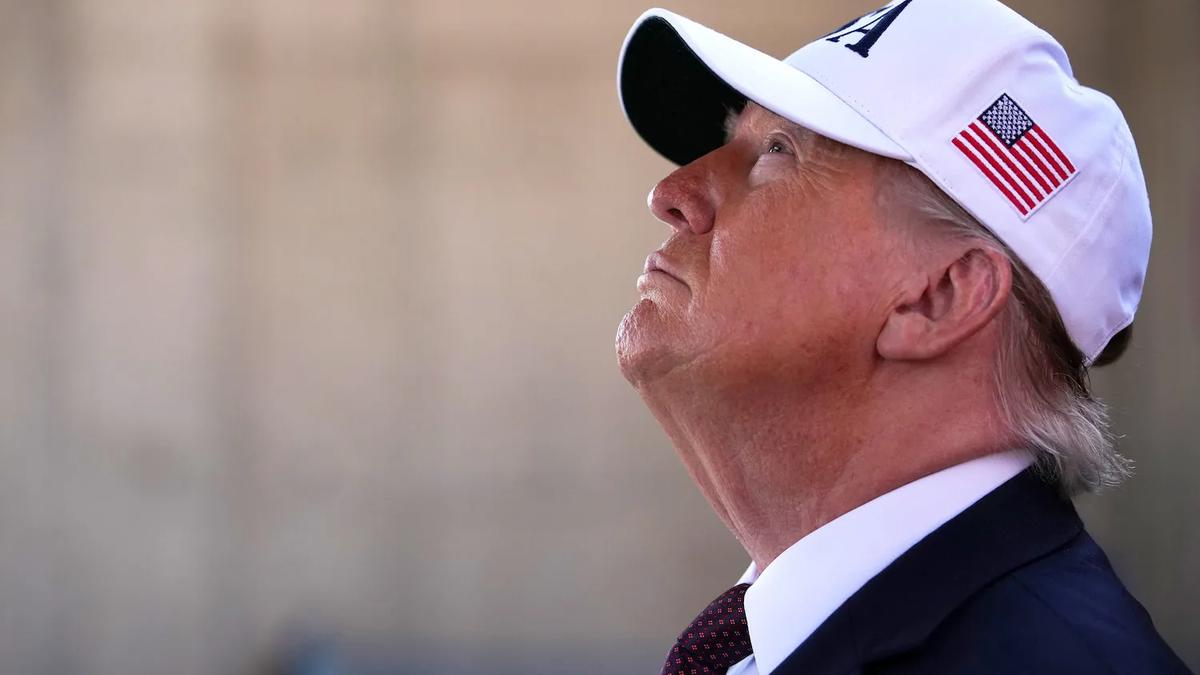
In a decisive US midterm election in November 2026, the Republican Party experienced a significant defeat, losing control of Congress to the Democrats. This outcome was widely interpreted by international observers as a rejection of President Donald Trump's foreign policy, particularly his administration's approach to the ongoing conflict with Iran and its stance on Ukraine. Immediately following the results, Iran expressed open satisfaction, framing the Republican loss as a public repudiation of the 'Iran war.' Russia voiced optimism, hoping for a continuation of Trump's efforts towards a peace deal in Ukraine and reduced financial constraints on Moscow. Meanwhile, China maintained a diplomatic silence, labeling the elections a 'domestic affair' while signaling readiness for continued engagement. North Korea, however, responded with a series of missile tests, dismissing the possibility of renewed talks with a 'hostile' Washington.
The US midterm election global impact reveals a complex interplay between domestic political shifts and international power calculations. With Democrats now controlling Congress, they gain significant legislative leverage to challenge President Trump's foreign policy agenda. This includes the ability to scrutinize military spending, influence aid packages, and potentially initiate impeachment proceedings against cabinet members like Defense Secretary Pete Hegseth, who is reportedly being considered a scapegoat for the Iran war's failures. However, the President retains substantial executive authority over foreign policy and national security decisions, creating a dynamic tension where legislative intent can clash with presidential prerogative.
For Iran, the Republican 'wipeout' is not merely a symbolic victory but a potential opening to alleviate pressure. The Iranian parliamentary speaker's declaration that 'Americans said NO TO WAR' highlights the strategic importance of public opinion within the United States as a factor in international conflict. The acknowledgement by US Vice President J.D. Vance that the economic impact of the 'Iran war' contributed to the Republican defeat underscores how domestic economic pain can directly constrain a superpower's military ambitions. Yet, Supreme Leader Ayatollah Mojtaba Khamenei's skepticism regarding fundamental shifts in US behavior, irrespective of party control, reflects a deep-seated understanding of the enduring structural interests that drive Washington's foreign policy. The reported pressure from Israeli Prime Minister Benjamin Netanyahu on Trump to continue the war, juxtaposed with growing bipartisan US sentiment to reassess ties with Israel, further illustrates how external allies and domestic political currents can pull US policy in conflicting directions.
Russia's optimistic reaction is rooted in President Trump's demonstrated inclination to reduce support for Ukraine and ease sanctions on Moscow. The upcoming trilateral talks in Abu Dhabi, mediated by the United States, are a testament to Trump's continued pursuit of a Ukraine-Russia peace deal, even amidst bipartisan criticism at home. The Kremlin's hope is that the President's personal agenda, rather than congressional pressure, will dictate the pace and terms of engagement, allowing Russia to consolidate its gains and potentially extract concessions. The shift in congressional control might introduce friction, but the executive branch's capacity to shape diplomatic initiatives remains formidable.
China's muted response—shrugging off the election as a 'domestic affair'—is a hallmark of its long-term strategic thinking. Unlike Iran or Russia, Beijing views US internal political fluctuations as less impactful on the fundamental trajectory of Sino-American relations. China's focus remains on managing differences, enhancing communication, and building a 'constructive relationship of strategic stability,' regardless of which party controls Congress. The anticipation of a meeting between President Trump and Chinese President Xi Jinping in Shenzhen later in the month suggests that high-level engagement will continue, driven by mutual economic and strategic imperatives rather than solely by the composition of the US legislature. This approach reflects China's confidence in its own rising power and its belief that US domestic politics, while noisy, do not alter the underlying geopolitical competition.
North Korea's immediate missile tests and the rejection of talks by Kim Yo Jong signal a calculated defiance. This response could be an attempt to exploit perceived US internal disarray or President Trump's diminished political standing, asserting Pyongyang's autonomy and signaling its continued development of military capabilities. For North Korea, a weakened US executive or a divided Washington might be seen as an opportunity to press its agenda without significant diplomatic concessions.
The shifting political landscape in Washington has direct and often severe consequences for ordinary people, far removed from the halls of power.
For Ukrainians, the US midterm election global impact translates into profound uncertainty regarding their nation's survival. The prospect of renewed US support with Democrats in control offers a glimmer of hope, but the reality on the ground remains brutal. The 'Iran war's' economic drain on the US budget, cited as a factor in the elections, implicitly competes with aid to Ukraine. Any reduction in financial or military assistance from Washington, driven by domestic political calculations or a presidential pivot towards 'peacemaking,' directly impacts Ukraine's ability to defend its territory, rebuild its infrastructure, and protect its citizens from ongoing conflict. The approaching winter exacerbates these concerns, making consistent international backing a matter of life and death for millions.
For the people of Iran, the 'Iran war' is not an abstract political talking point but a daily struggle. The economic impact that swayed US voters is mirrored, and amplified, within Iran itself, where sanctions and military tensions have crippled the economy, fueled inflation, and limited access to essential goods and services. The constant threat of military escalation, whether from US strikes or retaliatory actions, casts a long shadow over daily life, hindering development and fostering instability. While the Iranian government may 'gloat' over US election results, the human cost of prolonged confrontation is borne by its populace, who face the brunt of both external pressure and internal economic hardship.
Even within the United States, the human cost of foreign policy decisions is often obscured. The 'Iran war's' economic impact on US voters, leading to a Republican defeat, highlights how the financial burdens of overseas conflicts—whether through taxation, inflation, or diverted resources—directly affect the livelihoods of ordinary Americans. While not experiencing direct conflict on their soil, citizens pay the price through economic strain and the opportunity cost of resources that could be invested domestically. The disconnect between the decisions made by powerful actors in Washington and the everyday struggles of its citizens demonstrates a systemic challenge in democratic accountability for foreign policy.
Powerful actors, both within the United States and internationally, consistently downplay or omit crucial aspects of these geopolitical shifts, shaping narratives to serve their own interests.
President Trump's administration, while publicly standing by Defense Secretary Pete Hegseth, is reportedly considering him a 'fall guy' for the 'Iran war' failures. This internal maneuvering reveals a deeper truth: the US foreign policy establishment is far from monolithic. The departure of former Army Secretary Dan Driscoll, reportedly over disagreements with Hegseth, and his subsequent move to OpenAI for 'national security modernization,' suggests a brain drain and a re-evaluation of traditional defense structures. This internal discord, often framed as mere personnel changes, masks fundamental disagreements about US strategic direction and the efficacy of its military interventions. The official narrative often focuses on unity and resolve, while the reality is a fragmented approach that can lead to inconsistent and unpredictable foreign policy, with global repercussions.
Trump's 'peacemaking efforts' regarding Ukraine and Russia, while presented as a humanitarian endeavor, are often downplayed in their potential to weaken US alliances and strategic commitments. The narrative of seeking peace can obscure a shift towards reducing financial constraints on Moscow and souring on continued support for Kyiv. This framing allows the administration to appear proactive and compassionate, while potentially making concessions that embolden revisionist powers and undermine the international order. The human cost of such 'peace'—for those directly affected by Russian aggression—is rarely highlighted in official statements.
China's 'shrug' at the US midterm results, coupled with its boilerplate diplomatic statements, conceals a deeper strategic calculation. Beijing is not merely observing; it is actively positioning itself. The silence from state-run media like the Global Times, usually quick to offer 'hot takes' on US politics, suggests a deliberate strategy to avoid entanglement in US domestic squabbles and maintain a facade of neutrality. This allows China to project an image of stability and focus on its own long-term economic and military expansion, regardless of Washington's internal political turbulence. The 'constructive relationship of strategic stability' it seeks is one where China's growing influence is acknowledged and accommodated, not challenged by a distracted US.
The reported pressure from Israeli Prime Minister Benjamin Netanyahu on Trump to continue the Iran war, alongside the growing bipartisan US sentiment against the Israeli government, reveals a crack in the traditionally strong US-Israel relationship. This internal US shift, often obscured by official rhetoric emphasizing unwavering support, could significantly alter Israel's strategic calculations. The US public's unfavorable view of the Israeli government, driven by various factors, could lead to a reassessment of aid and diplomatic backing, leaving Israel in a more precarious position than official statements from either country would suggest.
As the new US Congress convenes, several key developments will indicate the true US midterm election global impact and the direction of global power dynamics.
First, closely monitor President Trump's decisions regarding the 'Iran war.' Will he opt to cut his losses and de-escalate, or will he attempt a fresh military operation to 'save face' and solidify his legacy? This choice will have immediate consequences for regional stability and global oil markets.
Second, the trilateral talks between Ukraine, Russia, and the United States in Abu Dhabi next week will be critical. The outcome will reveal the extent of Trump's commitment to a Ukraine-Russia peace deal and whether Democratic congressional pressure can alter his approach to supporting Kyiv.
Third, observe the actions of the newly empowered Democratic Congress. Their pledges to challenge Trump's foreign policy on Iran and Ukraine will test the limits of legislative power against presidential authority. Any moves towards an impeachment vote for Defense Secretary Pete Hegseth would signal a significant internal power struggle.
Fourth, the prospective meeting between President Trump and Chinese President Xi Jinping in Shenzhen will offer insights into the future of Sino-American relations. The tone and substance of this meeting will indicate whether China's 'shrug' was genuine indifference or strategic patience, and how Washington intends to navigate its relationship with its primary economic and military rival.
Finally, continue to watch North Korea's provocations. Its recent missile tests and rejection of talks suggest a calculated strategy to exploit perceived US weakness. Any further tests or aggressive rhetoric will signal Pyongyang's intent to press its agenda regardless of US internal political shifts.
Source referenced: FOREIGNPOLICY
This brief was synthesized by our Editorial Engine and reviewed by The Ground Narrative team.