TRENDING

Friday, 6 November 2026
----------------------
26 Jumada Al-Awwal 1448 AH
A tech‑stock plunge that began in the United States after the midterm elections spread to Asian exchanges, dragging down indices and unsettling everyday investors. The fallout reveals how political calculations in Washington can reshape livelihoods across the Pacific.
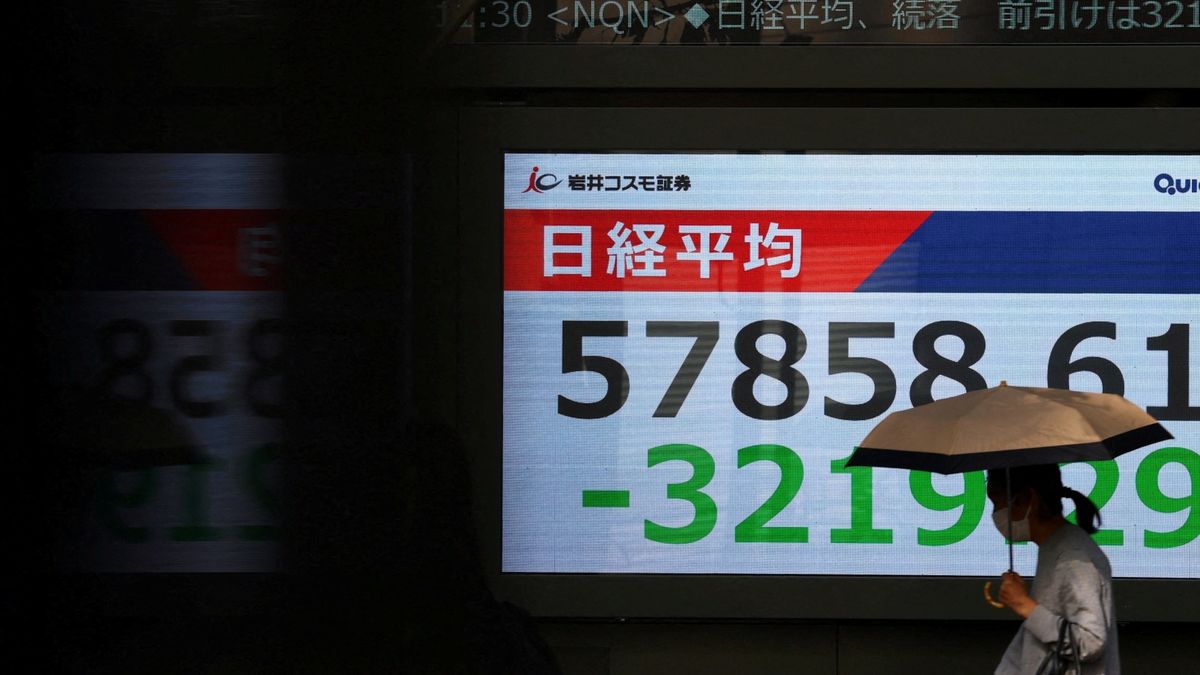
The United States saw the Nasdaq tumble 5.5% on Thursday, erasing roughly $3 trillion from the market value of S&P 500 tech firms. The drop was traced to fears that a Democrats‑led Congress would tighten oversight of artificial‑intelligence development and slow the construction of new data‑centre capacity. Within hours, the shockwave reached Asia: Japan’s Nikkei fell 6%, South Korea’s Kospi slumped more than 8% before a temporary trading halt, and Taiwan’s index lost 4.5% after an early‑morning plunge. State‑backed investors in China and South Korea intervened, buying equities to steady prices, while regulators eased rules on leveraged retail trading to blunt the panic.
Midterm outcomes in the United States are a proxy for future regulatory direction. Democrats have signaled a willingness to impose stricter standards on AI models, data privacy, and the environmental footprint of massive server farms. For investors, the prospect of new compliance costs translates into lower profit forecasts for firms that have built business models around rapid AI deployment.
Asian economies sit at the heart of the hardware backbone that powers the AI boom. Japan, South Korea, and Taiwan dominate memory‑chip, semiconductor, and display manufacturing. When U.S. investors reassess the growth trajectory of AI, the valuation of these export‑oriented firms collapses, even though their domestic demand may remain steady. The interdependence creates a feedback loop: a policy shift in Washington reverberates through supply‑chain contracts, order books, and ultimately, workers’ wages in factories across East Asia.
Large asset managers and hedge funds have poured billions into AI‑centric ETFs, betting on exponential returns. The recent sell‑off exposed how much of that capital was built on “rosy illusions” about near‑term revenue, as noted by a senior executive at Lingtong Shengtai. When sentiment turned, margin calls and forced liquidations amplified price declines, prompting exchanges to halt trading to avoid a cascade of defaults.
Tech conglomerates in the United States have spent heavily on lobbying to shape AI policy. A softer regulatory environment protects their valuation and satisfies shareholders demanding growth. Conversely, Democratic lawmakers, facing pressure from environmental groups and labor unions, can use AI oversight as a political rallying point to demonstrate responsiveness to constituents worried about job displacement and energy consumption.
Small‑scale savers in South Korea and Taiwan often allocate a sizable portion of their retirement savings to equity markets. The abrupt plunge erased years of accumulated wealth, pushing many into a precarious financial position just as they approach retirement age. The temporary trading halt offered little solace; the underlying price correction persisted into the close of the trading day.
Chip‑fab employees at Samsung Electronics, SK Hynix, and TSMC saw their companies’ market caps tumble, raising concerns about future hiring freezes and overtime cuts. In regions where semiconductor plants are the primary employer, a dip in stock price can trigger layoffs, reduced overtime pay, and a slowdown in wage growth, directly affecting household income.
The anticipated expansion of data‑centre infrastructure has already sparked resistance in rural United States towns and European outskirts, where residents fear increased electricity demand and noise pollution. Analysts warn that stricter regulations could halt new builds, leaving construction crews and local service providers without the promised jobs. The market’s reaction therefore signals a looming loss of employment for a workforce still transitioning from traditional manufacturing to high‑tech services.
Tech giants publicly champion AI as a catalyst for economic growth, yet they downplay the environmental toll of data‑centre construction and the social licence challenges of locating massive power‑hungry facilities in underserved regions. Statements from industry leaders often omit the fact that many data‑centres are being sited in areas with fragile ecosystems or where local grids are already strained.
U.S. policymakers frame tighter AI oversight as a consumer‑protection measure, but the move also serves to keep American firms ahead of China in the race for algorithmic dominance. By imposing higher compliance costs domestically, the United States can indirectly raise barriers for foreign competitors that lack comparable regulatory frameworks, a nuance rarely highlighted in official briefings.
Local governments in Japan and South Korea rely on capital‑gains tax revenues from booming tech stocks to fund public services. The sudden market correction shrinks these revenue streams, forcing municipalities to reconsider budget allocations for healthcare, education, and infrastructure—pressures that seldom appear in corporate earnings calls.
- U.S. legislative agenda: Monitor bills introduced in the House and Senate that target AI model transparency, data‑centre permitting, and carbon‑intensity reporting. Passage of any of these measures will likely deepen the risk premium on tech equities worldwide.
- Asian policy responses: Track whether China, Japan, and South Korea introduce counter‑regulatory incentives, such as tax breaks for AI R&D or subsidies for green data‑centre construction, to cushion domestic firms from the U.S. shock.
- Corporate earnings: The next quarterly reports from semiconductor leaders will reveal whether the sell‑off was a temporary sentiment swing or a sign of longer‑term demand contraction.
- Investor behavior: Watch for a shift from high‑leverage retail positions toward more diversified, lower‑risk assets, as regulators in the region tighten rules on margin trading.
- Supply‑chain diversification: Companies may accelerate moves to locate chip production outside of East Asia to mitigate geopolitical and regulatory risk, a trend that could reshape employment patterns across the continent.
The convergence of election‑driven policy risk, intertwined supply chains, and the financial market’s appetite for AI growth creates a volatile mix. As governments and corporations navigate the fallout, ordinary workers and small investors will feel the reverberations long after the headlines fade.
Investors fear that a Democratic win will bring stricter AI regulations and slower data‑centre expansion, which reduces expected growth for AI‑related companies worldwide, prompting a sell‑off that spreads to Asian markets.
Semiconductor manufacturers, AI chipmakers, and retail investors with heavy exposure to tech equities are most at risk, as falling valuations threaten jobs, wages, and retirement savings.
Source referenced: ALJAZEERA
This brief was synthesized by our Editorial Engine and reviewed by The Ground Narrative team.