TRENDING

Thursday, 17 September 2026
----------------------
6 Rabi' Al-Thani 1448 AH
At the Boao Forum, a Chinese scholar framed Beijing’s growth model as an “open‑source” development kit for the Global South, promising AI access and shared pathways. The claim masks a strategic push to bind emerging economies to China’s tech standards and supply chains.
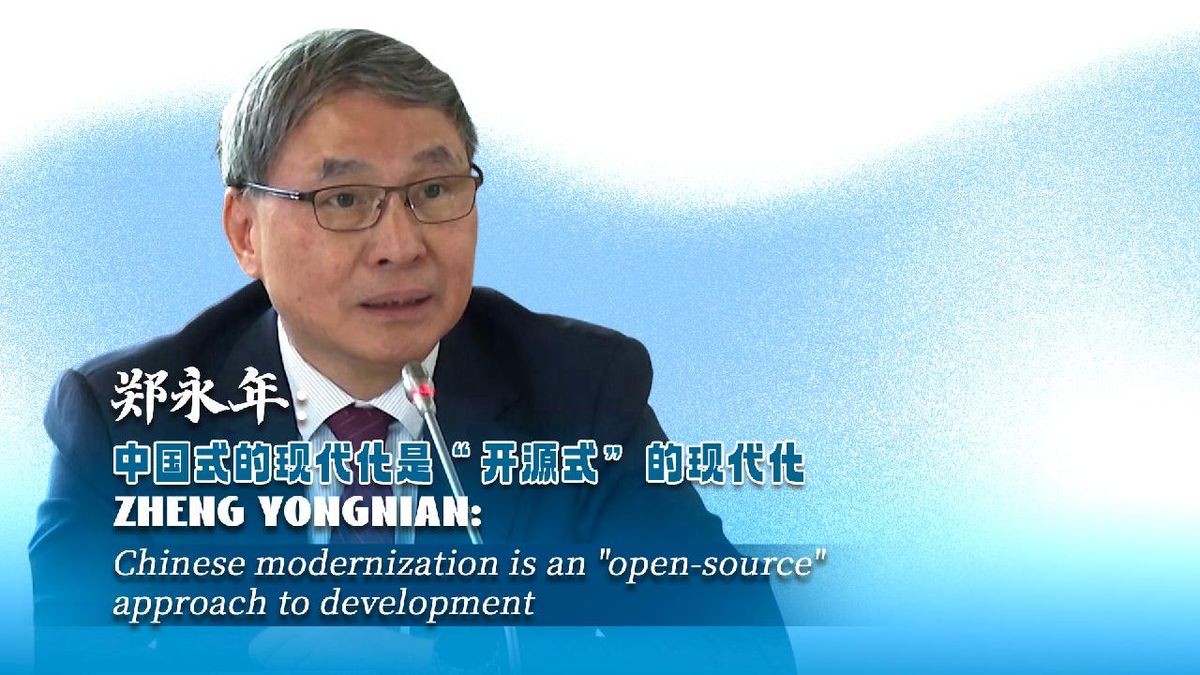
On September 16, 2026, Zheng Yongnian, dean of the School of Public Policy at CUHK‑Shenzhen, told the Boao Forum for Asia that China’s modernization follows an “open‑source” approach. He said the model aims to share development opportunities, extend China’s economic ladder to other developing nations, and announced an “open‑source AI zone” for BRICS countries.
The rhetoric serves several structural incentives. First, economic reciprocity: China’s export‑driven growth depends on markets for its manufactured goods, infrastructure projects, and increasingly, its digital platforms. By offering a veneer of voluntary technology transfer, Beijing lowers the political cost of deepening trade ties while securing future demand for Chinese hardware and standards. Second, political legitimacy: Positioning itself as a benefactor of the Global South bolsters the Communist Party’s narrative of “peaceful rise” and counters Western criticism of “debt‑trap diplomacy.” Third, strategic technology diffusion: An AI zone for BRICS creates a parallel ecosystem to Western‑led AI governance frameworks, embedding Chinese algorithms, data policies, and talent pipelines in partner economies. Finally, alliance math: By framing cooperation as a shared ladder rather than a hierarchy, China nudges non‑aligned states toward the BRICS bloc, diluting U.S. influence in regions from Africa to Latin America.
The promise of “open‑source” development lands on the ground where it matters most. In rural African towns slated for Chinese‑funded AI labs, local technicians often lack the training to maintain sophisticated hardware, leading to reliance on Chinese service contracts. Small‑scale farmers in Southeast Asia may see Chinese‑provided smart‑irrigation tools, but the data harvested feeds back into platforms controlled abroad, limiting the farmers’ bargaining power. In India’s tech hubs, startups eyeing the BRICS AI zone confront intellectual‑property regimes that favor state‑backed Chinese firms, potentially crowding out homegrown innovation. Across these contexts, the human cost includes job displacement in legacy sectors, data privacy erosion, and the subtle reshaping of local economies around Chinese supply chains.
Official statements stress “no intention to impose a model,” yet the policy levers reveal a different calculus. The “open‑source” label sidesteps the reality that most software and hardware components remain under Chinese patents, with licensing fees tied to long‑term procurement contracts. Moreover, the AI zone’s governance rules are being drafted behind closed doors, likely mirroring China’s own regulatory approach that prioritizes state oversight and limits foreign auditability. What is omitted is the financial exposure of partner countries: many BRICS members already carry heavy debt loads from previous Chinese infrastructure deals, and adding AI infrastructure could deepen fiscal vulnerabilities without transparent cost‑benefit analyses.
Watch for three concrete developments. First, the formal charter of the BRICS AI zone, expected to be released at the next summit, will reveal standards for data sharing, algorithmic transparency, and intellectual‑property rights. Second, the rollout of pilot AI hubs in Kenya, Brazil, and Indonesia will generate early data on technology transfer effectiveness and local employment impacts. Third, reactions from the United States and the European Union—whether they launch competing “open‑source” initiatives or tighten export controls on AI chips—will shape the broader contest over who writes the rules of the emerging digital economy. The trajectory of these moves will determine whether the “open‑source” narrative translates into genuine shared growth or a deeper alignment of developing economies with Beijing’s strategic ecosystem.
Source referenced: CGTN
This brief was synthesized by our Editorial Engine and reviewed by The Ground Narrative team.


