TRENDING

Wednesday, 16 September 2026
----------------------
5 Rabi' Al-Thani 1448 AH
A potential summit between Kim Jong Un and Donald Trump could serve as a global stage for Kim's daughter, Kim Ju Ae, signaling a dynastic succession and North Korea's push for de facto nuclear state recognition.
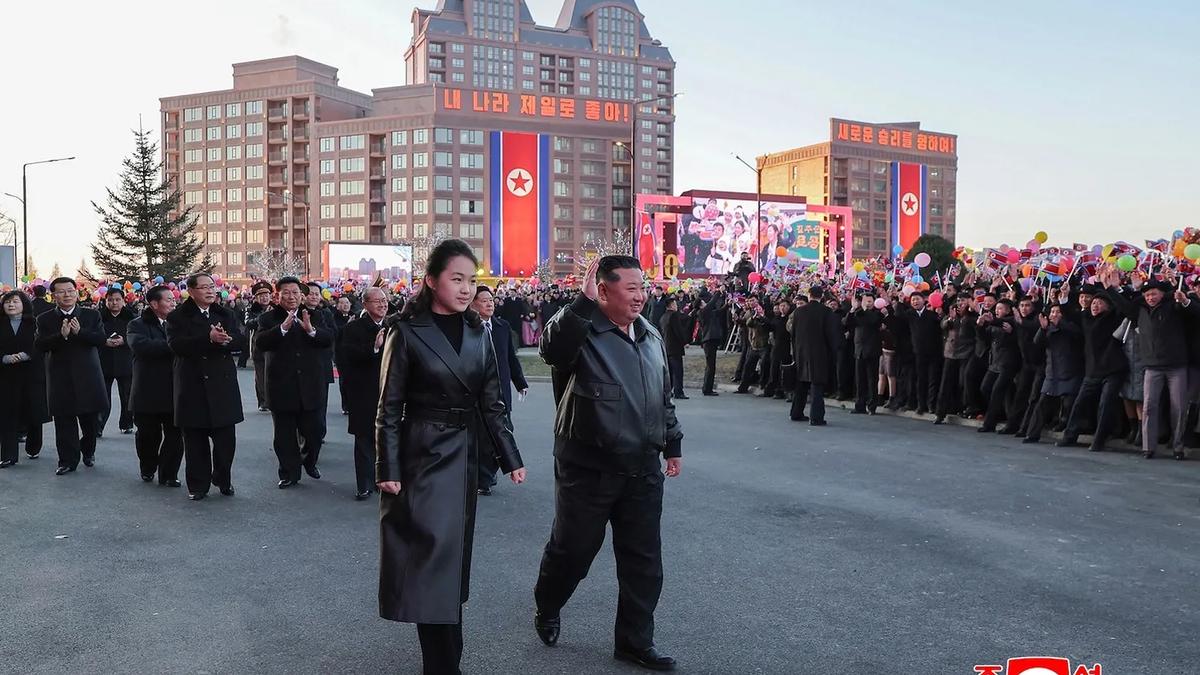
North Korean leader Kim Jong Un is reportedly preparing for a potential fourth summit with former U.S. President Donald Trump later this year. Crucially, this meeting may not just be about nuclear talks, which have historically stalled, but about a carefully orchestrated introduction of Kim's daughter, Kim Ju Ae, to the international community as his likely successor. Ju Ae, believed to be around 13, has increasingly appeared in state media at significant events, including missile launches and military parades, and recently made her first publicly confirmed trip abroad to Beijing alongside her father, meeting Chinese President Xi Jinping and Russian President Vladimir Putin.
This potential summit is a masterclass in leveraging symbolism for strategic gains. For Kim Jong Un, the primary objective is twofold: securing dynastic continuity and normalizing North Korea's nuclear status. By presenting Ju Ae on a global stage alongside a U.S. president, Kim aims to legitimize a fourth generation of family rule, projecting stability and international acceptance for his chosen heir. This move is less about immediate policy breakthroughs and more about a long-term power play, cementing the Kim family's grip on the state for decades to come.
Simultaneously, North Korea seeks to shift the international perception of its nuclear arsenal from a 'problem to be eliminated' to a 'strategic fact to be managed.' Pyongyang has explicitly stated that denuclearization is an 'irreversibly finalized matter.' A summit with a U.S. president, especially one like Trump who has publicly acknowledged North Korea as a 'nuclear power,' lends significant credibility to this narrative. Even without a formal agreement, the optics of a U.S. president engaging with a nuclear-armed North Korean leader on equal footing would blur the lines between official U.S. policy (denuclearization) and political reality (negotiating with a nuclear state). This allows Kim to gain international legitimacy and domestic prestige, reinforcing the idea that his regime, backed by its nuclear capabilities, cannot be ignored.
The most profound human cost of these power maneuvers falls squarely on the ordinary citizens of North Korea. Their lives remain largely dictated by a hereditary regime that prioritizes military strength and dynastic survival over economic development or individual freedoms. The resources poured into nuclear weapons programs and the elaborate staging of succession events come at the direct expense of improving living standards, healthcare, and infrastructure for a population that already endures severe sanctions and isolation. They have no say in who leads them, and the prospect of a child heir further entrenches a system devoid of democratic accountability. Regionally, the continued nuclear proliferation poses an existential threat, fueling an arms race and diverting resources in South Korea and Japan towards defense, impacting their own public spending priorities.
What is often downplayed or omitted in official statements and diplomatic discussions is the de facto acceptance of North Korea as a nuclear power. While the U.S. maintains its official stance on denuclearization, the very act of engaging in high-level summits with a leader who explicitly rejects that goal sends a different message. The focus on 'talks' can obscure the underlying reality that the international community is increasingly managing, rather than eliminating, North Korea's nuclear arsenal. Furthermore, the internal vulnerabilities of North Korea's dynastic system, particularly the implications of a young female leader in a deeply patriarchal and militarized society, are rarely discussed openly. Kim's 'maternal statecraft' is a propaganda tool, but the actual challenges of a smooth transition for Ju Ae, including potential internal power struggles or challenges from other family members like Kim Yo Jong, remain a critical untold story. The international community, by engaging in these symbolic summits, inadvertently participates in legitimizing a system that actively suppresses its own people and poses a long-term proliferation risk.
Readers should closely watch for the specifics of any potential summit: who accompanies Kim, the language used by both sides regarding denuclearization, and the nature of the photo opportunities. Beyond the summit, observe Ju Ae's continued public profile – her frequency of appearances, the types of events she attends, and any official pronouncements that further solidify her position. Pay attention to how South Korea and Japan react to these developments, as their security calculations are directly impacted. Finally, monitor any subtle shifts in the international community's approach to North Korea, particularly whether the rhetoric of denuclearization begins to yield to a more pragmatic, albeit risky, strategy of nuclear arms control and management with a recognized nuclear state.
Source referenced: FOREIGNPOLICY
This brief was synthesized by our Editorial Engine and reviewed by The Ground Narrative team.


