TRENDING

Thursday, 5 November 2026
----------------------
25 Jumada Al-Awwal 1448 AH
Renewed fighting across northern Ethiopia has shattered a fragile peace, pushing the region's already strained health system to the brink of collapse. The World Health Organization warns of devastating consequences as drone strikes and blockades cut off essential medical supplies and claim civilian lives.
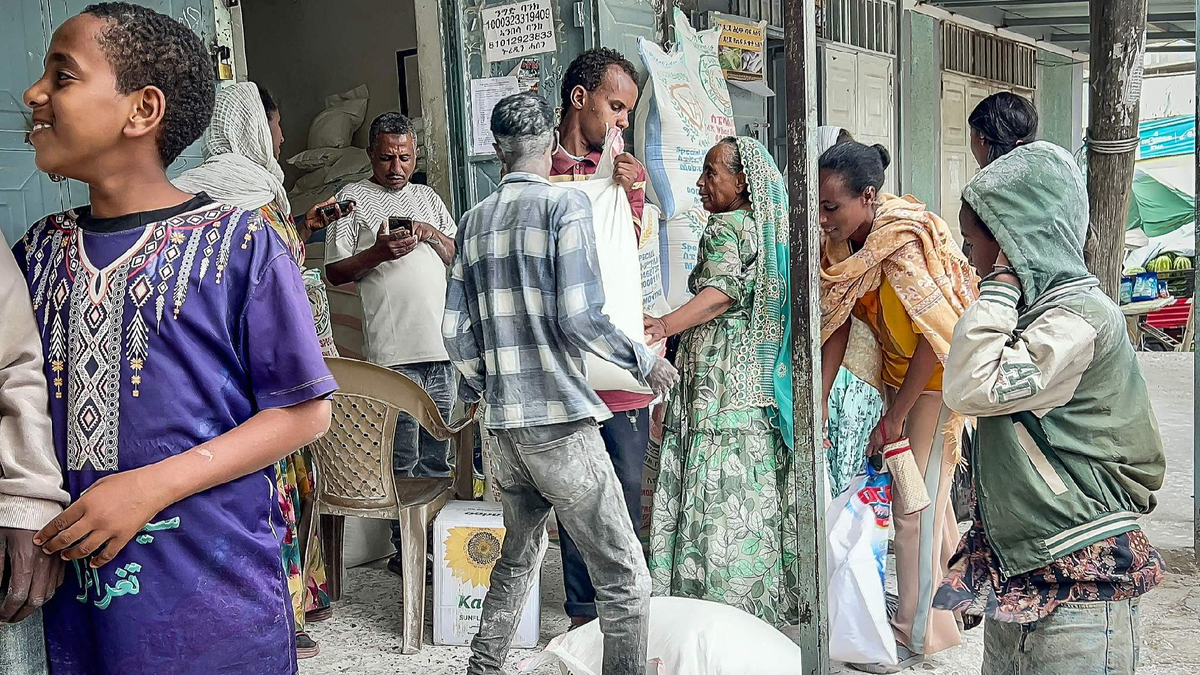
Renewed and deadly fighting has erupted across northern Ethiopia, particularly in the Amhara, Tigray, and Afar regions. This resurgence of hostilities, nearly four years after a significant peace agreement, has triggered dire warnings from the World Health Organization (WHO). The WHO reports that the region's already fragile health system is on the verge of collapse due to severe shortages of medical personnel, essential medicines, and critical equipment. Insecurity has crippled ambulance operations and prevented the delivery of life-saving supplies, while recent drone attacks have claimed civilian lives, including children and a newborn, in displacement camps and towns where people sought food.
The current unraveling of peace in Ethiopia is a complex interplay of unresolved historical grievances, fragmented political power, and the strategic calculations of multiple armed actors. The 2022 Pretoria Peace Agreement, which officially ended the two-year conflict between the Ethiopian federal government and the Tigray People's Liberation Front (TPLF), was always a fragile edifice built on exhaustion rather than a comprehensive political settlement. While it brought a cessation of major hostilities, it left fundamental questions of federalism, regional autonomy, and resource allocation largely unaddressed, merely deferring them.
At the heart of the resurgence is the ongoing struggle for power and influence within Ethiopia's ethnically federated system. The TPLF, once the dominant force in Ethiopian politics for decades, was sidelined by Prime Minister Abiy Ahmed's reforms. Its initial conflict with the federal government stemmed from a clash over central authority versus regional self-determination. The Pretoria agreement stipulated the disarmament, demobilization, and reintegration (DDR) of TPLF fighters and the restoration of federal authority in Tigray. However, the implementation of these terms has been uneven and contentious, fueling distrust on both sides.
The current fighting, extending beyond Tigray into Amhara and Afar, introduces additional layers of complexity. In Amhara, local militias known as Fano and elements of the Amhara regional forces, who initially fought alongside federal troops against the TPLF, now find themselves in opposition to the federal government. Their grievances often relate to territorial claims (e.g., Western Tigray/Welkait), perceived marginalization, and a desire for greater autonomy or a different vision for Ethiopia's federal structure. The federal government's attempts to disarm regional forces and integrate them into the national army have been met with fierce resistance, particularly in Amhara, where many view it as an erosion of their security and identity.
The use of drone attacks, as highlighted by the WHO, signifies a shift in military doctrine and capabilities. Drones offer a way for the federal government to project power and target perceived rebel strongholds without risking ground troops, but their use in civilian areas is highly controversial and often leads to indiscriminate casualties. This tactic also underscores the asymmetry of power, with the federal government possessing advanced aerial capabilities that rebel groups lack.
External actors also cast a shadow. Eritrea, which played a significant role in the initial Tigray War by supporting the Ethiopian federal forces, remains an unpredictable element. Its long-standing animosity towards the TPLF and its strategic interests in the Horn of Africa mean that any escalation could draw it back into the conflict, further destabilizing the region. The broader regional context, with ongoing conflicts in neighboring Sudan and instability in Somalia, makes Ethiopia's internal strife a critical concern for international stability.
Economically, control over fertile lands, trade routes, and administrative centers remains a powerful incentive for all parties. The disruption of agricultural cycles and trade networks further exacerbates humanitarian crises, turning food and medicine into strategic assets or weapons in the conflict. Political survival for regional leaders and the assertion of national sovereignty by the federal government are paramount, often overshadowing the devastating human impact of their decisions.
The renewed fighting in northern Ethiopia is exacting a catastrophic human toll, pushing communities already scarred by years of conflict to the brink of survival. The WHO's stark warning about the collapse of the health system is not merely an administrative concern; it translates directly into preventable deaths, widespread suffering, and a profound erosion of human dignity.
Direct casualties from drone strikes, including children and a newborn in a displacement camp in Amhara, and civilians attempting to obtain food in Rama, Tigray, represent the most brutal and immediate cost. These are not mere statistics but individual lives extinguished, families shattered, and communities traumatized. The very places meant to offer refuge – displacement camps – have become targets, instilling a pervasive fear that leaves no safe haven.
Beyond immediate fatalities, the breakdown of the health system means a silent, slow-motion catastrophe. Hospitals and clinics, already depleted by the previous conflict, now lack basic medical personnel, essential medicines, and even functional equipment. This means:
- Emergency Care is Non-Existent: Victims of violence, accidents, or sudden illness cannot receive timely treatment, turning treatable conditions into fatal ones.
- Maternal and Child Health Services Vanish: Pregnant women face childbirth without skilled attendants, leading to increased maternal and infant mortality. Children miss critical vaccinations, risking outbreaks of preventable diseases like measles and polio.
- Chronic Diseases Go Untreated: Patients with diabetes, hypertension, HIV/AIDS, or tuberculosis are cut off from life-sustaining medication, leading to severe complications and premature deaths.
- Disease Outbreaks Loom: Poor sanitation, overcrowding in displacement camps, and lack of access to clean water, combined with a non-existent health infrastructure, create fertile ground for cholera, typhoid, and other epidemics.
The insecurity also restricts the movement of ambulances and prevents the delivery of humanitarian aid, including medical supplies. This deliberate or incidental obstruction of aid effectively weaponizes basic necessities, using hunger and disease as tools of war. Communities are isolated, cut off from any external support, and left to fend for themselves in an increasingly hostile environment.
Mass displacement is another grim reality. People flee their homes, often with nothing but the clothes on their backs, seeking safety in overcrowded camps or with already strained host communities. This displacement disrupts education, livelihoods, and social networks, creating a generation of children whose development is stunted by trauma, malnutrition, and lack of schooling. The psychological toll on survivors, especially children exposed to violence and loss, will reverberate for decades, perpetuating cycles of trauma and instability.
Economically, the conflict devastates local economies. Farmers cannot plant or harvest, markets are disrupted, and trade routes are blocked. This leads to food insecurity, hyperinflation, and a complete collapse of economic activity, pushing millions into extreme poverty. The human cost is not just about lives lost, but about futures stolen, potential squandered, and the very fabric of society torn apart.
In the cacophony of official statements and international warnings, much of the true narrative of Ethiopia's renewed conflict remains obscured or deliberately downplayed. Powerful actors, both within Ethiopia and in the international community, often frame the situation in ways that serve their political agendas, omitting the inconvenient truths that reveal the deeper mechanics of power and the full extent of human suffering.
Governments, particularly the Ethiopian federal government, often frame military actions as necessary law enforcement operations to restore order and assert national sovereignty. This narrative tends to downplay civilian casualties, attributing them to
Source referenced: CGTN
This brief was synthesized by our Editorial Engine and reviewed by The Ground Narrative team.