TRENDING

Wednesday, 4 November 2026
----------------------
24 Jumada Al-Awwal 1448 AH
Abdul El‑Sayed became the first Muslim elected to the U.S. Senate, riding a Democratic surge in Michigan. The win reshapes power balances while ordinary voters bear hidden costs.
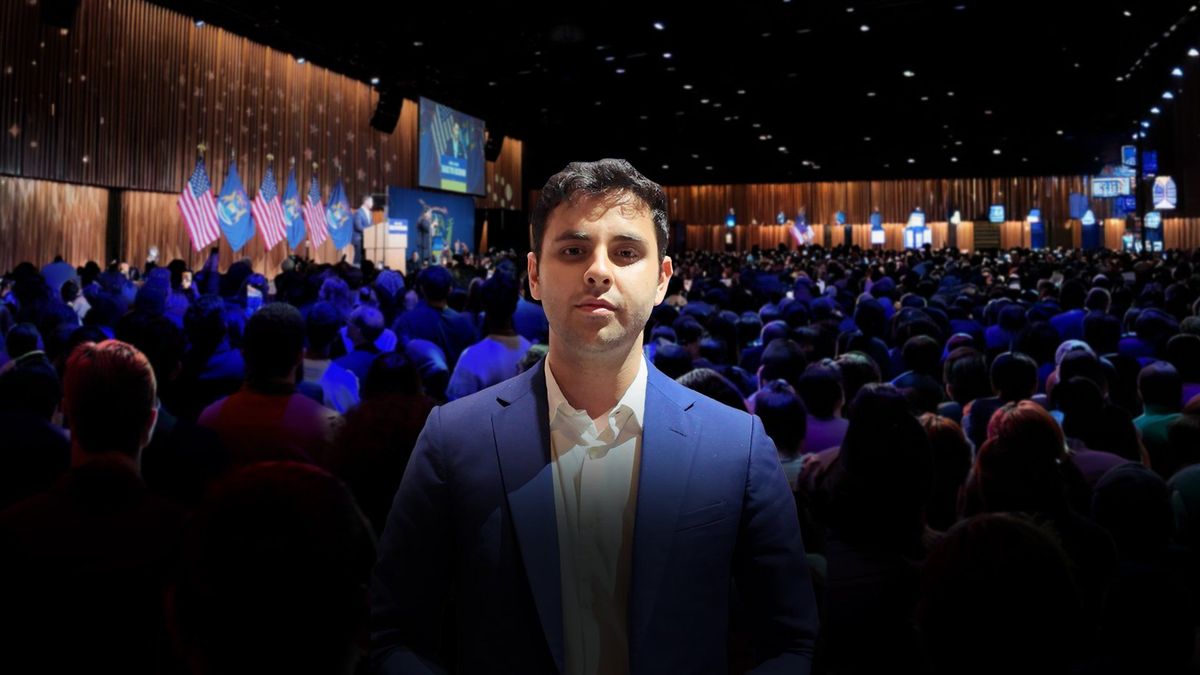
Democratic voters in Detroit and across Michigan celebrated the night Abdul El‑Sayed clinched a Senate seat, marking the first time a Muslim has entered the upper chamber. The victory was framed as part of a broader "blue wave" that flipped several key districts and narrowed the Republican majority in Washington.
The win did not happen in a vacuum; it reflects a confluence of demographic shifts, party calculations, and fundraising dynamics. Over the past decade, Michigan has seen a steady increase in younger, college‑educated residents who lean Democratic, especially in urban hubs like Detroit. The Democratic Party capitalized on this trend by fielding a candidate who could appeal to both progressive activists and moderate voters concerned about health care and climate policy.
At the same time, the Republican Party doubled down on cultural messaging, betting that identity politics would energize its base in the state's rural counties. This strategy left the GOP vulnerable in suburban swing districts where economic concerns outweighed cultural rhetoric. The result was a narrow but decisive margin that tipped the Senate balance, giving Democrats a stronger foothold to negotiate legislation.
Campaign finance also played a pivotal role. El‑Sayed's race attracted record contributions from national Democratic donors, labor unions, and progressive PACs eager to break the Senate's long‑standing religious homogeneity. In contrast, the Republican challenger relied heavily on small‑donor fundraising and a handful of legacy donors tied to the auto industry, whose influence has waned as the sector contracts.
Finally, the election underscored the growing importance of identity representation in American politics. By electing the first Muslim senator, voters signaled a willingness to expand the symbolic makeup of the federal government, a factor that parties now weigh alongside policy platforms when selecting candidates.
While the celebratory atmosphere dominated headlines, the underlying economic and social pressures on everyday Michiganders persisted. The state's manufacturing belt continues to grapple with job losses, wage stagnation, and under‑investment in infrastructure. For many workers, the promise of new federal funding hinges on the Senate's ability to pass comprehensive economic relief bills, a process that can be stalled by partisan gridlock.
Immigrant communities, particularly those of Middle‑Eastern descent, also face a double‑edged reality. On one hand, El‑Sayed's victory offers a sense of representation; on the other, heightened visibility can attract backlash from extremist groups, potentially increasing hate‑crime incidents. Local law enforcement agencies have reported a modest uptick in bias‑motivated reports following the election, placing additional strain on community‑police relations.
Rural voters who supported the Republican challenger experience a different kind of loss. Their concerns about agricultural subsidies, broadband access, and opioid addiction may receive less attention in a Senate that now leans more progressive. The shift could translate into slower policy responses for these regions, exacerbating existing disparities.
Lastly, the campaign's massive spending spree diverted resources from local public services. Municipal budgets in several swing counties reported shortfalls as candidates tapped into community fundraising events, leaving fewer funds for schools and public health initiatives during a critical post‑pandemic recovery period.
Official campaign disclosures highlight the headline‑grabbing donations, but they mask a network of dark money groups that funnel contributions through nonprofit shells. These entities, often linked to national think tanks, spend heavily on targeted digital ads that amplify polarizing narratives without disclosing their ultimate backers. The effect is a more fragmented electorate, where voters receive curated messages that reinforce existing biases.
Both parties have weaponized cultural identity, yet the public discourse rarely addresses how this tactic reshapes policy priorities. By foregrounding El‑Sayed's religious background, the Democratic Party hopes to broaden its coalition, but it also risks reducing complex policy debates to symbolic victories. Meanwhile, the Republican Party continues to frame the election as a cultural showdown, diverting attention from substantive issues like infrastructure decay.
Foreign governments monitor U.S. elections for signs of policy shifts that could affect their interests. El‑Sayed's win may be read by Middle‑Eastern states as a softening of American attitudes toward Muslim representation, potentially influencing diplomatic outreach and trade negotiations. However, official statements from these governments are muted, preferring to focus on broader bilateral topics while quietly assessing the Senate's future stance on foreign aid and security cooperation.
The next legislative session will test whether the new Senate composition translates into concrete policy outcomes. Key indicators include the progress of the bipartisan infrastructure bill, climate legislation that affects the Great Lakes region, and any moves to reform campaign finance rules that could curb dark‑money influence. Observers should also track hate‑crime statistics in Michigan's urban centers, as a rise could signal backlash against the symbolic breakthrough.
On the political front, the Democratic Party will gauge whether identity‑based candidacies can be replicated in other swing states, while the Republican Party may recalibrate its cultural messaging to recapture suburban voters. The interplay between these strategies will shape the national narrative heading into the 2028 election cycle.
Finally, grassroots organizations in Detroit and surrounding counties are mobilizing to hold the new senator accountable on promises related to affordable housing, public transit, and health care access. Their ability to translate street‑level activism into legislative pressure will be a litmus test for how much power truly shifts from Washington corridors to ordinary neighborhoods.
He is the first Muslim elected to the U.S. Senate, breaking a long‑standing religious barrier and signaling broader demographic shifts in American politics.
A slimmer Republican majority gives Democrats more leverage to negotiate on infrastructure, climate, and health care bills, though partisan gridlock remains possible.
Increased visibility can attract both positive representation and heightened hate‑crime threats, putting community safety and police relations under pressure.
Source referenced: ALJAZEERA
This brief was synthesized by our Editorial Engine and reviewed by The Ground Narrative team.