TRENDING

Wednesday, 4 November 2026
----------------------
24 Jumada Al-Awwal 1448 AH
US President Donald Trump has acknowledged that the war on Iran contributed significantly to Republican losses in the recent midterm elections, where Democrats gained control of Congress. This admission highlights a rare moment of accountability for foreign policy's domestic political consequences.
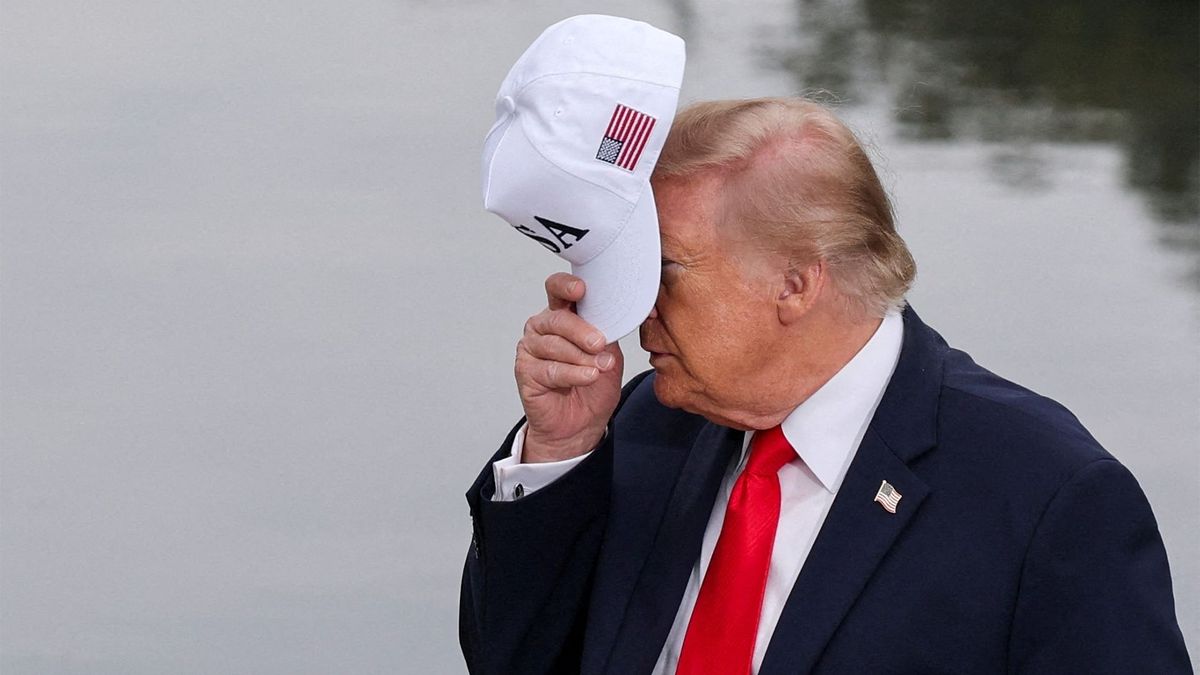
In a candid admission, US President Donald Trump stated that the ongoing war on Iran played a significant role in the Republican Party's poor performance during the recent midterm elections. The outcome saw Democrats reclaim control of Congress, a development that fundamentally shifts the balance of power within Washington. Simultaneously, Trump vowed to veto what he termed 'insane' legislation, signaling a period of intense executive-legislative friction ahead. This direct linkage between a major foreign policy engagement and domestic electoral consequences underscores a growing public fatigue with prolonged military interventions.
The admission by President Trump is not merely a political post-mortem; it’s a rare public acknowledgment of the intricate feedback loop between executive foreign policy decisions and the will of the electorate. For years, the US presidency has wielded immense power in initiating and sustaining military conflicts, often with limited congressional oversight or direct public mandate. The war on Iran, like many before it, likely began with specific strategic objectives – perhaps to contain Tehran's regional influence, dismantle its nuclear program, or secure vital energy pathways. However, the sustained human and financial cost of such endeavors often accumulates, eventually reaching a tipping point where voters express their discontent at the ballot box.
The midterm elections serve as a crucial, albeit imperfect, mechanism for accountability. While voters rarely cast ballots solely on foreign policy, the protracted nature of the Iran conflict likely became a proxy for broader dissatisfaction with government spending, national priorities, and the perceived effectiveness of leadership. The Democratic Party's success in gaining control of Congress now introduces a potential check on presidential war powers. Historically, Congress has struggled to assert its constitutional authority over declarations of war, often deferring to the executive branch. However, a newly empowered opposition may seek to scrutinize war funding, demand clearer objectives, or even attempt to legislate limits on military engagements.
Yet, Trump's immediate vow to veto 'insane' legislation reveals the enduring strength of executive power. This threat suggests that even with a divided government, the President retains significant leverage to shape policy, particularly in foreign affairs. The 'insane' bills could encompass a range of legislative efforts, from defense spending cuts to attempts to reassert congressional war powers, or even domestic policies that clash with the administration's agenda. This dynamic sets the stage for a period of legislative gridlock, where the public's desire for a shift in direction may be met with continued executive resistance.
Beyond domestic politics, the Iran war itself is a complex tapestry of geopolitical interests. The US and Iran have been locked in a decades-long struggle for regional dominance, often playing out through proxy conflicts in Iraq, Syria, Yemen, and Lebanon. The war's mechanics involve not just direct military confrontation but also economic sanctions, cyber warfare, and intense diplomatic maneuvering. Powerful regional allies of the US, such as Saudi Arabia and Israel, have long advocated for a hardline stance against Iran, viewing its nuclear ambitions and support for non-state actors as existential threats. Their influence on US policy, through lobbying and strategic partnerships, is a significant, often understated, power mechanic in perpetuating such conflicts. Conversely, Iran's strategic depth and asymmetric warfare capabilities have allowed it to resist direct military defeat, turning the conflict into a costly, prolonged engagement for all parties involved.
While political leaders and strategists debate the merits of military engagement, the most profound and immediate consequences of the Iran war are borne by ordinary people. The human cost is multifaceted, extending far beyond battlefield casualties to reshape societies, economies, and individual lives.
In Iran, civilians have undoubtedly paid the highest price. Direct military strikes, whether from conventional forces or covert operations, result in immediate casualties, injuries, and the destruction of homes and infrastructure. Beyond the immediate violence, the war intensifies the effects of long-standing international sanctions, which cripple the Iranian economy. This leads to shortages of essential goods, including medicine and food, hyperinflation, and widespread unemployment. Ordinary Iranians struggle to access basic healthcare, education, and economic opportunities, their futures constrained by a conflict they did not choose. The psychological trauma of living under constant threat, coupled with economic despair, leaves deep scars on individuals and communities, often manifesting as increased rates of depression, anxiety, and social unrest.
For the United States, the human cost is primarily shouldered by its service members and their families. While direct combat deaths may be lower than in previous large-scale conflicts, the toll of deployment, combat-related injuries, and the invisible wounds of war—such as Post-Traumatic Stress Disorder (PTSD) and traumatic brain injuries—are immense. Veterans often return home to face challenges reintegrating into civilian life, struggling with physical disabilities, mental health issues, and inadequate support systems. Their families endure prolonged periods of separation, anxiety, and the profound grief of loss or the long-term care of injured loved ones. The financial burden of veteran care, though often overlooked in war budgets, is a generational commitment that continues long after the last shot is fired.
The Iran war does not exist in a vacuum; it fuels and is fueled by broader regional instability. Proxy conflicts intensify, leading to further displacement of populations across the Middle East. Millions become refugees or internally displaced persons, fleeing violence, seeking asylum in neighboring countries or further afield, often facing xenophobia and precarious living conditions. This mass movement of people strains the resources of host nations and creates humanitarian crises that reverberate globally. The conflict also exacerbates sectarian divisions, empowering extremist groups who thrive in chaos and further destabilize an already volatile region, creating a vicious cycle of violence and suffering.
Economically, the war represents a colossal diversion of resources. For the US, trillions of dollars are spent on military operations, equipment, and personnel, funds that could otherwise be invested in critical domestic priorities: improving infrastructure, expanding healthcare access, funding education, or addressing climate change. This opportunity cost is rarely factored into public discourse about war. For Iran, the economic destruction is even more direct and devastating, setting back development by decades. The disruption of global oil markets and trade routes also has ripple effects on the global economy, impacting energy prices and supply chains for consumers worldwide. The true cost of war, therefore, extends far beyond the immediate battlefield, touching the lives and livelihoods of countless individuals.
The official narratives surrounding the war on Iran – or any major conflict – are often carefully constructed to justify actions, maintain public support, and downplay inconvenient truths. President Trump's admission, while significant, still operates within a political framework, focusing on electoral impact rather than the deeper, often hidden, mechanics of power and profit.
Governments rarely articulate the full spectrum of motivations behind going to war. While official statements might cite national security, counter-terrorism, or humanitarian concerns, the deeper drivers often involve a complex interplay of economic interests, geopolitical dominance, and domestic political calculations. For the Iran war, the official pretexts likely centered on Iran's nuclear program and its alleged support for terrorism. However, the untold story often includes the desire to control vital oil and gas reserves, secure strategic shipping lanes, or maintain regional hegemony against a perceived rival. The influence of powerful lobbying groups, including defense contractors, pro-Israel organizations, and anti-Iran advocacy groups, on US foreign policy decisions is a critical, often opaque, factor. These groups invest heavily in shaping public opinion and congressional votes, ensuring that a hawkish stance against Iran remains a priority, regardless of the broader public cost.
While millions suffer, a select few invariably profit immensely from conflict. The military-industrial complex – a network of defense contractors, weapons manufacturers, and associated industries – stands to gain billions from sustained military operations. Contracts for arms, logistics, and reconstruction efforts flow freely, creating powerful incentives for the perpetuation of conflict. These corporations often employ former government officials and military leaders, creating a revolving door that blurs the lines between public service and private gain. The human cost of war is an externality for these entities, while the financial gains are tangible and immense. This aspect is almost universally omitted from official statements, which focus instead on national interest and security.
Mainstream media, particularly in times of conflict, often struggles to provide truly independent analysis. The pressure to align with national narratives, reliance on official sources, and the sensational nature of war reporting can lead to a homogenization of perspectives. Critical voices are often marginalized, and the complexities of the conflict, particularly the suffering of civilians and the long-term strategic failures, are downplayed. The focus often remains on military victories or political rhetoric, rather than the nuanced realities on the ground or the deeper geopolitical forces at play. This selective framing can inadvertently contribute to public apathy or even support for prolonged engagements, preventing a full accounting of the war's true impact.
The sustained state of war, particularly undeclared wars, eroding democratic principles by concentrating power in the executive branch and diminishing the role of public debate. Decisions to deploy troops, launch strikes, or impose sanctions are often made with limited transparency, bypassing congressional approval and public scrutiny. This creates a dangerous precedent where foreign policy becomes the domain of a select few, rather than a reflection of democratic will. Trump's reference to 'insane' bills, without specific context, further obscures the legislative battles that are likely attempts to reassert democratic control over these executive prerogatives.
The admission by President Trump and the shift in congressional power signal a potentially volatile period for US foreign policy and domestic politics. Several key areas warrant close observation to understand the evolving landscape.
First, the actions of the newly Democratic-controlled Congress will be critical. Will they leverage their newfound power to meaningfully challenge presidential war powers? Watch for legislative attempts to cut funding for the Iran war, impose stricter reporting requirements on military engagements, or even propose resolutions to formally end hostilities. Any such moves will inevitably clash with President Trump's executive authority, leading to legislative battles and potential vetoes. The outcome of these power struggles will define the future balance between the executive and legislative branches on matters of war and peace.
Second, observe President Trump's rhetoric and policy decisions regarding Iran. While his admission suggests an awareness of public discontent, it remains to be seen whether this translates into a genuine de-escalation or a tactical shift. He might seek to reframe the conflict, declare a premature 'victory,' or pivot to other foreign policy challenges to distract from the Iran quagmire. Alternatively, he could double down, using the veto threat to push through his preferred policies, potentially escalating tensions further if he perceives a weakened domestic opposition.
Third, pay close attention to Iran's response. A change in US domestic political dynamics could be interpreted in Tehran as either an opportunity for de-escalation or a sign of US weakness to be exploited. Iran might seek to engage in new diplomatic overtures, or it could intensify its regional activities, testing the resolve of a divided US government. The reactions of US regional allies, particularly Saudi Arabia and Israel, will also be crucial. They may perceive a shift in US policy as a betrayal or an opportunity to pursue their own agendas more aggressively, potentially leading to new flashpoints in the Middle East.
Finally, the 2028 presidential election will undoubtedly be shaped by the legacy of the Iran war. Candidates from both parties will be forced to articulate their vision for US engagement abroad, and the public's apparent war fatigue will likely be a dominant theme. Watch for how potential candidates address the costs of prolonged conflict, the role of military intervention, and the balance between domestic needs and international commitments. The 'insane bills' Trump referenced will also reveal ongoing ideological battles, indicating which domestic priorities are being sacrificed or championed in the shadow of foreign policy decisions. These internal struggles will continue to define the political landscape and the choices available to the American public.
President Trump's admission was a political assessment, linking the public's dissatisfaction with the prolonged conflict to the Republican Party's losses in the midterm elections. It highlights a rare acknowledgment of how foreign policy can directly influence domestic electoral outcomes.
With Democrats controlling Congress, there's potential for increased scrutiny of presidential war powers and military funding for the Iran conflict. They may attempt to legislate limits on engagements or demand greater transparency, though President Trump's veto power will remain a significant obstacle.
The primary human cost is borne by Iranian civilians, facing casualties, displacement, and severe economic hardship due to sanctions and conflict. US service members and their families also pay a heavy price through combat injuries, mental health challenges, and the long-term strain of deployments.
Editor's Note: Analysis is based on the provided raw intelligence, contextualized with general geopolitical knowledge of US-Iran relations and US political dynamics.
Source referenced: ALJAZEERA
This brief was synthesized by our Editorial Engine and reviewed by The Ground Narrative team.