TRENDING

Thursday, 5 November 2026
----------------------
25 Jumada Al-Awwal 1448 AH
The World Internet Conference in Wuzhen spotlighted open‑source AI, but the event masks deeper state ambitions and uneven burdens. This analysis untangles the power structures, human stakes, and hidden narratives behind the summit.
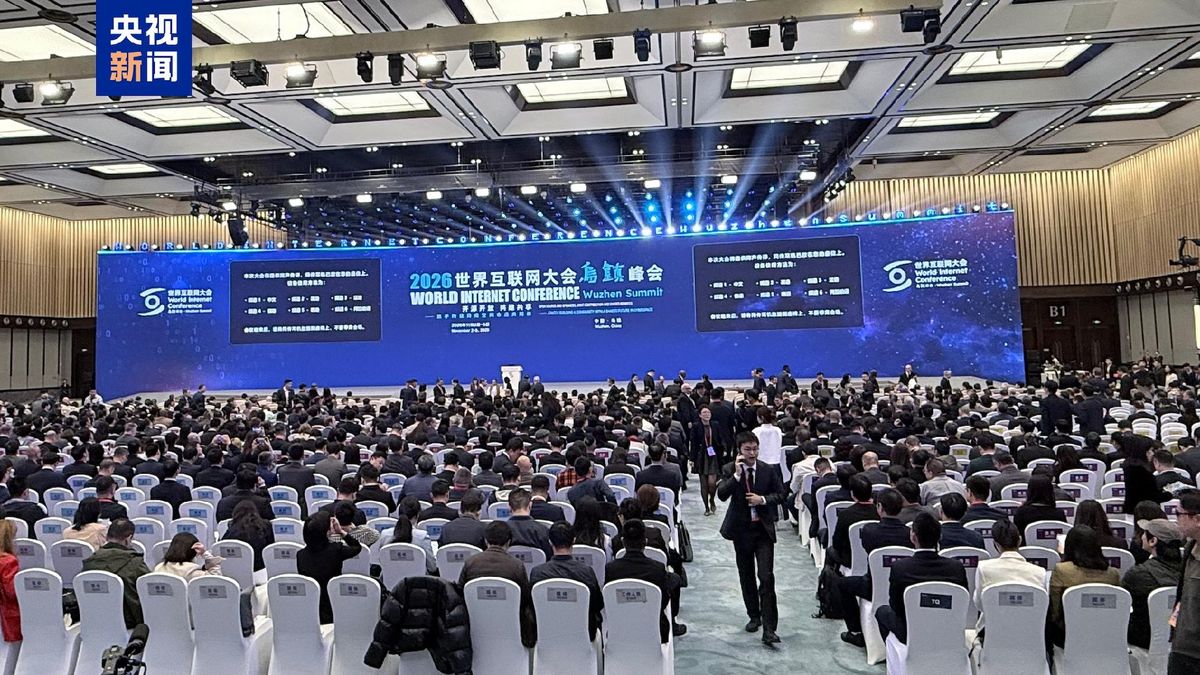
The World Internet Conference convened in the water‑town of Wuzhen, Zhejiang, on 3 November 2026 under the banner “Open Source and Openness, Collaborative Development and Shared Benefits.” Delegates from governments, multinational firms, academia and civil society gathered to discuss an emerging global open‑source AI ecosystem, showcase award‑winning projects, and launch the AI Wuzhen Dialogue that paired leading tech giants with open‑source large language model developers.
The summit featured 27 sub‑forums covering everything from cyber‑governance to embodied intelligence, and attracted 360 case submissions from 80 countries, a 21 % year‑on‑year rise. While Chinese officials, such as Academician Wang Jian, hailed the event as a catalyst for shared digital futures, Western observers noted the timing amid tightening export controls and a global scramble for AI talent.
China’s leadership has framed open‑source AI as a way to sidestep Western licensing regimes while projecting an image of collaborative stewardship. By hosting the summit, Beijing positions itself as the de‑facto hub for standards‑setting, leveraging soft power to attract developers who might otherwise gravitate toward Silicon Valley ecosystems.
Open‑source projects thrive on network effects: the more contributors, the more valuable the codebase. Chinese tech firms—Alibaba, Baidu, Tencent—are seeding these projects with proprietary data and cloud credits, subtly nudging global developers into a dependency loop that favors Chinese infrastructure services.
The summit’s emphasis on “shared benefits” doubles as a diplomatic overture to nations wary of a bifurcated internet. By inviting participants from 80 regions, China hopes to build a coalition that can collectively resist calls for a fragmented AI regulatory regime led by the United States and the European Union.
While the event promotes openness, parallel policy moves tighten export controls on high‑performance chips. This duality forces foreign firms to choose between accessing Chinese cloud resources or maintaining supply chains for cutting‑edge hardware, a dilemma that reshapes global AI investment flows.
Chinese engineers and researchers are being mobilized into state‑backed open‑source projects, often with limited transparency about data usage or intellectual‑property rights. The promise of “shared benefits” masks a reality where many workers face long hours, surveillance, and the risk of their contributions being repurposed for military AI applications.
Start‑ups in Africa, Latin America and Southeast Asia that join the open‑source ecosystem may gain visibility, yet they frequently lack the bargaining power to negotiate fair licensing terms. Their code can be incorporated into commercial products sold by large Chinese firms without equitable revenue sharing, eroding local innovation capacity.
Open‑source models trained on massive datasets often include personal information scraped from the web. When these models are deployed globally, users in participating countries may unwittingly expose their data to servers hosted in China, raising concerns about surveillance and cross‑border data flows.
The push for open‑source AI accelerates automation in sectors such as manufacturing and logistics. Workers in regions highlighted by the summit’s award cases—particularly in low‑wage economies—face job displacement without robust social safety nets, amplifying existing economic inequalities.
Chinese state media portrays the summit as a purely collaborative venture, yet internal policy documents reveal a calculated effort to embed Chinese technical standards into the global AI stack. This strategic layering is downplayed in public speeches that stress “leaving no one behind.”
Major Chinese cloud providers sponsor open‑source projects, but the financial incentives are rarely disclosed. By offering free compute credits, they lower entry barriers while simultaneously steering developers toward proprietary services that generate recurring revenue.
The summit’s rhetoric of a “shared future in cyberspace” serves to counter narratives of a “digital Cold War.” However, the emphasis on open‑source can be used to justify the export of surveillance‑grade AI tools under the guise of collaborative development, a nuance omitted from official briefings.
Discussions on AI ethics were limited to abstract principles, with no substantive debate on how open‑source models could be weaponized for repression. This omission sidesteps accountability for potential misuse in Xinjiang, Hong Kong or other regions where AI surveillance is already pervasive.
Watch for new Chinese regulations that formalize open‑source AI contributions as part of national security assessments. Such rules could require foreign developers to submit code for review, effectively granting the state a veto over global AI innovations.
The International Organization for Standardization (ISO) and the Institute of Electrical and Electronics Engineers (IEEE) will soon convene working groups on AI governance. Chinese delegates, fresh from Wuzhen, are likely to push for standards that align with their openness narrative while preserving state control.
Expect tighter licensing requirements for high‑end GPUs and AI chips destined for Chinese cloud providers. These measures will test the resilience of the open‑source ecosystem and may force developers to relocate critical infrastructure.
Cities like Nairobi and São Paulo have announced plans to host satellite events under the “Wuzhen model.” Monitoring the agendas of these offshoots will reveal how China tailors its open‑source pitch to different geopolitical audiences.
Online forums and GitHub activity will indicate whether the global developer community embraces the Chinese‑led open‑source push or retreats toward alternative ecosystems backed by Western firms. Sentiment trends will be a barometer of the summit’s long‑term influence.
By tracing these threads, readers can see beyond the polished stage of the Wuzhen summit and understand who truly benefits, who bears the cost, and what the next moves in the global AI chessboard might be.
China frames open‑source AI as a way to bypass Western licensing, attract global talent, and embed its technical standards, while also advancing state‑led AI capabilities.
They may lose control over their code, receive little financial return, and become dependent on Chinese cloud services that can repurpose their contributions for commercial or state uses.
Chinese delegates are likely to push for standards that align with their openness narrative, influencing bodies like ISO and IEEE, while Western nations may tighten export controls to limit Chinese access to advanced chips.
Source referenced: CGTN
This brief was synthesized by our Editorial Engine and reviewed by The Ground Narrative team.