TRENDING

Thursday, 17 September 2026
----------------------
6 Rabi' Al-Thani 1448 AH
Prime Minister Mark Carney’s address to the European Parliament signals a pivot away from the United States, reshaping trade, security and energy ties. The shift carries costs for workers, Indigenous communities and the U.S.‑Canada border region.
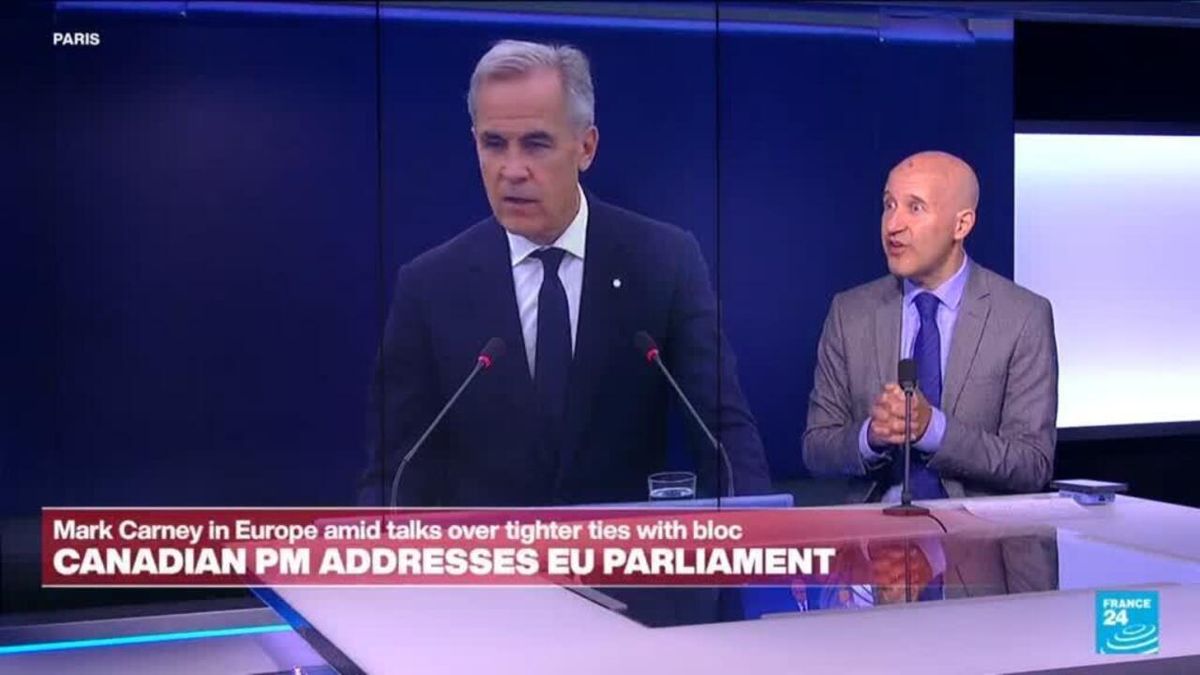
Canadian Prime Minister Mark Carney delivered a speech to the European Parliament on 17 September 2026, outlining deeper economic and security cooperation between Ottawa and Brussels. The remarks arrived as U.S.–Canada relations grew tense over trade disputes and divergent climate policies, marking the first time a Canadian premier has framed a major foreign‑policy pitch in Europe rather than Washington.
Carney’s pivot rests on three intersecting incentives. First, the EU’s green‑energy transition offers Canada a lucrative market for its hydro‑electricity and LNG, especially as Europe seeks to cut Russian gas dependence. Second, the United States is tightening export controls on critical minerals and imposing higher tariffs on Canadian lumber and steel, pressuring Ottawa to diversify its trade basket. Third, NATO’s internal debates over burden‑sharing have left Canada seeking a more visible role in European security, positioning itself as a reliable bridge between North America and the continent. The move also serves domestic political calculus: Carney can claim he is securing jobs and energy revenue while sidestepping a deteriorating relationship with a traditional ally.
The human cost of this diplomatic re‑orientation is uneven. Border towns such as Windsor and Niagara, whose economies depend on cross‑border trade, face uncertainty as customs procedures could be reshaped to favor EU routes. Indigenous communities in northern Canada, where new LNG pipelines are slated for export to Europe, risk environmental degradation and loss of traditional lands without adequate consultation. Meanwhile, American workers in the auto and aerospace sectors could see a slowdown in Canadian parts supply if tariffs persist, threatening jobs that have long been tied to the integrated North‑American market. Finally, European citizens may experience higher energy prices in the short term as Canadian LNG contracts are negotiated, shifting the burden of Europe’s energy security onto Canadian producers.
Official statements stress mutual benefit, but they downplay strategic competition with the United States. By courting the EU, Canada is subtly signaling to Washington that it can pivot if American policies become too hostile, a leverage point that may embolden U.S. lawmakers to push harder on trade concessions. Additionally, the speech glosses over regulatory gaps in Canada’s environmental assessments for new pipeline projects destined for Europe, sidestepping the growing climate‑justice critique from both Indigenous groups and European NGOs. Finally, the narrative omits the geopolitical signal to China and Russia: a stronger Canada‑EU axis could be read as a counterweight to Beijing’s Belt‑and‑Road outreach in the Arctic, potentially drawing Canada into broader great‑power rivalries.
Watch for three developments. 1) Trade negotiations between the EU and Canada on LNG and critical minerals, which will reveal the depth of economic commitment and any concessions on environmental standards. 2) U.S. legislative response, especially any moves to tighten export controls or impose retaliatory tariffs, which could force Ottawa to double‑down on Europe or seek a rapprochement with Washington. 3) Indigenous legal challenges to new pipeline permits, which could stall or reshape the energy export pipeline, altering the calculus of the Canada‑EU partnership. The interplay of these factors will determine whether Carney’s European overture becomes a lasting realignment or a temporary bargaining chip.
Source referenced: FRANCE24
This brief was synthesized by our Editorial Engine and reviewed by The Ground Narrative team.


