TRENDING
Thursday, 17 September 2026
----------------------
6 Rabi' Al-Thani 1448 AH
Ahead of its State Duma elections, Russia has systematically purged anti-war candidates and parties, silencing even symbolic dissent and consolidating the Kremlin's narrative of national unity.
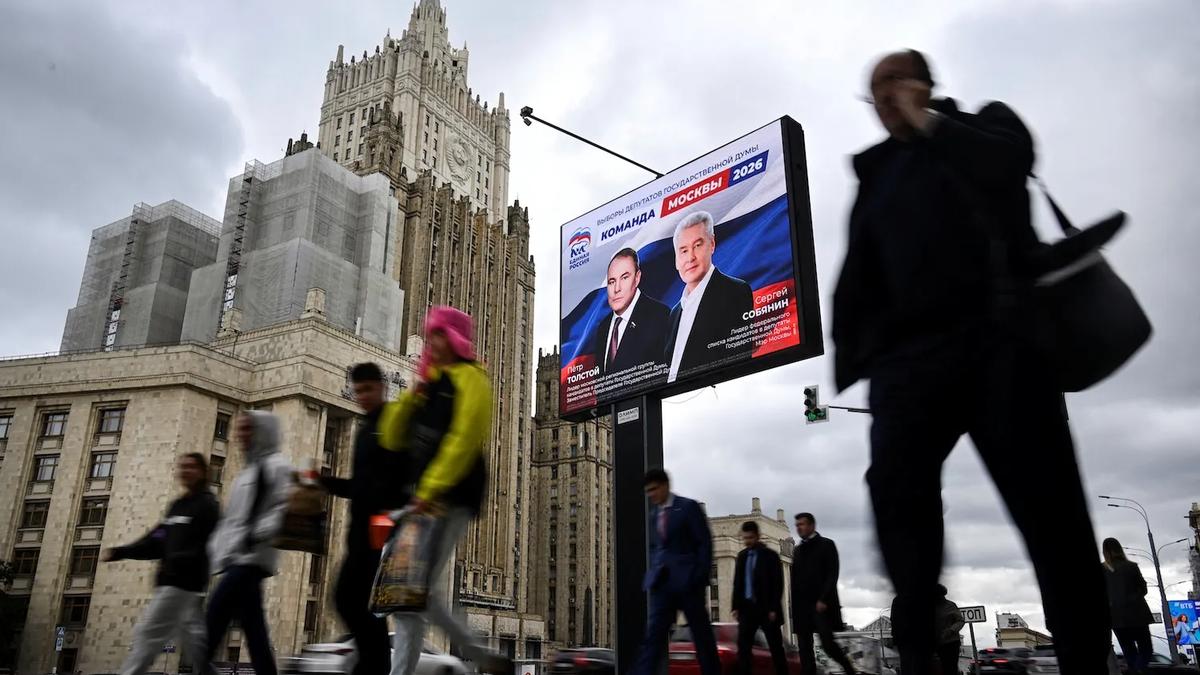
Ahead of Russia's State Duma elections, the Kremlin has moved decisively to eliminate any official platform for anti-war sentiment. Boris Nadezhdin, an independent candidate who campaigned on a peace platform, faced intense legal pressure, including a 'foreign agent' designation and charges of displaying 'extremist symbols,' ultimately forcing him into exile. Concurrently, the liberal Yabloko party, which had seen a surge in interest as the last anti-war option, was barred from the party-list ballot by a Moscow court, effectively removing the final vestiges of sanctioned opposition to the ongoing conflict in Ukraine.
This systematic removal of anti-war voices is a calculated move by the Kremlin to reinforce its narrative of unwavering public support for the war. The Russian political system, particularly the State Duma, functions not as a forum for genuine debate but as a stage for controlled consensus. The so-called 'systemic opposition' parties are largely Kremlin-aligned, offering superficial diversity without challenging core state policies. By purging figures like Nadezhdin and parties like Yabloko, the government aims to prevent any official electoral avenue for citizens to register discontent. This strategy is driven by the imperative to maintain internal stability and project an image of national unity, especially as the conflict in Ukraine continues to exact a toll and Ukrainian drones strike deeper into Russian territory. The fear is that even minor anti-war campaigns could expose underlying anxieties or coalesce latent opposition, which the Kremlin views as a direct threat to its authority and the legitimacy of its wartime policies.
The most significant human cost of this political purge falls squarely on the ordinary Russian citizens. They are effectively denied a voice, however symbolic, to express a desire for peace or an end to the conflict. For many, the choice to vote against the war, or even to express a preference for an alternative path, has been systematically removed from the ballot. This erosion of political agency fosters a climate of apathy, fear, and self-censorship, forcing individuals to internalize dissent or seek avenues of expression outside official channels, often at great personal risk. Opposition figures, like Nadezhdin, face the stark choice between imprisonment and exile, uprooting their lives and severing their connection to their country. The hollowing out of democratic institutions means that the mechanisms for peaceful political change are dismantled, pushing any future societal shifts towards potentially more volatile, non-electoral pathways.
What the Kremlin's actions implicitly reveal is a deep-seated anxiety about the true extent of public support for the war. If the official narrative of overwhelming national unity were genuinely robust, such extreme measures to silence relatively minor anti-war voices would be unnecessary. The very act of purging these candidates and parties suggests that the government fears that even a small, officially sanctioned platform for peace could tap into a broader, unexpressed desire for an end to the conflict. The surge in public interest for Yabloko and Nadezhdin's initial campaign momentum, despite the tightly controlled information environment, hints at a significant segment of the population that is not fully aligned with the state's war agenda. The 'stability' that President Putin references is therefore not a reflection of popular consensus, but rather a carefully constructed and coercively maintained facade, built upon the suppression of genuine political choice and the constant threat of state reprisal.
Going forward, observers should watch how the Kremlin frames the election results, which will undoubtedly be presented as an overwhelming endorsement of its policies. The absence of any official anti-war voice will make it harder to gauge true public sentiment, pushing dissent further underground. It will be crucial to monitor informal expressions of dissatisfaction, such as coded social media messages or subtle acts of civil disobedience. The trajectory of the war itself, particularly any significant military setbacks or escalating human and economic costs, will remain the most potent factor in shaping internal dynamics. Should the conflict continue to be protracted and costly, the pressure for internal dissent, even without formal political outlets, will inevitably grow, testing the limits of the Kremlin's control and the resilience of its carefully constructed narrative.
Source referenced: FOREIGNPOLICY
This brief was synthesized by our Editorial Engine and reviewed by The Ground Narrative team.


