TRENDING

Thursday, 17 September 2026
----------------------
6 Rabi' Al-Thani 1448 AH
China’s defense minister used the Xiangshan Forum to push a new security narrative, promising cooperation while quietly reshaping the rules that govern military power.
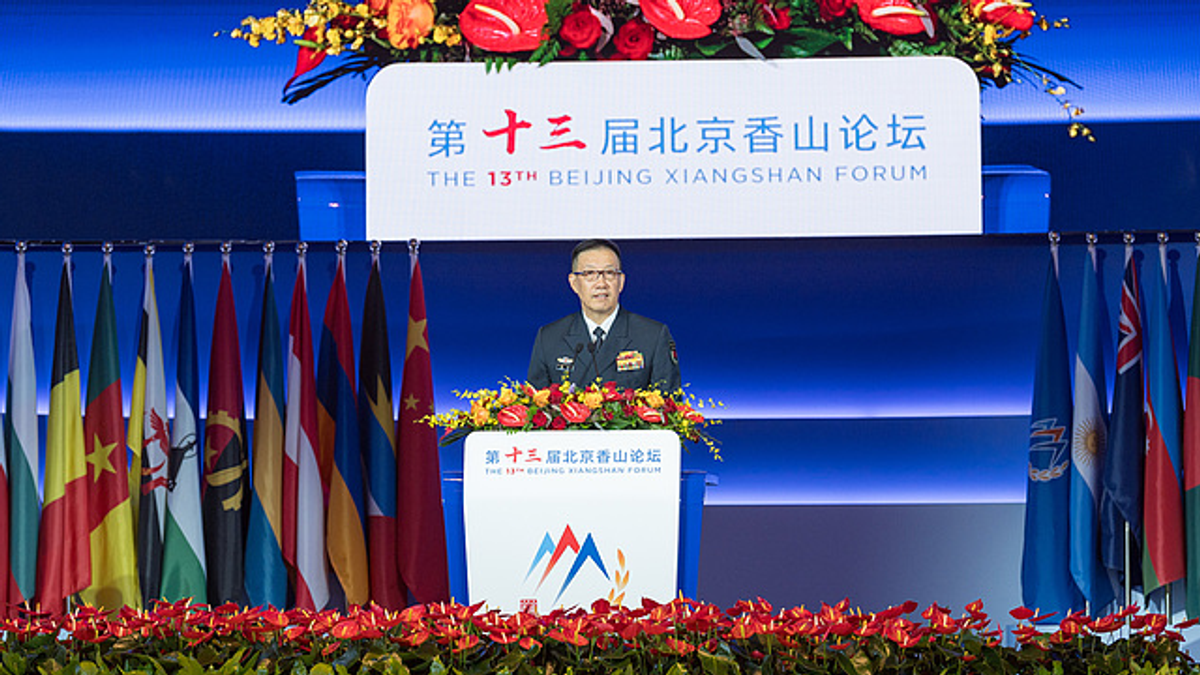
Chinese Defense Minister Dong Jun addressed the 13th Beijing Xiangshan Forum on September 16, 2026, urging “consensus and action” on global security governance. He framed the Global Security Initiative (GSI) as a multilateral project, pledged PLA assistance in disaster relief, and offered to share China’s centenary‑era military‑building experience with any interested nation.
Dong’s speech served three intertwined objectives. First, it projected China’s growing confidence as the PLA nears its centenary, showcasing a modernised force ready to export its doctrine. Second, the GSI was positioned as a normative alternative to the U.S.–led security architecture, inviting countries to “co‑create” rules that accommodate Chinese strategic interests—particularly in the Indo‑Pacific and emerging domains like cyber and space. Third, the forum’s semi‑official Track 1.5 format allowed Beijing to host a wide swath of foreign officials, scholars, and think‑tank representatives under the guise of open dialogue, while subtly steering conversations toward acceptance of Chinese‑led initiatives. The underlying incentive is clear: by framing security as a shared public good, China seeks to legitise its own maritime claims, its Belt‑and‑Road infrastructure, and its expanding overseas bases without overtly confronting existing alliances.
The rhetoric of “shared development” masks concrete costs for smaller states. Nations that sign onto the GSI may find their defence budgets increasingly tied to Chinese equipment, training, and logistics, limiting policy autonomy. In regions like Africa and Southeast Asia, Chinese disaster‑relief promises often come bundled with infrastructure contracts that lock local economies into debt cycles. Meanwhile, PLA modernization diverts resources from domestic social programs, affecting rural health, education, and housing for millions of Chinese citizens. The emphasis on “public‑goods” delivery also obscures the human toll of China’s own security actions—such as the militarisation of the South China Sea, which has disrupted fishing communities and forced relocations.
Official statements omitted any reference to China’s recent coercive actions: the tightening of the Taiwan Strait, the enforcement of the “nine‑dash line,” or the cyber‑espionage campaigns attributed to PLA units. By foregrounding disaster relief and multilateralism, the speech downplays how the GSI could become a vehicle for exporting surveillance technologies and dual‑use capabilities that strengthen authoritarian governance abroad. Moreover, the forum’s claim of “equal dialogue” masks a power asymmetry—China controls the agenda, the venue, and the narrative, while participating states must navigate a diplomatic tightrope between cooperation and criticism.
Watch for three signals. One, the rollout of concrete GSI projects—joint exercises, infrastructure‑security packages, or data‑sharing agreements—will reveal how Beijing translates rhetoric into operational influence. Two, the reaction of the United States, NATO, and regional coalitions: joint statements, counter‑forums, or increased military deployments will indicate whether the GSI is being treated as a genuine partnership or a strategic challenge. Three, domestic Chinese discourse around the PLA’s centenary: heightened patriotic messaging and budget allocations could intensify the push for overseas security engagements, potentially straining China’s own social safety nets. The convergence of these trends will shape whether the GSI remains a diplomatic veneer or becomes a new pillar of global security governance.
Editor's Note: Analysis based on publicly available statements and known strategic patterns.
Source referenced: CGTN
This brief was synthesized by our Editorial Engine and reviewed by The Ground Narrative team.


