TRENDING

Thursday, 17 September 2026
----------------------
6 Rabi' Al-Thani 1448 AH
Myanmar's civil war, now in its fifth year, is increasingly sustained by a dedicated Christian diaspora in the US, whose financial support is entangled with complex American political loyalties and the shifting landscape of international aid.
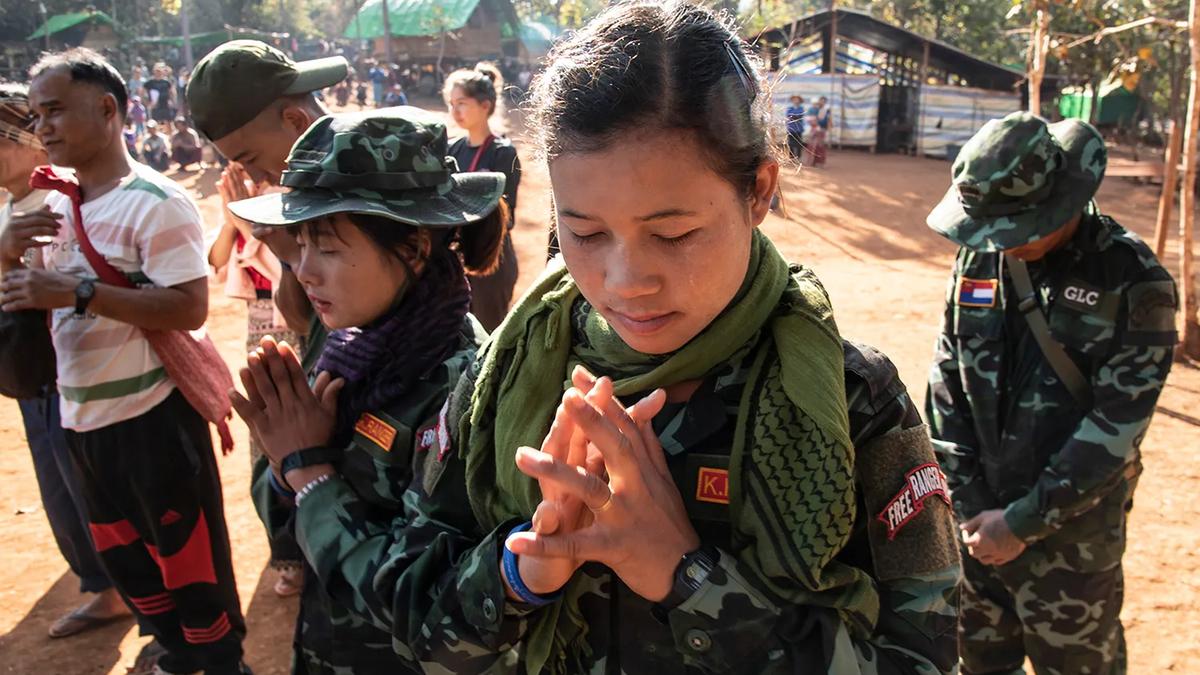
Myanmar's civil war, ignited by the 2021 military coup, continues to rage, pushing the country into a humanitarian crisis. While often overlooked by mainstream Western media, the conflict is significantly funded and supported by Myanmar's Christian diaspora, primarily settled in the US Midwest. These communities, many of whom arrived as refugees, channel earnings from everyday jobs into the resistance movement, leveraging their ties to the US Christian right and the 'Make America Great Again' movement, even as US government aid to Myanmar has been curtailed.
At the heart of this conflict's endurance is the remarkable financial power of a diaspora. Refugees from Myanmar, having found new lives in the US, particularly in states like Indiana and Minnesota, are sending back substantial funds. These remittances, earned in meat-packing plants, distribution centers, and restaurants, form a critical lifeline for the resistance against the junta. This direct funding model, often crowdfunded through social media and church networks, bypasses traditional aid channels, giving the diaspora significant, albeit informal, leverage. On the ground, resistance groups, particularly in Christian-majority regions like Chin State, become heavily reliant on these funds, creating a delicate political tightrope: they cannot afford to alienate their US-based benefactors, many of whom are staunch supporters of figures like Donald Trump, despite his administration's cuts to humanitarian aid and refugee programs for Myanmar. The junta, meanwhile, exploits religious divisions, employing Buddhist nationalism to specifically target Christian sites and communities, adding an ideological dimension to its brutal military campaign and further entrenching the diaspora's religious motivation for support.
The human cost of this dynamic is borne by multiple groups. For the people inside Myanmar, particularly those displaced by the conflict, the sudden cancellation of US Agency for International Development (USAID) programs has led to a spike in hunger and death. Volunteer groups like the Free Burma Rangers, while dedicated, are overwhelmed and cannot sustainably meet the needs of vast refugee populations. On the ground, resistance fighters face a harrowing reality: not only are they subjected to the junta's indiscriminate airstrikes, abductions, and torture, but they also navigate a political bind. Their survival depends on funding from a diaspora that often aligns with US political figures who have reduced official aid, forcing them to temper their own political opinions to maintain financial flows. For the diaspora members in the US, their commitment means working demanding jobs to send money home, living with constant anxiety for their loved ones, and grappling with the moral complexities of their political allegiances and the consequences of US policy decisions on their homeland.
What often goes unacknowledged by powerful actors, including the US government and even some within the diaspora, are the significant trade-offs inherent in this situation. The US government, while condemning the coup, has simultaneously reduced official aid and refugee intake, creating a vacuum that private, often religiously motivated, funding attempts to fill. This selective engagement allows Washington to maintain a critical stance without fully committing to the humanitarian consequences of the conflict or the long-term support of the resistance. The alignment of the diaspora's Christian nationalism with segments of the US right, while providing a powerful funding channel, also risks narrowing the focus of support to specific religious groups and potentially overlooking the broader, multi-ethnic, and secular aspects of the resistance. Furthermore, the reliance on crowdfunding and volunteer efforts, while heroic, is not a sustainable or comprehensive solution for a protracted civil war and massive displacement. The transactional nature of this support, where political alignment can influence funding, creates internal tensions within the resistance that are rarely discussed openly, yet profoundly impact their unity and strategic choices.
Looking ahead, several factors will shape the trajectory of Myanmar's conflict and the diaspora's role. The outcomes of future US election cycles will be critical, determining whether humanitarian aid and refugee programs are reinstated or further curtailed, directly impacting the ground situation. Observers should also watch the junta's strategy regarding religious persecution; any escalation could further galvanize the Christian diaspora but also intensify the conflict's sectarian dimensions. The long-term sustainability of diaspora funding is another key unknown; as economic conditions in the US fluctuate, the ability of these communities to maintain their current level of support may diminish. Finally, the internal dynamics of Myanmar's resistance will bear close watching. How they navigate the political pressures from their funders, maintain unity across diverse ethnic and religious lines, and adapt to the evolving landscape of international support will be crucial to their struggle against the junta.
Source referenced: FOREIGNPOLICY
This brief was synthesized by our Editorial Engine and reviewed by The Ground Narrative team.


