TRENDING

Thursday, 17 September 2026
----------------------
6 Rabi' Al-Thani 1448 AH
Canadian Prime Minister Mark Carney urged the EU to forge a deep partnership covering critical minerals, AI and defence, positioning Canada as a potential associate member. The proposal reshapes trade ties while exposing the stakes for workers, communities and smaller economies caught in the power play.
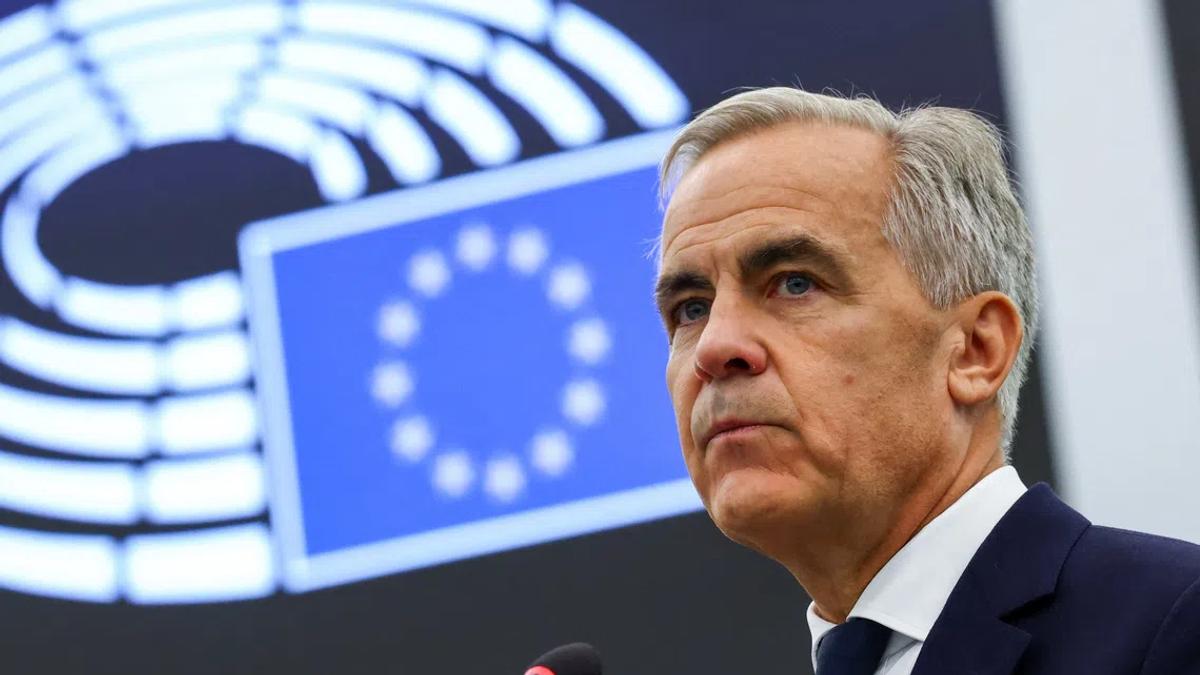
Canadian Prime Minister Mark Carney addressed the European Parliament in Strasbourg on September 17, 2026, calling for a sweeping alliance with the European Union. He highlighted joint action on critical minerals, artificial intelligence, defence industrial capacity, energy security and seamless digital trade, and referenced the EU’s invitation for Canada to become its first associate member.
Carney’s overture rests on three intersecting incentives. First, both Canada and the EU face supply‑chain vulnerabilities: Europe’s push for green tech demands rare‑earths and lithium, while Canada seeks stable markets for its burgeoning LNG and hydrogen projects. By bundling mineral access with AI research and defence co‑production, the alliance creates a reciprocal dependency that can blunt external pressure, especially from China and the United States, who vie for the same resources.
Second, the proposal serves domestic political calculus. In Canada, a recent poll shows a clear majority favouring closer ties with Europe, giving the Liberal government a narrative of proactive, values‑based foreign policy that contrasts with perceived U.S. unilateralism. For the EU, an associate membership offers a showcase of multilateralism after recent strains on the WTO and NATO, reinforcing the bloc’s image as a rule‑based actor.
Third, the economic math is compelling. Joint investment in AI and digital trade could unlock billions in cross‑Atlantic services, while coordinated defence procurement spreads R&D costs across a larger industrial base. The move also signals to private capital that the Canada‑EU corridor will be insulated from tariff spikes, encouraging long‑term infrastructure projects such as northern ports and hydrogen pipelines.
The human cost of this high‑level deal will be felt most acutely in mining towns across northern Canada and the European Balkans, where new extraction projects could exacerbate environmental degradation and strain local services. Indigenous communities risk further marginalisation if mineral licences are fast‑tracked without meaningful consent, echoing past disputes over pipelines and mines.
In Europe, workers in legacy industries—steel, coal and traditional automotive—face the prospect of rapid automation as AI integration accelerates. While the alliance promises high‑skill jobs, the transition may leave low‑skill labour exposed to layoffs and wage pressure. Moreover, the push for seamless digital trade could sideline small‑scale exporters unable to meet stringent data‑security standards, concentrating market power in large multinational firms.
Official statements stress shared democratic values, yet both governments downplay the strategic calculus of limiting rival influence. By tightening supply chains around critical minerals, Canada and the EU effectively create a gatekeeper that can restrict access for countries like China, Russia or even the United States if political frictions arise. This subtle exclusionary intent is rarely highlighted in diplomatic rhetoric.
Additionally, the emphasis on “open” digital trade masks a growing push for data sovereignty. European regulators are likely to embed strict data‑localisation clauses, which could force Canadian tech firms to restructure operations, benefitting larger EU platforms that already meet those standards. The narrative of mutual benefit therefore conceals an asymmetry that favours entities already entrenched in the European market.
Watch for three concrete developments. First, the EU’s formal legislative package on associate membership, expected by early 2027, will reveal the exact scope of regulatory alignment—particularly around data, AI ethics and mineral licensing. Second, Canadian parliamentary debates on Indigenous consultation for new mining projects will test whether the alliance’s rhetoric on “human dignity” translates into policy. Finally, the response of the United States, which has signalled concern over any bloc that could dilute its influence in the Atlantic, will shape whether the Canada‑EU partnership becomes a bridge or a wedge in broader trans‑Atlantic relations.
Source referenced: STRAITSTIMES
This brief was synthesized by our Editorial Engine and reviewed by The Ground Narrative team.


