TRENDING

Sunday, 20 September 2026
----------------------
9 Rabi' Al-Thani 1448 AH
The United States handed over 64 cultural artifacts to China, sparking a quiet power play that reaches beyond museums into trade, law enforcement, and diplomatic leverage.
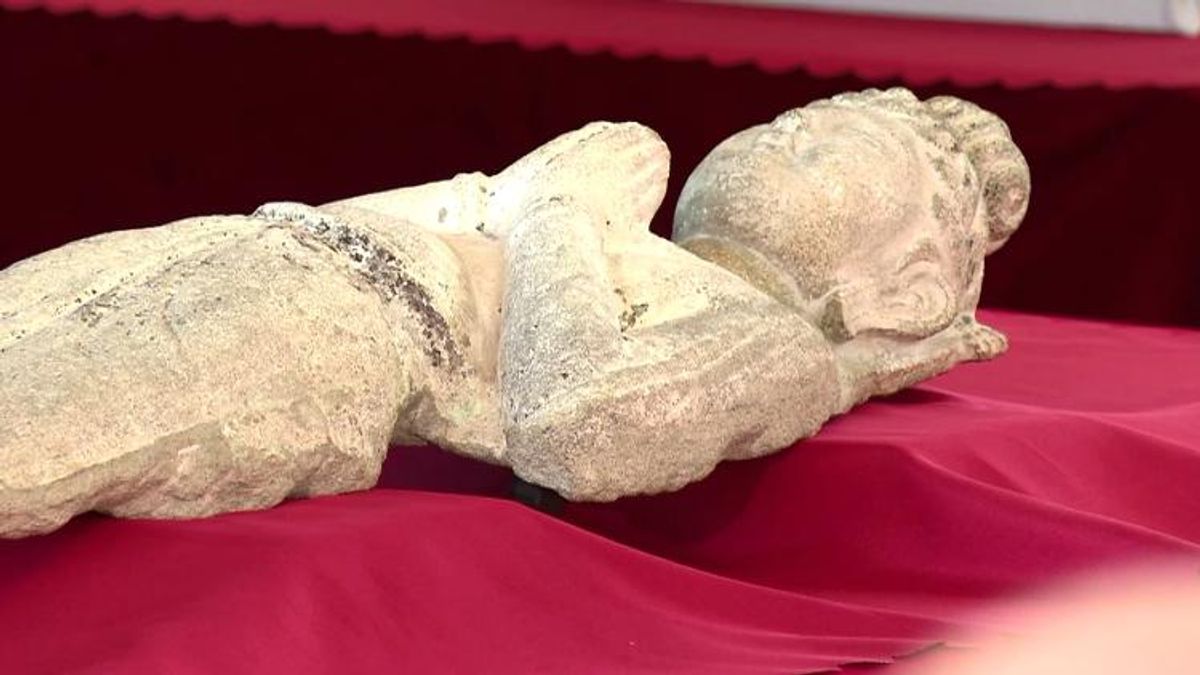
On September 16 and 18, 2026, U.S. Homeland Security Investigations in Washington, D.C., and the Manhattan District Attorney’s Office in New York returned two batches of cultural relics—64 items in total—to China’s National Cultural Heritage Administration. The haul included a bodhisattva torso from the Tianlongshan Grottoes, terracotta figures, dinosaur skeletons, fish fossils, and dinosaur egg fossils. This marks the fifth time the Manhattan DA’s Office has repatriated Chinese artifacts under a 2009 memorandum of understanding (MOU) that the two governments have extended three times.
The repatriation is not merely a cultural goodwill gesture; it is a convergence of several structural forces. First, the 2009 MOU creates a legal framework that obliges U.S. agencies to cooperate with Chinese authorities on illicit cultural trade, turning a diplomatic promise into an operational mandate for customs and law‑enforcement bodies. Second, the U.S. faces mounting pressure from domestic advocacy groups and the art market to tighten controls on looted artifacts, a pressure that dovetails with broader concerns about illicit finance and money‑laundering pathways. Third, China leverages cultural heritage as a soft‑power asset, using returned artifacts to bolster nationalist narratives and to showcase its capacity to reclaim historical patrimony. The return also serves a pragmatic purpose: it eases bilateral friction in other arenas—trade, technology, and regional security—by providing a low‑stakes concession that can be framed as a win for both sides. Finally, the involvement of the Manhattan DA’s Office signals the growing role of U.S. prosecutors in transnational cultural crime, aligning legal enforcement with diplomatic objectives.
While diplomats and prosecutors exchange statements, the real beneficiaries and victims are far removed from the conference tables. In China, local museum curators and heritage workers finally gain access to artifacts that can attract tourists, generate ticket revenue, and reinforce regional identity—especially in Shanxi, where the Tianlongshan Grottoes are a cultural anchor. Conversely, the illicit antiquities market—often operating in the shadows of major auction houses—loses a lucrative supply line, squeezing profit margins for dealers who rely on smuggled items to satisfy high‑end collectors. In the United States, small‑scale illegal excavators and middlemen face heightened risk of detection, potentially driving them deeper underground or prompting a shift toward other contraband. Communities in source countries, historically deprived of their heritage, see a symbolic restoration, yet the material benefits rarely reach the original custodians, who remain marginalized in the global heritage economy.
Official narratives highlight cultural cooperation, but they downplay the strategic calculus behind the hand‑over. The U.S. is simultaneously navigating a fraught relationship with China over technology bans, supply‑chain security, and Taiwan. By delivering a high‑profile cultural concession, Washington can claim diplomatic goodwill without ceding leverage in more contentious domains. Moreover, the focus on “return” obscures the fact that many of these items entered the U.S. market through private collectors, auction houses, and even academic institutions that benefited financially from their sale. The financial incentives for these intermediaries are rarely disclosed, and the legal gray zones that allow such transactions persist. Finally, the MOU’s extensions are presented as routine cooperation, yet each renewal subtly re‑balances the power equation, granting China a diplomatic foothold to demand future concessions in unrelated policy areas.
Watch for three developments. First, the U.S. Justice Department may expand its prosecutorial reach, targeting not just the import of artifacts but also the financial networks that facilitate their trade, potentially leading to broader crackdowns on art‑market money laundering. Second, China is likely to use the returned relics in high‑visibility exhibitions that coincide with diplomatic visits or trade negotiations, turning cultural capital into political capital. Third, other source nations—such as Egypt, Italy, and Peru—are monitoring the U.S.–China precedent and may push for similar repatriation agreements, reshaping the global market for antiquities. The interplay of legal enforcement, soft‑power signaling, and economic interests will determine whether these returns remain isolated gestures or become a template for future cultural diplomacy.
Source referenced: CGTN
This brief was synthesized by our Editorial Engine and reviewed by The Ground Narrative team.


