TRENDING

Friday, 18 September 2026
----------------------
7 Rabi' Al-Thani 1448 AH
Saudi Prince Turki Al-Faisal advocated for diplomacy over military solutions to Middle East conflicts at a Beijing forum. This signals a potential shift in Saudi foreign policy and highlights China's growing role as a regional mediator.
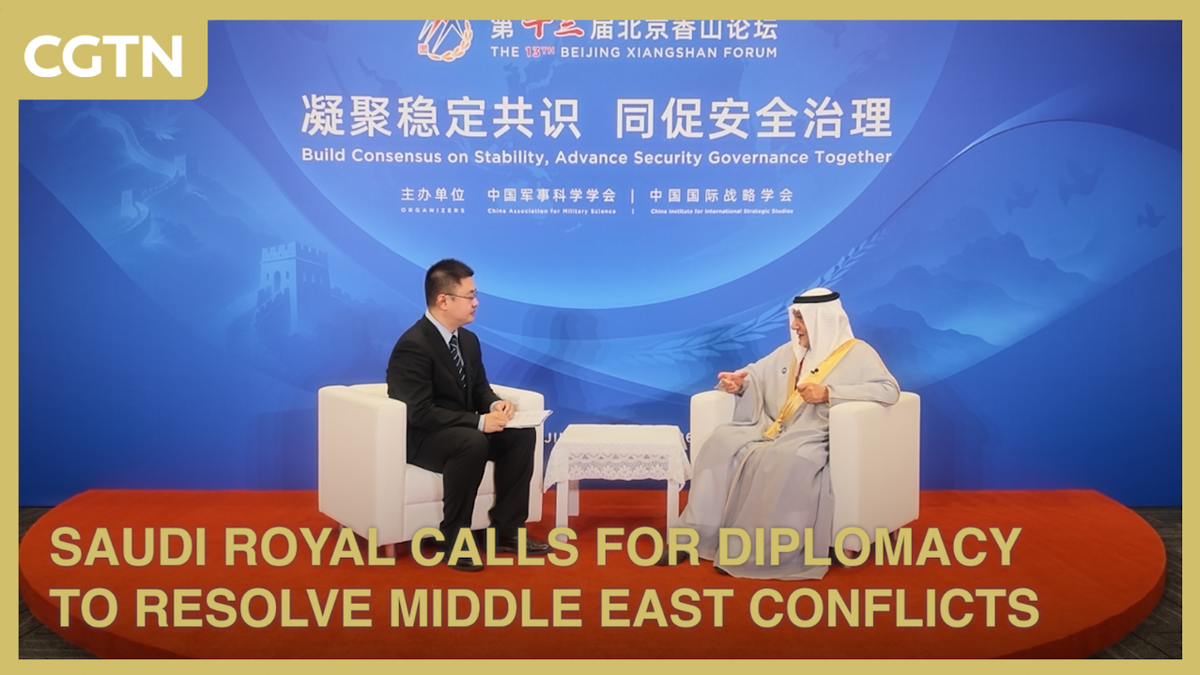
At the Beijing Xiangshan Forum, Prince Turki Al-Faisal, a prominent Saudi royal and chairman of the King Faisal Center for Research and Islamic Studies, publicly called for diplomacy and international cooperation to resolve the Middle East's myriad conflicts. His remarks emphasized that negotiations should take precedence over military confrontation, a notable statement given the region's recent history.
This isn't merely a polite diplomatic gesture; it reflects a significant recalibration of power dynamics. For years, Saudi Arabia has pursued an assertive, often militarized, foreign policy in the Middle East, notably in Yemen and through its rivalry with Iran. This public pivot towards diplomacy, particularly at a forum hosted by China, signals several underlying shifts. First, it underscores Saudi Arabia's pragmatic turn, driven by the economic imperatives of its Vision 2030, which demands regional stability to attract investment and diversify its economy away from oil. Prolonged conflict is a direct threat to these ambitions. Second, China's role as the host and a platform for such a statement highlights its growing influence as an alternative power broker in a region traditionally dominated by the United States. Beijing benefits from regional stability for its Belt and Road Initiative and its vast energy security needs, positioning itself as a neutral mediator. This move by Riyadh suggests a deliberate diversification of its security and diplomatic partnerships, signaling a potential reduction in its singular reliance on Western powers.
The human cost of the Middle East's conflicts is staggering, yet rarely centered in high-level diplomatic discussions. While princes speak of diplomacy, millions of ordinary citizens bear the brunt of military confrontations. In Yemen, years of conflict have created one of the world's worst humanitarian crises, with widespread displacement, famine, and a collapsed healthcare system. In Syria, Iraq, and other flashpoints, infrastructure lies in ruins, economies are shattered, and entire generations have grown up knowing only war. The call for diplomacy, while welcome, comes after immense suffering, and the path to peace will be long and arduous for those whose lives have been irrevocably altered. Their voices, often unheard, are the true measure of the region's instability.
What is often downplayed in such diplomatic pronouncements is the historical role of powerful actors, including Saudi Arabia itself, in contributing to the very conflicts they now seek to resolve. While the Prince advocates for negotiation, Riyadh has been a key player in escalating regional tensions through military interventions and proxy engagements. The call for diplomacy, while forward-looking, subtly sidesteps accountability for past actions and the complex web of grievances that fuel ongoing strife. Furthermore, China's presentation as a neutral arbiter, while strategically effective, obscures its own self-interest in securing stable energy supplies and trade routes, rather than purely altruistic peace-making. The real challenge lies not just in talking peace, but in dismantling the structural incentives for conflict and addressing the root causes of instability, which often involve the powerful actors themselves.
Readers should closely watch for concrete actions that follow this diplomatic rhetoric. Will Saudi Arabia translate its call for peace into tangible de-escalation, particularly in long-standing conflicts like Yemen, and continue its rapprochement with regional rivals like Iran? Observe how China leverages this newfound diplomatic capital; will it successfully broker more significant peace deals, and how will this impact its standing relative to the United States in the region? Finally, monitor the reactions from Washington and other Western capitals. Will they perceive this as a challenge to their influence, prompting their own renewed diplomatic efforts, or will it further accelerate a multi-polar shift in Middle East security arrangements? The true test of this diplomatic overture will be its ability to translate words into a sustained reduction of human suffering on the ground.
Source referenced: CGTN
This brief was synthesized by our Editorial Engine and reviewed by The Ground Narrative team.