TRENDING

Sunday, 20 September 2026
----------------------
9 Rabi' Al-Thani 1448 AH
Former Chilean president Michelle Bachelet quit the race for UN secretary‑general after far‑right President José Antonio Kast pulled his support, reshaping the power balance behind the next global leader.
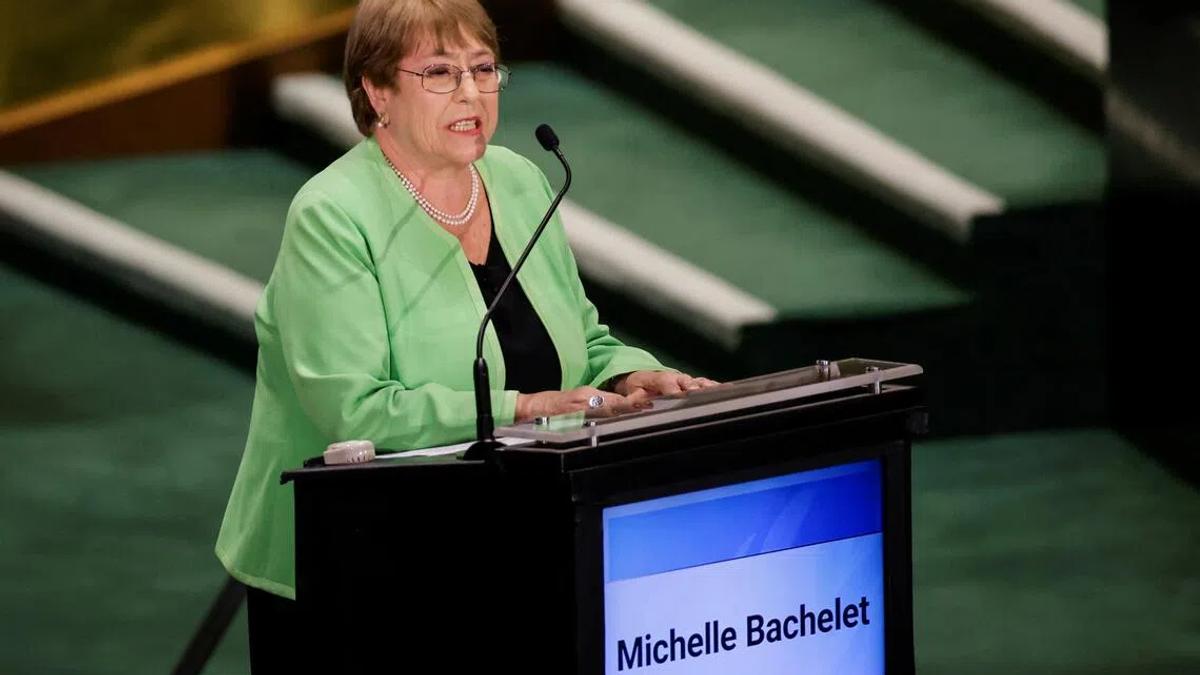
Former Chilean president Michelle Bachelet announced on September 19 that she is withdrawing from the United Nations secretary‑general race. Her exit follows a straw poll that placed her near the bottom of eight candidates and the recent decision by Chile’s new far‑right president, José Antonio Kast, to withdraw his backing.
The UN secretary‑general selection is an informal, multi‑stage process dominated by the 15‑member Security Council. While the broader UN membership votes in a straw poll, the final appointment hinges on the veto power of the five permanent members and the regional rotation norm that, this cycle, favors a Latin American candidate. Bachelet entered the race with the endorsement of Chile’s left‑wing former president Gabriel Boric and the backing of Mexico and Brazil’s leftist leaders, positioning her as a bridge between the region’s progressive bloc and the UN’s gender‑balance agenda.
Kast’s withdrawal is more than a personal political statement; it signals a shift in Chile’s foreign‑policy calculus. By distancing himself from a candidate associated with the previous left‑leaning administration, Kast aims to align Chile with the emerging right‑wing coalition in Latin America, which is increasingly skeptical of multilateral institutions perceived as dominated by Western liberal norms. The move also eases pressure on the United States and European powers, who have expressed reservations about a former socialist president leading the UN, fearing she might tilt the agenda toward human‑rights interventions that could clash with their strategic interests in the Global South.
Meanwhile, the Security Council’s informal polls have already elevated Rebeca Grynspan of Costa Rica and Carolyn Rodrigues‑Birkett of Guyana. Both candidates are seen as more palatable to the P5, offering continuity on climate, development, and conflict‑prevention without the ideological baggage that Bachelet carries from her tenure in Chile’s turbulent political landscape.
The immediate human cost falls on Chilean citizens who see their country’s diplomatic clout wane. Bachelet’s candidacy had galvanized civil‑society groups advocating for gender parity and Latin American representation at the UN’s helm. Her withdrawal dampens hopes for a symbolic breakthrough: a woman from the region leading the organization for the first time. It also curtails the momentum of grassroots campaigns that linked Chile’s domestic reforms—such as pension overhauls and gender‑based violence legislation—to a broader push for progressive governance on the world stage.
Beyond Chile, women across Latin America lose a high‑profile rallying point. The UN’s 80‑year history without a female secretary‑general has been a rallying cry for feminist movements worldwide; Bachelet’s exit removes a concrete example of a woman breaking the highest diplomatic glass ceiling.
Official statements frame Kast’s decision as a “respect for the UN process,” but they omit the strategic calculus of aligning Chile with a right‑leaning bloc that is increasingly courting China and Russia for economic and security partnerships. By stepping back, Chile signals openness to a candidate who will not challenge the status quo of great‑power competition within the UN, thereby preserving the delicate balance that allows the P5 to retain veto leverage.
Moreover, the narrative downplays how the UN’s internal power brokers—particularly the United States, the European Union, and the United Kingdom—have quietly lobbied for a candidate who will keep the organization’s agenda within a familiar liberal framework. Bachelet’s progressive track record on gender equality, climate justice, and human‑rights accountability threatened to push the UN’s agenda further left, a prospect that senior diplomats from these powers have been keen to avoid.
Watch the next Security Council straw poll, scheduled for early October, where the P5 will likely coalesce around a candidate acceptable to all five permanent members. Pay attention to any behind‑the‑scenes diplomatic shuttles between the United States, the EU, and the emerging Latin American right, as they may shape the final shortlist.
Regional blocs—MERCOSUR, the Pacific Alliance, and the Caribbean Community—will also vie to position their preferred candidate, testing whether the informal regional rotation norm can survive the growing ideological split in Latin America. Finally, monitor how feminist NGOs and civil‑society coalitions respond; a coordinated push for a gender‑balanced outcome could pressure the Security Council into a compromise that still delivers a woman, albeit one more aligned with the great‑power consensus.
The outcome will reveal whether the UN’s leadership selection remains a venue for incremental reform or reverts to a predictable affirmation of the existing power structure.
Source referenced: STRAITSTIMES
This brief was synthesized by our Editorial Engine and reviewed by The Ground Narrative team.


