TRENDING

Saturday, 19 September 2026
----------------------
8 Rabi' Al-Thani 1448 AH
Iran's recent mass mobilization in Tehran, featuring military hardware and pledges of popular defense, signals a dual message of internal resolve and external deterrence. This display, however, comes with significant human and economic costs for ordinary citizens.
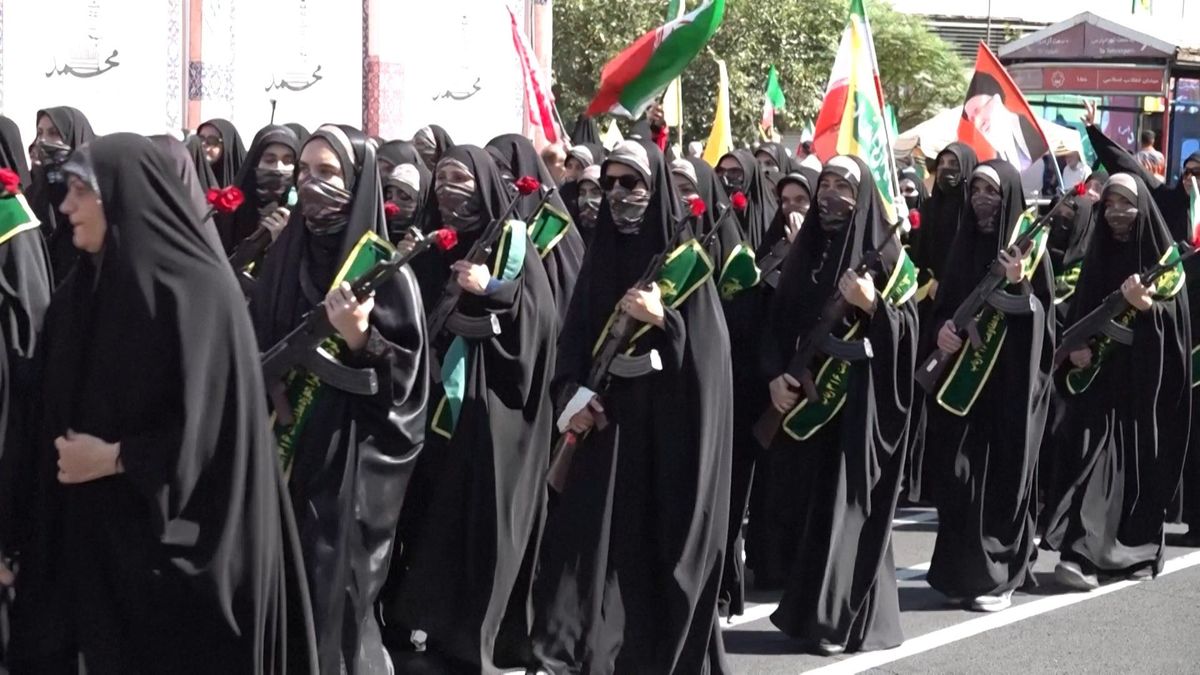
Iran recently orchestrated a large-scale mobilization campaign in its capital, Tehran, featuring hundreds of thousands of participants. The event showcased military assets, including anti-aircraft guns and Shaheed drones, alongside armed women, all pledging to take up arms as part of a broader national defense initiative. This public demonstration was framed by state media as a powerful show of force and popular unity.
This mobilization serves multiple, interconnected power objectives for the Iranian establishment. Internally, it aims to project an image of unwavering popular support and national cohesion, particularly to counter any latent dissent or economic grievances among the population. By involving a vast number of citizens, including women, and displaying military hardware, the regime reinforces its narrative of a resilient, self-reliant nation prepared to defend its values and territory. This public display is a crucial tool for regime survival, signaling to its own people that the state commands widespread loyalty and military readiness.
Externally, the show of force is a clear message of deterrence directed at regional rivals—such as the Saudi-led naval coalition mentioned in related news—and global adversaries, primarily the United States and Israel. The presence of Shaheed drones, which have seen extensive use in regional conflicts, underscores Iran's asymmetric warfare capabilities and its willingness to project power beyond its borders. The display of anti-aircraft guns highlights a defensive posture, signaling readiness against potential aerial threats. This carefully choreographed event is designed to raise the perceived cost of any military action against Iran, thereby influencing the strategic calculations of its opponents and bolstering its position in regional power dynamics.
The human cost of such grand displays of power is often borne by the very citizens they claim to represent. For ordinary Iranians, these mobilizations are not merely symbolic; they represent a significant diversion of national resources toward military posturing and away from pressing social and economic needs. In a country grappling with international sanctions, high inflation, and unemployment, the funds and logistical effort expended on staging events of this magnitude could otherwise be directed towards improving healthcare, education, or infrastructure. Furthermore, while presented as spontaneous popular support, participation in such events can often be influenced by state incentives, social pressure, or even subtle coercion, blurring the lines between genuine enthusiasm and obligatory attendance. The constant emphasis on military readiness also perpetuates a climate of tension and potential conflict, impacting the psychological well-being and future prospects of a generation growing up under the shadow of geopolitical confrontation.
What official statements and state media often downplay or omit is the true extent of internal dissent and the economic fragility masked by these shows of strength. While hundreds of thousands may march, the actual depth of popular commitment to the regime's military doctrine is complex and often exaggerated. The spectacle aims to create an illusion of monolithic unity, but beneath the surface, significant segments of the population grapple with economic hardship and desire greater social and political freedoms. Governments and state-controlled media rarely acknowledge the economic strain imposed by maintaining a large military apparatus and funding proxy operations, especially when these costs directly impact the daily lives of citizens. The narrative of national defense often serves to deflect attention from domestic governance challenges and to rally support against external threats, real or perceived, thereby consolidating power without addressing underlying societal grievances.
Moving forward, observers should watch for several key indicators. Firstly, monitor the reactions from regional powers and the United States. Any escalation in rhetoric or military exercises from these actors could signal a heightened state of alert. Secondly, pay close attention to Iran's internal economic indicators and any signs of public unrest. If the economic situation deteriorates further, the regime's ability to maintain popular support through such mobilizations may diminish. Thirdly, observe developments in regional proxy conflicts where Iran's influence is a factor, as these often serve as testing grounds for its military capabilities and strategic resolve. The interplay between internal stability, economic pressures, and external deterrence will dictate the next phase of Iran's geopolitical maneuvering.
Source referenced: ALJAZEERA
This brief was synthesized by our Editorial Engine and reviewed by The Ground Narrative team.


