TRENDING

Friday, 18 September 2026
----------------------
7 Rabi' Al-Thani 1448 AH
U.S. officials met Houthi envoys in Oman as President Trump refused Saudi Arabia’s request for direct military aid, exposing a clash between election politics, regional power games, and the lives of Yemen’s civilians.
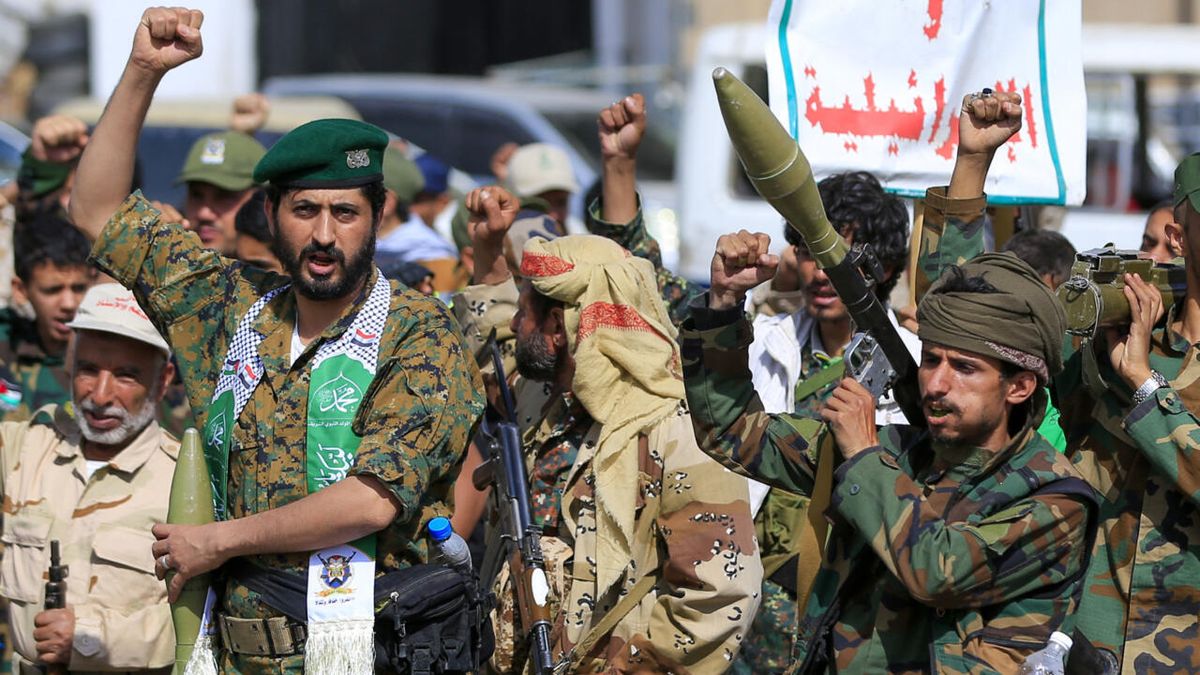
U.S. diplomats convened with representatives of Yemen’s Iran‑backed Houthi movement in Muscat over the weekend, days after the militia seized a vital Red Sea corridor previously held by Saudi‑backed forces. President Donald Trump publicly rebuffed Saudi pleas for fresh American military support, leaving the kingdom to reassess its options in a rapidly shifting battlefield.
The episode sits at the intersection of three competing incentive structures. First, Trump’s domestic calculus: with the 2028 election looming, the president is wary of a new overseas entanglement that could inflame anti‑war sentiment and drain political capital. Second, Saudi Arabia’s strategic reliance on U.S. security guarantees to protect its southern flank and safeguard oil export routes; the kingdom’s request reflects a fear that a Houthi‑controlled Red Sea could choke global energy flows and erode its regional hegemony. Third, Iran’s indirect leverage through the Houthis, which allows Tehran to project power without overtly deploying its own forces, keeping the U.S. and Saudi Arabia occupied while preserving Iran’s own diplomatic cover. Oman’s role as a neutral venue underscores its long‑standing policy of quiet mediation, offering a back‑channel that lets the U.S. test diplomatic waters without committing troops.
While leaders trade statements, ordinary Yemenis bear the brunt. The Houthi offensive has disrupted the delivery of food, medicine, and fuel to coastal communities that already depend on precarious humanitarian corridors. Saudi‑backed forces, many of whom are conscripts from the Gulf’s lower‑income strata, face heightened casualty risks as they scramble to plug gaps left by absent U.S. air support. Global shipping firms report rising insurance premiums and rerouted vessels, costs that ultimately filter down to consumers worldwide, especially in Europe and Asia, who pay more for oil and container goods. In the United States, taxpayers fund the broader strategic posture—intelligence, naval patrols, and potential contingency plans—without seeing a direct benefit.
Official statements emphasize “strategic patience” and “regional stability,” but they downplay two critical dimensions. First, the U.S. is using the Oman talks to gauge Iran’s willingness to negotiate indirectly, sidestepping a formal diplomatic overture that could be portrayed as a concession. Second, the refusal to back Saudi Arabia is framed as a principled stance, yet it also shields the administration from a costly arms sales push that would lock the Pentagon into a long‑term supply chain with Saudi defense firms. Both moves serve to keep the U.S. narrative focused on “preventing escalation” while quietly preserving flexibility for future policy shifts, whether toward deeper engagement or a calibrated disengagement.
Watch for three converging signals. One, any shift in Saudi military posture—whether it leans on private contractors, ramps up its own air‑defense purchases, or seeks alternative partners like the UAE. Two, the tone of subsequent Houthi‑Oman meetings: a move toward a cease‑fire framework could open space for broader Iran‑U.S. de‑escalation talks, while a hardening stance would likely push the Red Sea into a security vacuum. Three, the domestic political fallout in Washington: if Trump’s refusal fuels criticism from hawkish lawmakers, we may see a bipartisan push for a limited “protect‑the‑shipping” operation, which would re‑introduce U.S. forces in a constrained capacity. Each development will reshape not only the balance of power in the Gulf but also the everyday realities of the millions living under the shadow of conflict.
Source referenced: FRANCE24
This brief was synthesized by our Editorial Engine and reviewed by The Ground Narrative team.


