TRENDING

Friday, 18 September 2026
----------------------
7 Rabi' Al-Thani 1448 AH
Russia’s first Duma election during the Ukraine war reveals a population squeezed by fuel shortages, price spikes and the threat of new mobilization, while the Kremlin scrambles for a legitimacy boost.
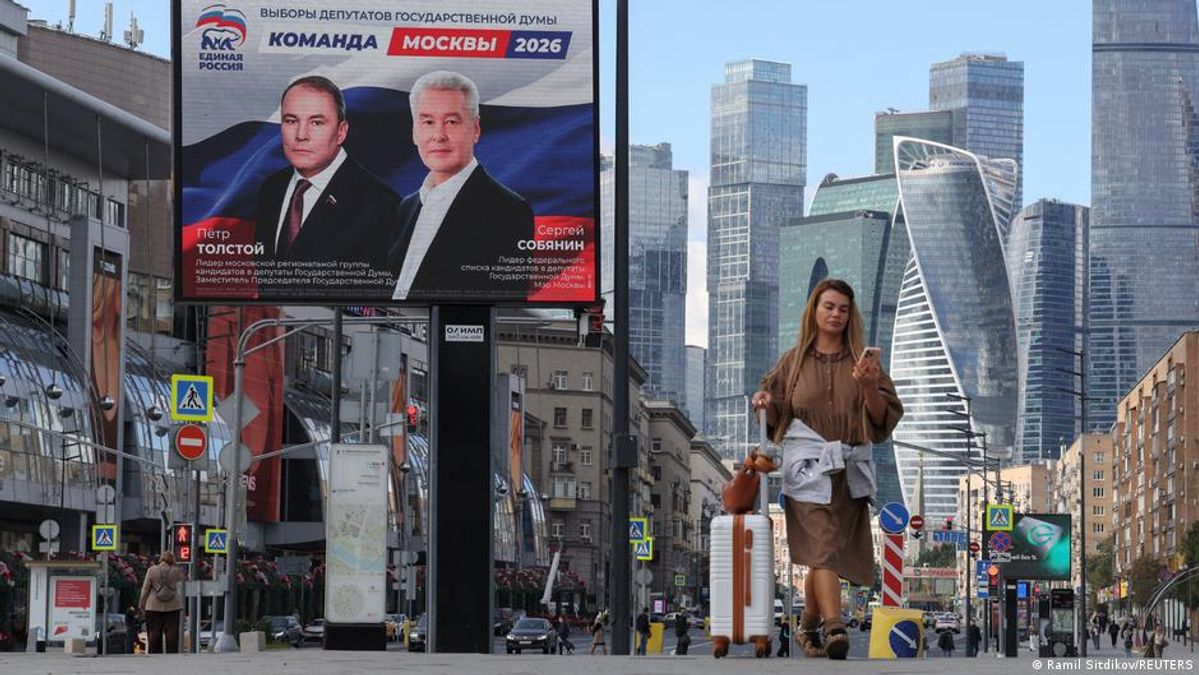
From September 18‑20, 2026, Russians voted to fill all 450 seats of the State Duma – the first parliamentary election held while the war in Ukraine rages. United Russia, the de‑facto party of President Vladimir Putin, ran a slate dominated by war veterans and pledged a continued “victory” in Ukraine. The liberal opposition party Yabloko, which had been polling at around 5‑6 % before being barred by a court, was excluded from the ballot, leaving voters with either United Russia, a handful of Kremlin‑approved parties, or the option to spoil their vote.
The Kremlin treats the Duma vote as a reality check on popular loyalty. High turnout and a dominant United Russia score provide a veneer of democratic legitimacy that can be leveraged in two ways: domestically, to justify further resource allocation to the war effort, and internationally, to counter accusations of authoritarian decay. Turnout numbers also serve as a barometer for the risk of a new partial mobilization; a low‑turnout signal could push the regime toward harsher conscription measures to meet front‑line manpower gaps.
United Russia’s campaign hinges on war‑time patriotism and the promise of continued sanctions‑resilient growth, while the state media paints any dissent as a threat to national security. Simultaneously, the exclusion of Yabloko eliminates the only registered party that openly opposes the war, narrowing the electoral field and forcing anti‑war sentiment into either a protest‑vote (ballot spoiling) or a risky abstention. The Kremlin’s control over the electoral apparatus—ballot printing, vote‑counting software, and the official narrative—means the final percentages can be fabricated, but the raw turnout figure remains a hard data point that the regime cannot fully disguise.
For ordinary Russians, the election arrives amid war fatigue that has seeped into daily life. Independent polling shows 60 % say the war has worsened their personal circumstances, while half report a pervasive sense of alarm. Rising food and energy prices, internet blackouts, and fuel shortages caused by Ukrainian strikes on refineries have eroded purchasing power. Young men face the specter of a new mobilization, prompting a wave of emigration to neighboring states such as Georgia and Kazakhstan. Families with members already serving on the front line grapple with loss, trauma, and the uncertainty of replacement drafts.
The silent majority—people who may still vote for United Russia out of habit or fear but privately desire an end to hostilities—find themselves trapped between a regime that demands loyalty and an opposition that is legally silenced. Volunteer networks around Yabloko have swelled, especially among university students, yet the party’s ban leaves these activists with limited channels to express dissent. Some are turning to ballot spoiling as a symbolic act, while others heed calls from figures like Yulia Navalnaya to simply show up at the polling stations, turning the queues themselves into a protest.
Official statements downplay the political cost of a low turnout. Kremlin spokespeople frame the election as a routine democratic exercise, ignoring that a turnout below 60 % could signal a loss of popular control and trigger harsher internal security measures. The regime also sidesteps the international dimension: a credible electoral mandate could be used to justify deeper integration with BRICS and to deflect Western sanctions, while a contested result would provide fodder for foreign governments to intensify pressure.
Equally omitted is the economic calculus behind the war’s continuation. The state’s ability to fund the conflict relies on a fragile mix of sanctions‑evasion, energy exports, and domestic fiscal tightening. Public discontent over price spikes directly threatens this balance; widespread protest could destabilize the limited economic concessions the Kremlin has managed to secure. Finally, the diaspora’s role is understated. Russians who have fled to Georgia, Turkey, and the Baltics are monitoring the election closely, ready to amplify any signs of dissent through social media and to lobby host governments for stronger sanctions.
Watch the official turnout figure when the Central Election Commission releases it on September 22. A turnout above 70 % would allow the Kremlin to claim broad support; a dip into the low‑60s would likely trigger a crackdown and possibly a new mobilization decree. Monitor the rate of spoiled ballots; a spike above the historical 2‑3 % baseline would signal organized protest despite the ban on Yabloko. Keep an eye on post‑election protests in Moscow and regional centers—queues, sit‑ins, or spontaneous rallies could become the first visible mass dissent since the war began.
Internationally, the election outcome will shape the Kremlin’s bargaining position in any upcoming peace talks slated for October. A strong United Russia showing could embolden Moscow to demand more favorable terms, while a visibly weakened result might push it toward a negotiated settlement to ease domestic pressure. Finally, the migration flow will be a barometer of long‑term societal strain; spikes in exit visas or asylum applications in the weeks after the vote would underscore the human cost that the ballot alone cannot capture.
Editor's Note: All polling figures are based on publicly reported surveys; exact turnout numbers will be confirmed after the election.
Source referenced: DW
This brief was synthesized by our Editorial Engine and reviewed by The Ground Narrative team.


