TRENDING

Friday, 6 November 2026
----------------------
26 Jumada Al-Awwal 1448 AH
China and Peru mark 55 years of diplomatic relations, highlighting Beijing's deep and enduring influence in Latin America. This milestone reflects a strategic partnership with significant economic and social implications for both nations.
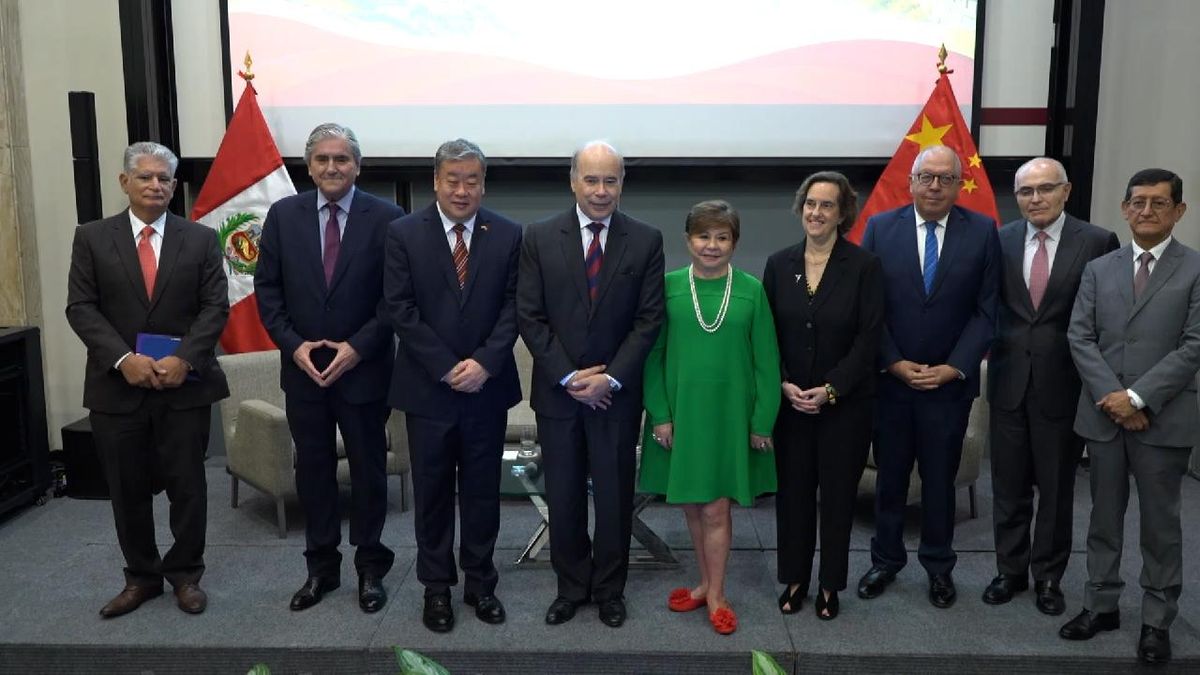
China and Peru recently marked 55 years of diplomatic relations, a significant milestone that underscores Beijing's enduring and deepening presence in Latin America. The event, reported by Chinese state media CGTN from Lima, highlighted the relationship as one of China's oldest and strongest alliances in the Americas. This commemoration is not merely a ceremonial nod to history; it signifies decades of strategic economic engagement, resource acquisition, and a quiet but persistent shift in regional power dynamics, with Peru emerging as a crucial partner in China's global ambitions.
The longevity and strength of Sino-Peruvian relations are rooted in a clear convergence of interests, driven by economic necessity and geopolitical ambition. For China, Peru represents a vital node in its global supply chains and a strategic foothold in a region historically dominated by the United States.
Beijing's primary incentive in Peru is resource security. Peru is one of the world's largest producers of copper, silver, and zinc, and also holds significant reserves of gold and other critical minerals. These raw materials are indispensable for China's vast industrial complex, its burgeoning manufacturing sector, and its ambitious transition towards green energy technologies. Chinese state-owned and private enterprises have invested billions in Peruvian mining operations, often becoming the largest buyers of the country's mineral exports. This ensures a stable and predictable flow of essential commodities, insulating China from potential disruptions in other global markets.
Beyond resources, Peru offers China a growing market for its manufactured goods, technology, and infrastructure development expertise. The Belt and Road Initiative (BRI) has found fertile ground in Peru, with Chinese companies undertaking massive projects such as ports, railways, and energy infrastructure. These projects not only facilitate the export of Chinese capital and labor but also integrate Peru more deeply into China's global trade network, creating new logistical pathways that favor Chinese commerce.
From Peru's perspective, the relationship with China offers an alternative to traditional Western partners. Historically, Peruvian economic development has been heavily influenced by US and European capital. China's entry provided a new source of investment, often with fewer overt political conditions than those imposed by institutions like the International Monetary Fund or the World Bank. This has allowed successive Peruvian governments, despite frequent internal political instability, to pursue large-scale infrastructure projects and expand export markets, diversifying their economic partnerships and reducing over-reliance on any single power. The sheer scale of Chinese demand for Peruvian commodities also provides a significant economic engine, driving growth and generating revenue, albeit with its own set of challenges.
For the United States, China's deepening influence in Peru and across Latin America represents a direct challenge to its long-standing regional hegemony. Washington views Chinese infrastructure projects, particularly ports, with strategic concern, fearing potential dual-use capabilities or a weakening of its own security alliances. The narrative of China as an
The 55-year milestone highlights China's deep and enduring economic and diplomatic presence in Latin America, positioning Peru as a key partner for resource acquisition and trade routes. It signifies a long-term strategic relationship that challenges traditional power dynamics in the region.
China's investments have significantly boosted Peru's economy through mineral exports and infrastructure development, but they also bring environmental concerns like water contamination and deforestation. Local communities often bear the human cost, facing displacement and disruption to traditional livelihoods.
The Chancay Port is a major deep-water port in Peru, majority-owned by a Chinese state-owned enterprise. It is crucial for China's global trade strategy, aiming to create a direct Pacific trade route to South America, bypassing the Panama Canal and enhancing China's logistical independence.
Editor's Note: The analysis expands on the brief raw intelligence by providing historical, economic, and geopolitical context, focusing on the power mechanics and human cost as per TGN doctrine.
Source referenced: CGTN
This brief was synthesized by our Editorial Engine and reviewed by The Ground Narrative team.