TRENDING

Monday, 21 September 2026
----------------------
10 Rabi' Al-Thani 1448 AH
France and Canada are forging closer ties, signaling a deliberate move to reduce reliance on the United States. This shift comes as both nations navigate strained relations with Washington and global energy market volatility.
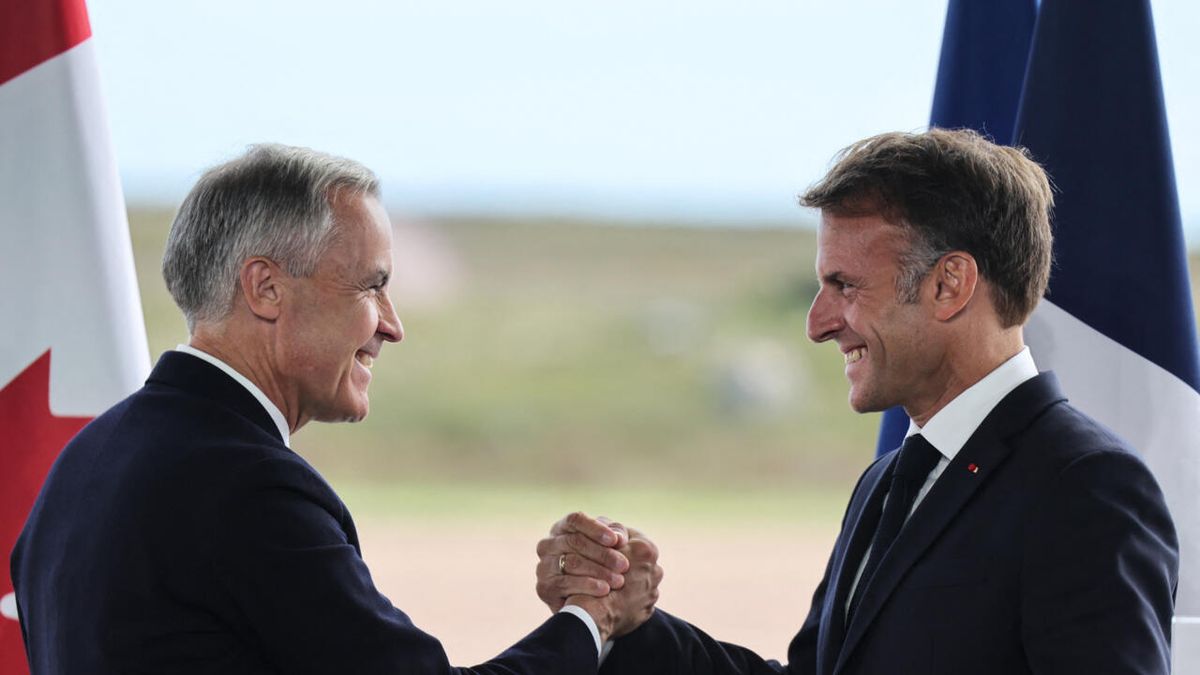
French President Emmanuel Macron and Canadian Prime Minister Mark Carney recently met on Saint Pierre and Miquelon, a small French territory off Canada's coast. This historic first visit by a Canadian leader to the archipelago served as a symbolic declaration: both nations are committed to strengthening their bilateral relationship, particularly in trade, energy, and security, amidst growing friction with the United States.
This meeting is a clear manifestation of a global power recalibration, driven largely by the United States' increasingly protectionist and unilateral foreign policy under President Trump. For Canada, long economically intertwined with its southern neighbor, Trump's tariffs, economic demands, and even rhetoric about Canada becoming the "51st state" have created an urgent imperative to diversify. The prospect of Canada becoming an associate member of the European Union underscores this strategic pivot, aiming to insulate its markets and sovereignty from perceived US overreach.
France, a vocal proponent of European strategic autonomy, sees this as an opportunity to solidify its vision of a more independent Europe. Macron's push for Canadian liquefied natural gas (LNG) and critical minerals reflects Europe's broader quest for energy security and supply chain resilience, especially as the Iran war disrupts global markets. The choice of Saint Pierre and Miquelon, a tiny French outpost near the Arctic, is a deliberate diplomatic signal—a quiet assertion of sovereignty and a rejection of any notion of territorial absorption, directly countering Trump's social media posts depicting a US-dominated North America.
While leaders speak of strategic autonomy and new alliances, the human cost of these geopolitical shifts often falls on ordinary citizens. For Canadian and French businesses, the uncertainty generated by strained US relations translates into disrupted supply chains, higher operating costs, and hesitant investment, potentially impacting jobs and economic stability. Consumers in Europe, already grappling with the ripple effects of the Iran war, face the prospect of higher fuel and energy prices. Macron's pursuit of Canadian LNG is a direct response to this, but the transition costs and market adjustments will inevitably be borne by households.
Furthermore, the rhetoric of "erosion of democratic norms" and "threats to sovereignty" articulated by Carney, while aimed at powerful actors, can foster a pervasive sense of insecurity among the public. This anxiety about the stability of the international order and the reliability of traditional allies can undermine public trust and create a climate of apprehension, particularly in communities whose livelihoods are directly tied to cross-border trade and resource management, such as the fishing communities around Saint Pierre and Miquelon.
What powerful actors are downplaying is the true cost and complexity of this strategic pivot. While the symbolism of the meeting is potent, the practical realities of significantly reducing economic dependence on the United States are immense. Diversifying supply chains, building new energy infrastructure, and reorienting decades-old trade relationships require colossal investment and time, potentially straining national budgets and consumer pockets in the short to medium term. The public statements emphasize aspiration more than the painful, disruptive realities of such a monumental shift.
Moreover, the discussion of Saint Pierre and Miquelon's strategic location near the Arctic subtly alludes to a deeper, unspoken geopolitical competition. Beyond immediate energy needs, the accelerating race for Arctic resources and shipping routes—involving the US, Canada, and France—is a long-term strategic play. The current focus on immediate energy security and sovereignty serves to frame away the broader, more complex contest for influence and resources in a rapidly changing polar region.
Watch for concrete developments regarding Canada's potential associate membership with the European Union; this will be a critical indicator of Ottawa's commitment to its diversification strategy. Closely monitor the progress of LNG export agreements and the necessary infrastructure development to facilitate Canadian energy shipments to Europe, which will reveal the tangible success of France's energy security efforts. Also, observe any further economic or diplomatic responses from the US administration to these overtures between France and Canada, as Washington's reaction could escalate tensions or force new calculations. Finally, keep an eye on developments in the Arctic, as the region's strategic importance will continue to shape the long-term geopolitical landscape for all involved parties.
Source referenced: FRANCE24
This brief was synthesized by our Editorial Engine and reviewed by The Ground Narrative team.


