TRENDING

Monday, 21 September 2026
----------------------
10 Rabi' Al-Thani 1448 AH
Ukrainian President Volodymyr Zelensky and former U.S. President Donald Trump have agreed to meet at the UN General Assembly, a rendezvous the Kyiv leader says could “change a lot.” The deal raises questions about whose interests drive the talks and who will bear the fallout.
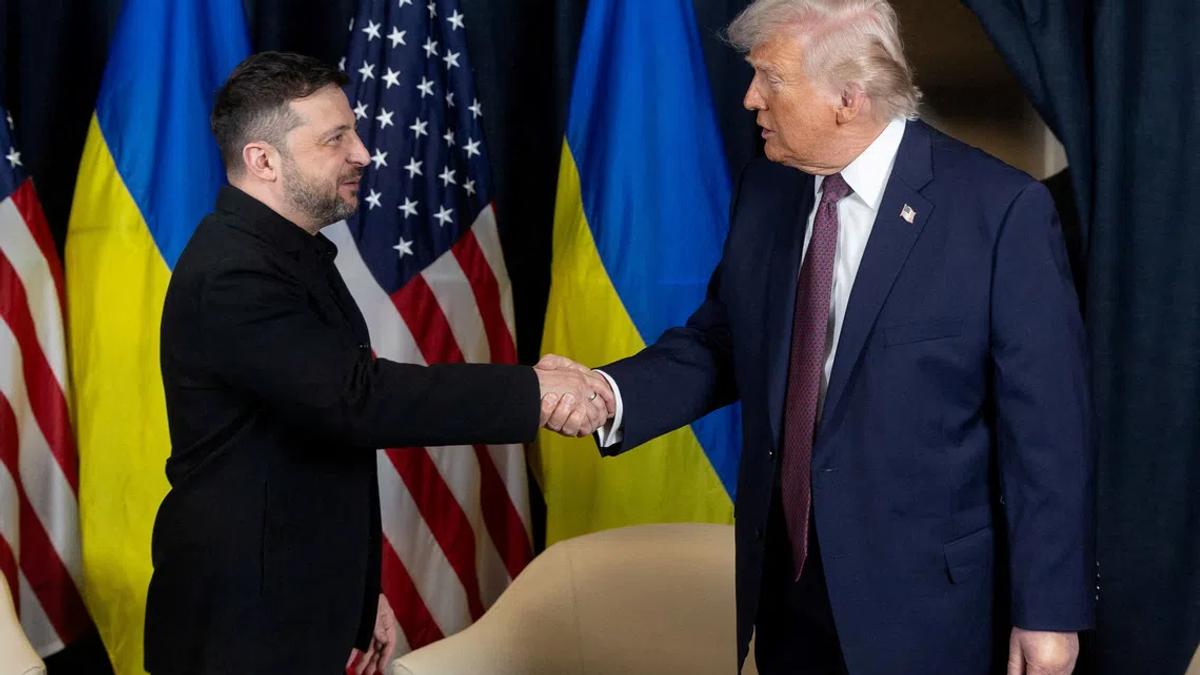
Ukrainian President Volodymyr Zelensky announced on September 20 that he and former U.S. President Donald Trump have set a date to meet in New York during the upcoming UN General Assembly. Zelensky framed the encounter as a diplomatic breakthrough, hinting that it could open “de‑escalation steps” on energy, food security and civilian protection. He also thanked Trump for recent U.S. sanctions against Russia and for a visit by senior American envoys to Kyiv.
Both leaders stand to gain politically from a high‑profile meeting. For Zelensky, the war in Ukraine has entered a costly stalemate; a direct line to Trump offers a chance to bypass the Biden administration’s more cautious approach and tap into the former president’s personal network of Republican donors, think‑tanks and media allies who have been vocal about a tougher stance on Moscow. A successful dialogue could also bolster Zelensky’s domestic standing by showing he can secure new diplomatic channels.
Trump, now a private citizen but still a dominant figure in the Republican Party, is eager to re‑enter the foreign‑policy spotlight ahead of the 2028 presidential cycle. Positioning himself as a peace‑broker for Ukraine lets him claim a foreign‑policy win while sidestepping the Biden administration’s mixed messaging on aid and sanctions. Moreover, a visible role in any potential settlement could translate into campaign contributions from Ukrainian diaspora groups and U.S. defense contractors eager for a stable Eastern‑European market.
For Washington, the meeting is a double‑edged sword. The Biden team must balance the need to keep Ukraine supplied with the risk that Trump’s involvement could undercut official diplomatic channels, create parallel back‑channel negotiations, or shift public discourse toward a “Trump‑led” peace plan that may lack congressional support. Meanwhile, Moscow watches closely, calculating whether a Trump‑Zelensky dialogue could be leveraged to extract concessions, especially on sanctions relief or frozen assets.
While the headline focuses on two powerful men, the real stakes fall on ordinary Ukrainians still living under artillery fire, disrupted power grids and food shortages. Rural families in the Donbas region already face dwindling harvests; any shift in energy policy could mean longer blackouts for hospitals and schools. Urban dwellers in Kyiv and Kharkiv continue to endure intermittent heating and soaring prices for basic goods, a burden amplified by inflation tied to war‑time spending.
In the United States, the meeting reverberates through communities that depend on defense contracts. Workers at factories producing artillery shells, drones and armored vehicles see their jobs tied to the continuation of U.S. aid. A rapid de‑escalation could trigger layoffs, while a prolonged stalemate sustains employment but also fuels public fatigue over endless war funding.
Official statements from both Kyiv and Trump’s camp stress “peace” and “de‑escalation,” yet they largely omit the conditions under which a settlement might be acceptable. Zelensky’s remarks are silent on whether Ukraine would consider ceding any territory, a point that Russian officials have repeatedly raised as a precondition for talks. Trump, for his part, has not clarified whether he would press for a freeze on sanctions, a move that could dramatically alter Russia’s economic calculus.
Both sides also downplay the role of other key players. The European Union, NATO allies and the International Monetary Fund are conspicuously absent from the narrative, even though any durable agreement would need their financial and security guarantees. By framing the meeting as a bilateral “peace track,” the discourse sidesteps the multilateral architecture that has underpinned Ukraine’s survival since 2022.
Watch for three concrete signals in the weeks ahead:
1. The agenda released by the UN General Assembly – whether the Ukrainian‑American meeting is listed as a formal side‑event or remains a private rendezvous will indicate how much institutional backing the talks receive.
2. Statements from the European Commission and NATO – any coordinated response, whether supportive or cautionary, will reveal whether the West is prepared to let a Trump‑led initiative coexist with its own diplomatic framework.
3. Russia’s tactical moves – a sudden softening of cyber‑attacks, a pause in missile strikes, or conversely an escalation, will signal how Moscow perceives the emerging diplomatic calculus.
If the New York handshake yields a concrete proposal—especially one that addresses energy security and food corridors—the next weeks could see a rapid shift in aid flows, sanctions enforcement and, ultimately, the daily reality for millions caught in the conflict. If it remains a symbolic meeting, the status quo persists, and the human cost continues to mount.
Editor's Note: Analysis based on publicly available statements; private diplomatic channels may evolve rapidly.
Source referenced: STRAITSTIMES
This brief was synthesized by our Editorial Engine and reviewed by The Ground Narrative team.


