TRENDING

Friday, 6 November 2026
----------------------
26 Jumada Al-Awwal 1448 AH
With no clear majority in Israel's parliament, the path to forming a stable government increasingly hinges on the participation of Arab political parties, marking a potential turning point in the nation's political landscape. This development reflects a notable shift in public sentiment among some Israeli citizens regarding Arab representation in the cabinet.
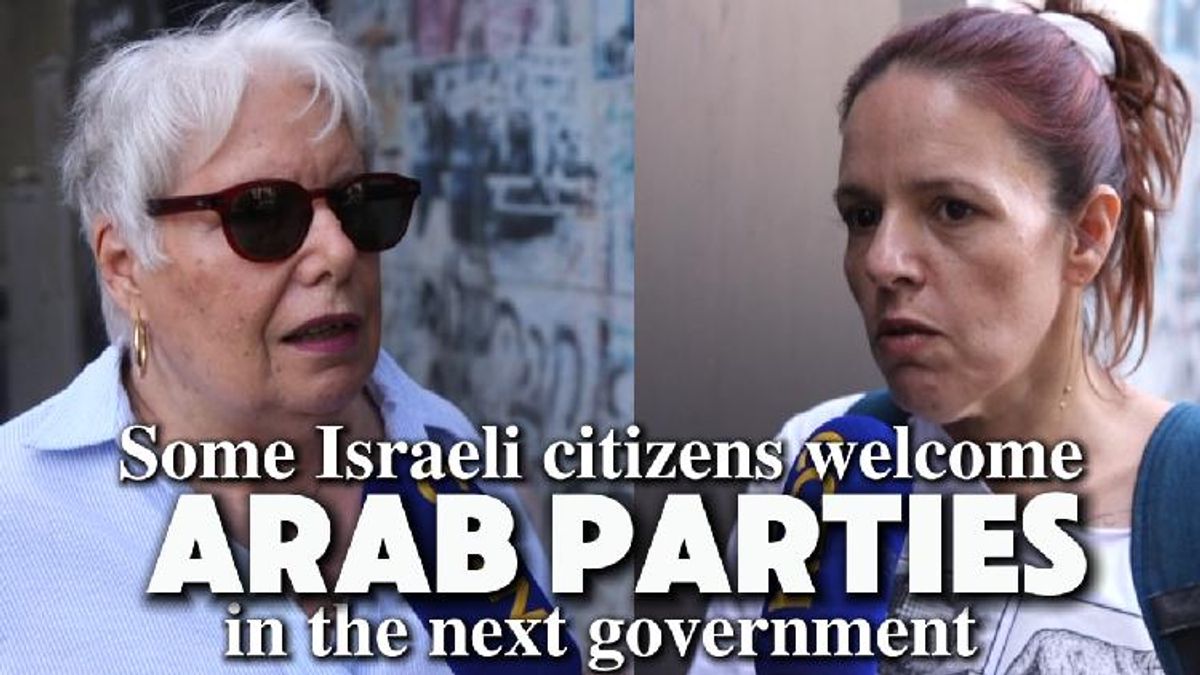
Israeli President Isaac Herzog has commenced official consultations with parliamentary parties, a routine step to determine who will receive the first mandate to form the next government. However, the current political landscape is anything but routine: neither of the major blocs has secured a clear majority, leaving the path ahead deeply uncertain. In this deadlock, the participation of Arab political parties has emerged as a crucial, almost unavoidable, factor for any prospective coalition. This necessity is accompanied by a notable shift in public discourse, with some Israeli citizens reportedly expressing a newfound openness to seeing Arab representation within the cabinet, challenging long-held political taboos.
The current political impasse in Israel is a direct consequence of a deeply fragmented electoral system combined with persistent demographic realities. Arab citizens of Israel, who constitute over 20% of the population, have historically been marginalized in national coalition politics. Their electoral power, however, is substantial, and in a parliament where a handful of seats can make or break a government, their collective votes become indispensable.
For decades, mainstream Zionist parties, both left and right, have largely avoided forming governments that rely on the direct support of Arab parties. This exclusion stemmed from a complex mix of ideological differences, security concerns, and the prevailing narrative of Israel as a “Jewish state.” Arab parties, representing a diverse array of interests from Islamist to secular nationalist, have often been relegated to the opposition, their platforms focused on civil rights for Arab citizens and a more equitable approach to the Palestinian-Israeli conflict.
The current deadlock, however, has forced a pragmatic re-evaluation. The traditional right-wing bloc, often led by Likud, struggles to secure a majority without relying on ultra-nationalist or religious parties whose demands can be extreme. Similarly, the centrist and left-leaning blocs find themselves short of the numbers needed to form a stable government. This mathematical reality grants Arab parties unprecedented leverage. Their demands for inclusion will likely center on tangible improvements for Arab communities—increased budget allocations for infrastructure, education, and healthcare, as well as addressing systemic discrimination in housing and employment. These are issues that resonate across the political spectrum within the Arab community and are distinct from the more contentious issues of the Palestinian territories.
The reported shift in mindset among some Israeli citizens is a critical, albeit subtle, power dynamic. It suggests a growing fatigue with political instability and a recognition that the exclusion of a significant segment of the citizenry is unsustainable. This shift could be driven by a desire for governmental stability over ideological purity, or perhaps a nascent acknowledgment of shared civic interests that transcend ethnic lines. Regardless of its root, this evolving public opinion provides political cover for parties considering alliances that were once deemed unthinkable, effectively lowering the political cost of engaging with Arab parties.
This situation presents a profound dilemma for Israel's established political forces. For the right, it challenges their foundational rhetoric and forces a choice between ideological purity and the practicalities of governance. For the center and left, it offers a potential pathway to power but also risks alienating segments of their own base who may harbor reservations about such alliances. The power now rests not just in the number of seats, but in the ability of Arab parties to act as a unified, decisive bloc, forcing a re-calibration of what is politically possible in Israel.
The political maneuvering in Jerusalem has profound consequences that ripple through the lives of millions, particularly Israel's Arab citizens, who have long borne the brunt of political marginalization.
For the Arab community in Israel, the prospect of their representatives holding sway in government offers a glimmer of hope for addressing decades of systemic neglect and discrimination. Arab towns and villages consistently rank lower on socio-economic indicators, suffering from underfunded infrastructure, inadequate public services, and disproportionately high crime rates. A seat at the cabinet table could translate into concrete policy changes, increased budget allocations, and a more equitable distribution of national resources. This could mean better schools, improved healthcare facilities, and more opportunities for economic development in communities that have historically been overlooked. The symbolic significance of Arab ministers or coalition partners cannot be overstated; it could foster a greater sense of belonging and civic participation among a population that often feels alienated from the state. However, there's also a significant risk: that Arab parties might be co-opted, their influence diluted, or their participation used as a token gesture without delivering substantial, long-term change. They could face immense pressure to temper their demands on issues related to Palestinian rights to maintain coalition stability, potentially alienating their own constituents.
For Jewish Israelis, the potential inclusion of Arab parties in government ignites deep-seated debates about national identity and security. For some, particularly those on the nationalist right, such an alliance is viewed as an existential threat to Israel's Jewish character and security. They fear that Arab parties might compromise national security interests or advocate for policies perceived as undermining the state's Zionist foundations. This perspective often fuels polarization and can lead to increased social tensions and even protests. Conversely, many centrist and left-leaning Jewish Israelis might welcome the move as a step towards a more inclusive and democratic society, believing it strengthens Israel's legitimacy and internal cohesion. They might see it as a pragmatic solution to political instability and an opportunity to bridge divides within the country. However, even within this group, there could be reservations about specific policy concessions or the perceived impact on the broader Palestinian-Israeli conflict. The human cost here is the potential for intensified internal divisions, fracturing society along ideological and ethnic lines, and the emotional toll of constant political uncertainty and identity questioning.
While the headlines focus on coalition math and shifting public opinion, several critical underlying narratives are often downplayed or omitted by powerful actors, revealing deeper truths about Israel's political landscape.
The necessity of Arab parties for government formation isn't merely a statistical anomaly; it's a stark spotlight on the inherent tension within Israel's self-definition as both a
Neither of Israel's major political blocs secured a clear majority in the recent election, creating a parliamentary deadlock. With Arab citizens comprising over 20% of the population, their elected representatives now hold a critical swing vote, making their inclusion or support essential for forming a stable government.
Arab parties are likely to prioritize civil rights, increased budget allocations for Arab communities, and addressing systemic discrimination in housing, education, and infrastructure. While they may advocate for a softer stance on Palestinian issues, their immediate focus would likely be on domestic improvements for their constituents.
The potential inclusion of Arab parties highlights the inherent tension in Israel's self-definition. It forces a re-evaluation of how a state can be both Jewish and democratic while ensuring full and equal political representation for its significant non-Jewish minority, challenging historical norms of exclusion.
Editor's Note: The analysis is based on the provided intelligence regarding a future date (2026), interpreting the reported 'shift in mindset' and political deadlock within the established historical context of Israeli politics.
Source referenced: CGTN
This brief was synthesized by our Editorial Engine and reviewed by The Ground Narrative team.


