TRENDING

Friday, 18 September 2026
----------------------
7 Rabi' Al-Thani 1448 AH
A recent bridge collapse in the Democratic Republic of Congo's Walikale territory has highlighted the stark contrast between the region's lucrative mining industry and its dilapidated infrastructure. As locals struggle to access basic necessities, the question remains: who benefits from the region's mineral wealth? The collapse of the bridge in Hombo, a village in the eastern part of North Kivu province, has reignited debates about mining revenues and their impact on local communities.
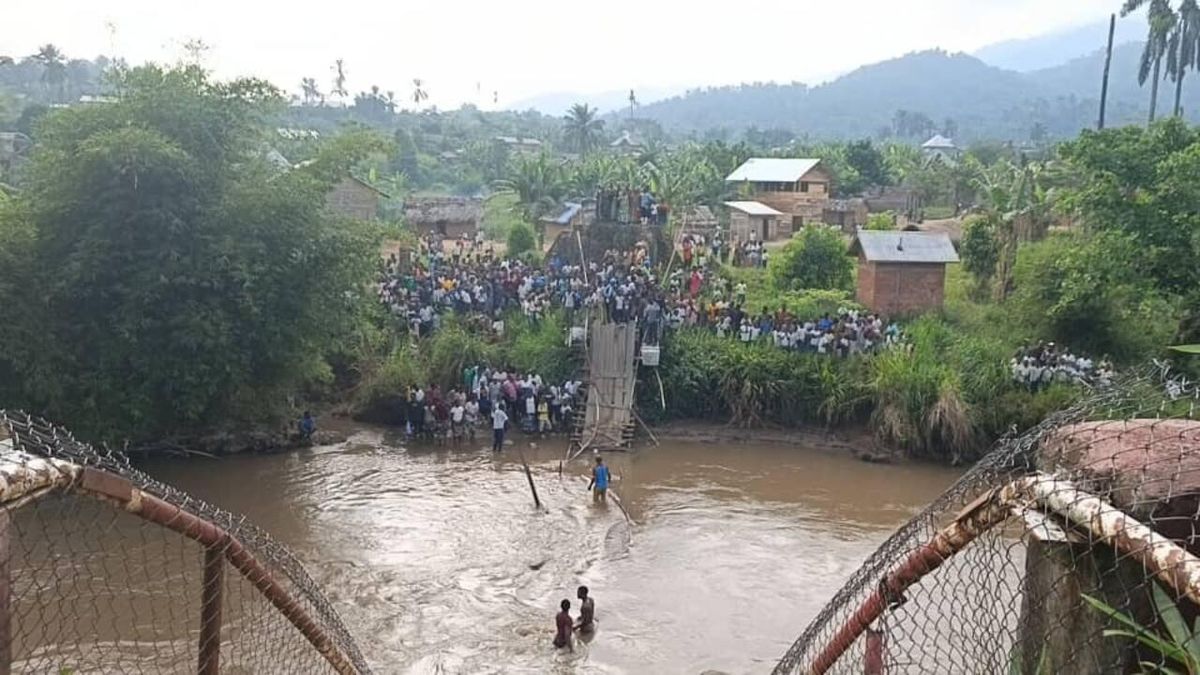
On June 3, 2026, a bridge in the village of Hombo, located in the Walikale territory of the Democratic Republic of Congo, collapsed, leaving several people stranded in the river. Fortunately, no one died in the incident. However, the collapse has created a complicated situation, as the bridge was a vital link between the two parts of the village, which belong to different administrative districts.
The Walikale territory is home to the Bisie mine, one of the most lucrative mines in the region, operated by Alphamin Resources, a company majority-owned by an Emirati firm. The mine represents 7% of the global tin production each year. Under Congolese law, mining companies are required to fulfill obligations related to local development, including building infrastructure like schools, roads, and bridges. However, these agreements often only benefit the areas directly surrounding the mine, leaving other parts of the territory, like Hombo, neglected.
The bridge collapse has had a significant impact on the local community, particularly in terms of food security. The village of Hombo relies on the bridge to access food from fields located on the other side of the river. With the bridge collapsed, the community is facing food shortages. Locals have been working together to create a makeshift solution, but it is fragile and poses a risk to their safety. The situation is further complicated by the fact that many bridges in the region are in a state of disrepair, and the roads are often impassable.
The story of the bridge collapse in Hombo is not an isolated incident. It is part of a larger narrative of neglect and exploitation in the Walikale territory. The mining companies operating in the region, including Alphamin Resources, have a significant impact on the local economy, but the benefits of their activities are not being felt by the local community. The company's obligations to local development are often not fulfilled, and the funds allocated for infrastructure development are often mismanaged or embezzled. The result is a territory that is rich in mineral resources but poor in infrastructure and basic services.
As the situation in Walikale continues to deteriorate, it is essential to monitor the response of the Congolese government and the mining companies operating in the region. Will they take steps to address the infrastructure needs of the local community, or will they continue to prioritize their own interests? The answer to this question will have significant implications for the people of Walikale and the future of the region. Readers should watch for updates on the reconstruction of the bridge, the implementation of local development projects, and the allocation of funds for infrastructure development in the territory.
Editor's Note: The analysis is based on publicly available information and may not reflect the full complexity of the situation on the ground.
Source referenced: FRANCE24
This brief was synthesized by our Editorial Engine and reviewed by The Ground Narrative team.


