TRENDING

Friday, 18 September 2026
----------------------
7 Rabi' Al-Thani 1448 AH
U.S. forces have sunk billions into a conflict that has failed to curb Iran's regional reach, while ordinary citizens on both sides bear the rising costs.
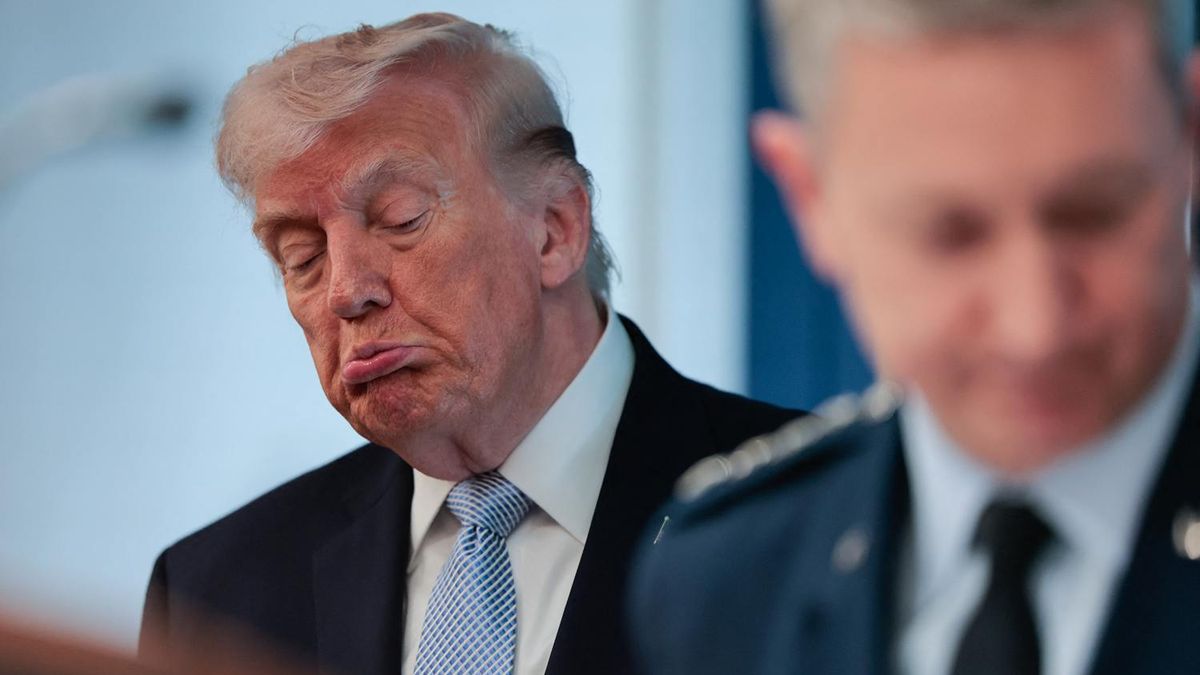
In early March 2026 President Donald Trump announced that the United States had "won" a war against Iran, pledging to finish a job that would dismantle Tehran's ability to project power. Six months later, fighting continues across the Strait of Hormuz and the Bab el‑Mandeb, U.S. casualties have risen, the Treasury reports $38.1 billion in expenses, and diplomatic channels remain stalled.
Political survival. Trump’s rhetoric framed the war as a decisive victory that would cement his anti‑establishment brand and distract from domestic scandals. Declaring success early created a narrative that any setback could be dismissed as a temporary setback.
Military overstretch. The U.S. Navy, already thinly deployed in the Indo‑Pacific, now has to patrol two chokepoints, protect commercial shipping, and support ground operations against Iranian proxies. This diffusion raises the risk of accidents and limits rapid response capability.
Iran’s proxy calculus. Tehran leverages the Houthi rebels in Yemen and militia networks in Iraq to threaten the Bab el‑Mandeb and the East‑West Saudi oil pipeline. By forcing the U.S. to defend multiple arteries, Iran extracts disproportionate strategic value from relatively low‑cost assets.
Energy market leverage. Control of Hormuz and Bab el‑Mandeb lets Iran influence global oil prices. The war‑induced price spikes have eroded real wages in the United States and Europe, feeding inflationary pressures that benefit no‑one but commodity traders.
Congressional pushback. Growing Republican opposition, exemplified by a move to impeach Defense Secretary Pete Hegseth, reflects a calculation that continued funding will hurt reelection prospects more than it will secure a geopolitical win.
- American taxpayers are shouldering a $38 billion bill that will appear on future federal budgets, translating into higher deficits and potential tax hikes.
- U.S. service members face extended deployments, increased combat risk, and the mental‑health toll of a war with unclear objectives.
- Iranian civilians endure air‑strike damage to industrial zones, loss of electricity, and shortages of medical supplies as missile factories are targeted.
- Yemenis see the Houthi offensive in Mocha and Perim intensify, pushing the country toward a full‑scale civil war and displacing thousands.
- Global consumers feel the pinch of higher gasoline prices, a direct consequence of disrupted oil flows through Hormuz and the Saudi pipeline.
Washington’s public statements repeatedly claim that Iran’s missile and drone programs are "functionally destroyed," yet intelligence assessments show underground production continuing unabated. The administration also downplays the strategic value Iran gains by simply threatening to close Hormuz—a lever it has now demonstrated it can wield for months. Meanwhile, the narrative that proxy groups are weakening ignores the fact that Iran has successfully transferred operational control of the Bab el‑Mandeb to the Houthis, effectively creating a second chokepoint that can be weaponized against any future U.S. naval presence.
- Congressional action: A vote on defense appropriations could force a scaling back of U.S. operations or trigger a new escalation if funding is tied to specific objectives.
- Iran’s next move: Sustained attacks on the Bab el‑Mandeb or a coordinated closure of Hormuz would push oil prices beyond $120 a barrel, pressuring the U.S. to negotiate on Tehran’s terms.
- Great‑power involvement: China and Russia have expressed interest in securing alternative shipping routes; any overt assistance to Iran would complicate Washington’s calculus and could broaden the conflict.
- Domestic political calculus: As the 2028 election approaches, Trump’s administration may double down on rhetoric to preserve a war‑time image, even as the fiscal and human costs mount.
- Humanitarian fallout: Monitoring refugee flows from Yemen and civilian casualty reports from Iranian industrial sites will reveal the longer‑term societal damage that remains largely invisible in official briefings.
Editor's Note: Analysis based on publicly available reporting up to September 2026; some intelligence assessments are not independently verified.
Source referenced: FOREIGNPOLICY
This brief was synthesized by our Editorial Engine and reviewed by The Ground Narrative team.