TRENDING

Thursday, 17 September 2026
----------------------
6 Rabi' Al-Thani 1448 AH
A US President's public mimicry of missile defense highlights the ongoing, often-ignored proxy conflicts that turn sovereign nations into battlegrounds. The human cost of these power plays often goes unacknowledged amidst political posturing.
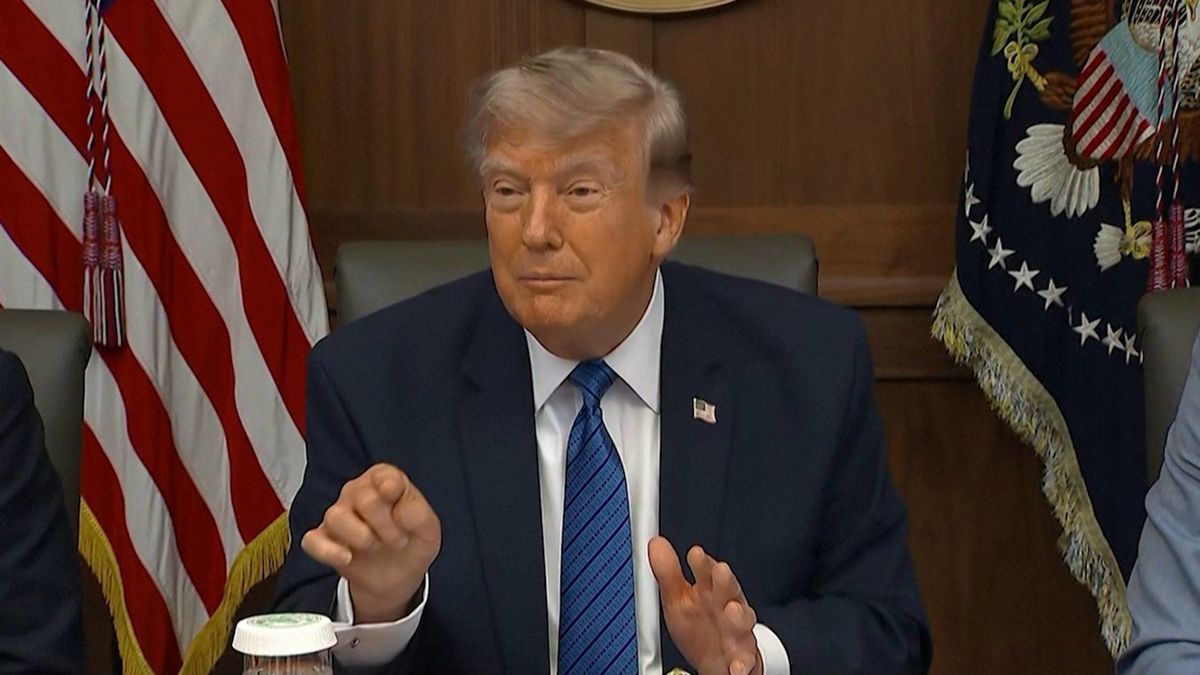
During a recent public address, former US President Donald Trump described the interception of five Iranian missiles over Jordan by US military forces. His account included mimicking the sound of Patriot missile interceptions, delivered with a joke about counting 'bings' to avoid comparisons to political rivals. This incident, while framed by the former president as a testament to US military prowess, underscores a deeper, more volatile reality in the Middle East.
This seemingly isolated event is a stark illustration of the enduring, low-intensity conflict between the United States and Iran, often played out on the territory of third-party nations. Jordan, a critical US ally, serves as a strategic buffer and a quiet operational base for American forces in a turbulent region. The presence of US Patriot missile defense systems in Jordan is not merely for the protection of American assets but also to bolster a key partner against regional threats, particularly from Iran and its proxies. For the US, these interceptions are a demonstration of its commitment to regional security and its capacity to project power, reinforcing its deterrent posture. For Iran, the launch of such missiles, even if intercepted, signals its reach and willingness to challenge US influence, often a response to perceived provocations or a means to exert pressure. The political performance surrounding the event, particularly Trump's rhetoric, simultaneously serves to rally domestic support and project an image of strength abroad, framing military actions as decisive victories rather than symptoms of persistent regional instability.
While political leaders and military strategists focus on missile trajectories and interception rates, the human cost is borne by the populations living beneath these contested skies. For ordinary Jordanians, their nation, a relatively stable haven in a volatile neighborhood, becomes an unwitting theater for a larger geopolitical struggle. The threat of missile launches and subsequent interceptions means living with the constant possibility of debris falling from the sky, the sonic booms of defense systems, and the underlying anxiety of being caught in a conflict not of their making. Beyond the immediate physical dangers, the persistent instability deters investment, strains public resources, and fosters a climate of uncertainty that impacts daily life, economic prospects, and mental well-being. These are the costs paid by civilians whose sovereignty is implicitly challenged when their airspace becomes a battleground for distant powers.
What is routinely downplayed or omitted in official statements and political rhetoric is the inherent vulnerability of the host nation. The successful interception of missiles is celebrated as a military achievement, but it simultaneously highlights the fact that missiles *were fired* over Jordanian territory in the first place. This exposes Jordan's precarious position, caught between powerful adversaries, and the inherent risks that come with hosting foreign military assets. The narrative of 'successful defense' often overshadows the underlying failure of diplomacy and de-escalation that led to the missile launch. Furthermore, the long-term strategic implications of such incidents – the potential for miscalculation, unintended escalation, and the normalization of conflict – are rarely foregrounded. Instead, the focus remains on immediate tactical victories, obscuring the deeper, systemic challenges of regional peace and the potential for a wider conflagration.
Going forward, observers should watch for several key indicators. Firstly, monitor any shifts in Iran's missile strategy or targeting, particularly regarding US interests or allied nations in the region. Secondly, observe Jordan's diplomatic maneuvering: will it seek to reinforce its strategic alliance with the US, or will it explore avenues for de-escalation with regional actors to reduce its exposure? Thirdly, pay close attention to the rhetoric from Washington, especially in an election cycle, as such incidents are likely to be leveraged for domestic political gain, potentially influencing future policy decisions. Finally, the broader regional context, including developments in Iraq, Syria, and Yemen, will continue to shape the US-Iran dynamic and, by extension, the security landscape for nations like Jordan.
Source referenced: ALJAZEERA
This brief was synthesized by our Editorial Engine and reviewed by The Ground Narrative team.


