TRENDING

Thursday, 5 November 2026
----------------------
25 Jumada Al-Awwal 1448 AH
Vice President J.D. Vance publicly linked the Republican defeat in the 2026 midterms to the costly war in Iran. The admission reveals shifting power calculations inside the Trump administration and a new front in the battle over America’s foreign policy.
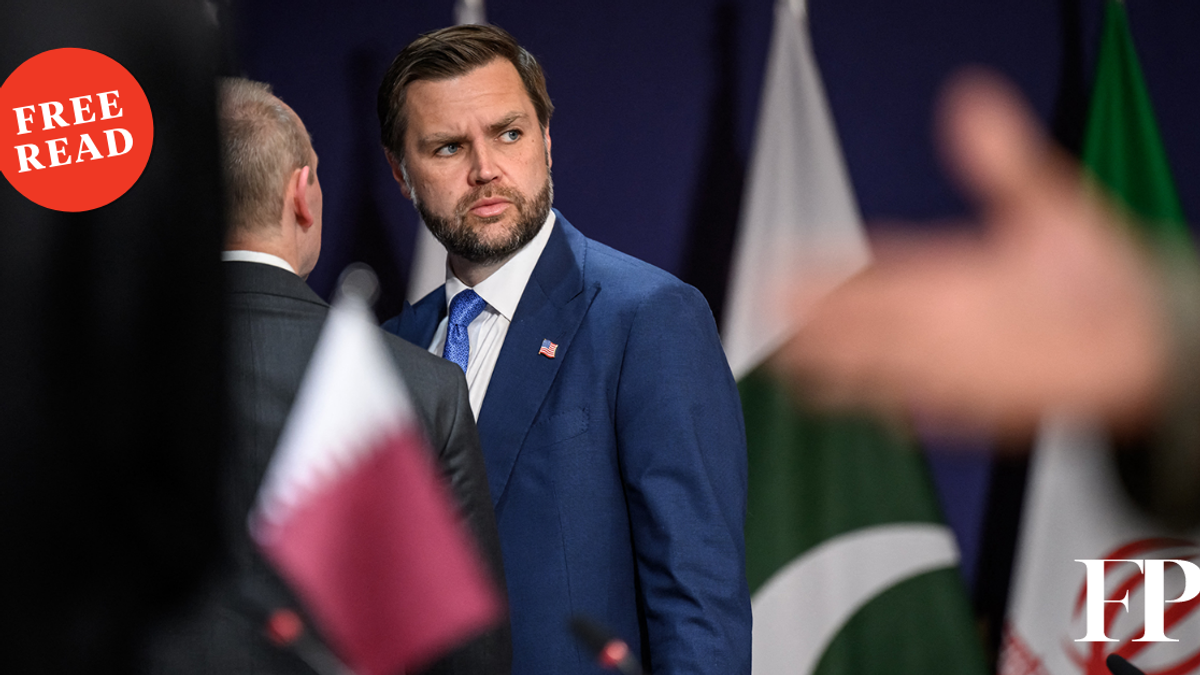
On November 4, 2026, J.D. Vance took to X to say the Republican loss in the midterm elections was “the war” – a direct reference to the United States’ full‑scale conflict with Iran that began in February. In a rare public break from President Donald Trump, Vance framed the defeat as a cost‑benefit calculation: losing Senate control for six years was the price of a war he called “unpopular” and “economically painful.” Trump, meanwhile, doubled down, insisting the war was necessary and that any short‑term pain at the pump would pay off in the long run. The election results showed Democrats gaining a decisive majority in both chambers, while exit polls confirmed that voters cited the war and rising living costs as top concerns.
The conflict’s political calculus rests on three intersecting forces. First, the Republican Party needed a rallying cause to justify a costly overseas engagement, especially after a decade of domestic turbulence. By casting Iran as an existential threat, the party could mobilize its base and justify higher defense spending. Second, the midterm elections served as a referendum on Trump’s leadership style; the war offered a convenient scapegoat for any losses, allowing the administration to shift blame onto a single policy decision rather than broader governance failures. Third, the military‑industrial complex stood to gain from sustained combat operations: contracts for aircraft, missiles, and logistics surged, creating a feedback loop where defense contractors lobbied for continued engagement, while congressional committees earmarked funds that bolstered the war effort. This triad of party loyalty, electoral timing, and industrial profit created a self‑reinforcing incentive structure that made the war politically survivable for a time, even as public sentiment soured.
The price of the war is being paid on three fronts. American working families have felt the sting of higher gasoline prices, inflated food costs, and a tighter job market as resources are diverted to overseas operations. Rural communities that depend on trucking and agriculture report lower margins, while urban commuters face longer lines at the pump. The energy sector has also been reshaped: sanctions on Iranian oil have spurred a scramble for alternative supplies, driving up global prices and prompting U.S. firms to invest in risky offshore projects that threaten environmental safety. Meanwhile, Iranian civilians endure the most direct devastation: cities have been reduced to rubble, hospitals overwhelmed, and displacement reaching historic levels. International NGOs warn of a looming humanitarian crisis, with millions lacking food, clean water, and medical care. The war’s ripple effects extend to neighboring countries—Afghanistan, Iraq, and the Gulf states—where refugee flows strain already fragile economies and heighten sectarian tensions.
Official narratives have downplayed several critical dimensions. White House messaging has repeatedly framed the war as a defensive necessity, sidestepping the fact that the initial justification—preventing a nuclear breakthrough—was later contradicted by intelligence reports showing Iran’s program had been significantly degraded months earlier. Media framing has focused on the war’s strategic objectives while glossing over the domestic lobbying that kept the conflict alive; few outlets have examined the flow of campaign contributions from defense contractors to key Republican lawmakers. The foreign policy establishment has also omitted the growing dissent within the Pentagon, where senior officers have warned that the war risks overextending U.S. forces and eroding alliances in the Middle East. By keeping these details out of public discourse, the administration preserves a narrative of unity and resolve, even as internal fractures widen.
Going forward, three indicators will reveal how the fallout reshapes American politics and regional dynamics. Public opinion polls will track whether the war’s unpopularity translates into lasting skepticism toward future interventions, especially as the economic pain persists. Congressional oversight will intensify as Democrats control key committees, potentially leading to hearings that expose the defense‑industry lobbying network and force a reassessment of the war’s budget. Finally, regional stability in the Persian Gulf will hinge on Iran’s capacity to rebuild its military and on the responses of Saudi Arabia, Israel, and Russia; any escalation could reignite a broader confrontation that would further entangle the United States. Observers should monitor diplomatic talks in Geneva, shifts in defense contracts, and the rhetoric emerging from both parties as they position themselves for the 2028 presidential race.
Vance argued that the war alienated voters by driving up living costs and creating a perception of reckless foreign policy, making it the most salient issue in the 2026 midterms.
Higher gasoline prices, increased food costs, and tighter job markets have hit working families, while defense spending has diverted resources away from domestic programs.
Source referenced: FOREIGNPOLICY
This brief was synthesized by our Editorial Engine and reviewed by The Ground Narrative team.


