TRENDING

Wednesday, 5 August 2026
----------------------
22 Safar 1448 AH
Hungary's record-low Danube river levels have triggered an energy crisis, forcing the shutdown of its sole nuclear plant and prompting companies and households to curb power use. As the heatwave peaks, the country's economic risks from climate change are becoming increasingly apparent.
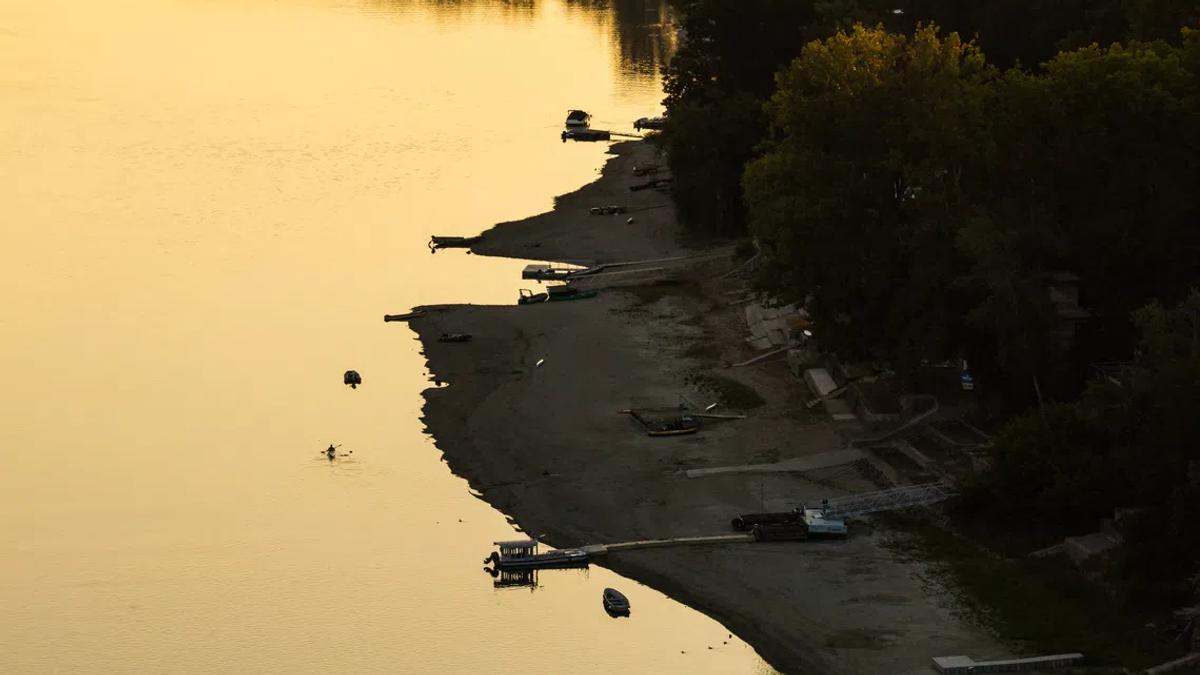
Hungary is facing an unprecedented energy crisis due to record-low Danube river levels, which have forced the shutdown of its sole nuclear plant. The plant, which uses the Danube's waters as a coolant, is currently operating at just over 10% of its capacity. This has led to a surge in power imports, stretching the country's power supply capacity to its limits.
The Hungarian government has appealed to companies and households to reduce their power consumption, resulting in a voluntary cutback of 600MW to 700MW daily. This is equivalent to switching off around a million average air-conditioners. The government plans to maintain energy subsidies and invest EU funds into the grid, despite the EU's recommendation to wind down the subsidy scheme. This move is likely driven by the government's desire to maintain popular support, particularly among households that have grown accustomed to heavily subsidized energy bills.
The energy crisis is having a significant impact on Hungarian households, which are being forced to reduce their power consumption. Residents are having to use air-conditioners sparingly and are only using essential electrical appliances. The crisis is also affecting industrial users, with many companies reducing their power usage to help ease pressure on the grid. The human cost of the crisis is not just limited to the immediate effects of the energy shortage, but also extends to the long-term economic risks posed by climate change. The Organisation for Economic Cooperation and Development has warned that Hungary's economic costs related to recurrent flooding and droughts are high and rising.
What is being downplayed in the official statements is the extent to which Hungary's energy crisis is a symptom of a broader climate change problem. The country's reliance on a single nuclear plant, which is vulnerable to droughts and heatwaves, highlights the need for a more diversified and resilient energy mix. The government's decision to maintain energy subsidies, despite the EU's recommendation to wind down the scheme, also raises questions about the country's commitment to reducing its carbon footprint and transitioning to a more sustainable energy model.
As the heatwave peaks, Hungary's energy crisis is likely to worsen, and the government will face increasing pressure to find a solution. Readers should watch for the government's next moves on energy policy, including any potential investments in renewable energy sources or efforts to diversify the country's energy mix. The impact of the crisis on Hungarian households and businesses will also be an important area to monitor, as will the EU's response to Hungary's decision to maintain energy subsidies. Ultimately, the crisis in Hungary serves as a warning to other countries about the need to prepare for the impacts of climate change and to develop more resilient and sustainable energy systems.
Editor's Note: The analysis is based on current events and data, but the long-term implications of the energy crisis and the government's response are subject to uncertainty and will require ongoing monitoring.
Source referenced: STRAITSTIMES
This brief was synthesized by our Editorial Engine and reviewed by The Ground Narrative team.