TRENDING

Wednesday, 5 August 2026
----------------------
22 Safar 1448 AH
A recent deadly Russian attack on Kyiv overwhelmed Ukraine's air defenses, highlighting critical shortages of Western-supplied interceptors and the human cost of a strained global supply chain.
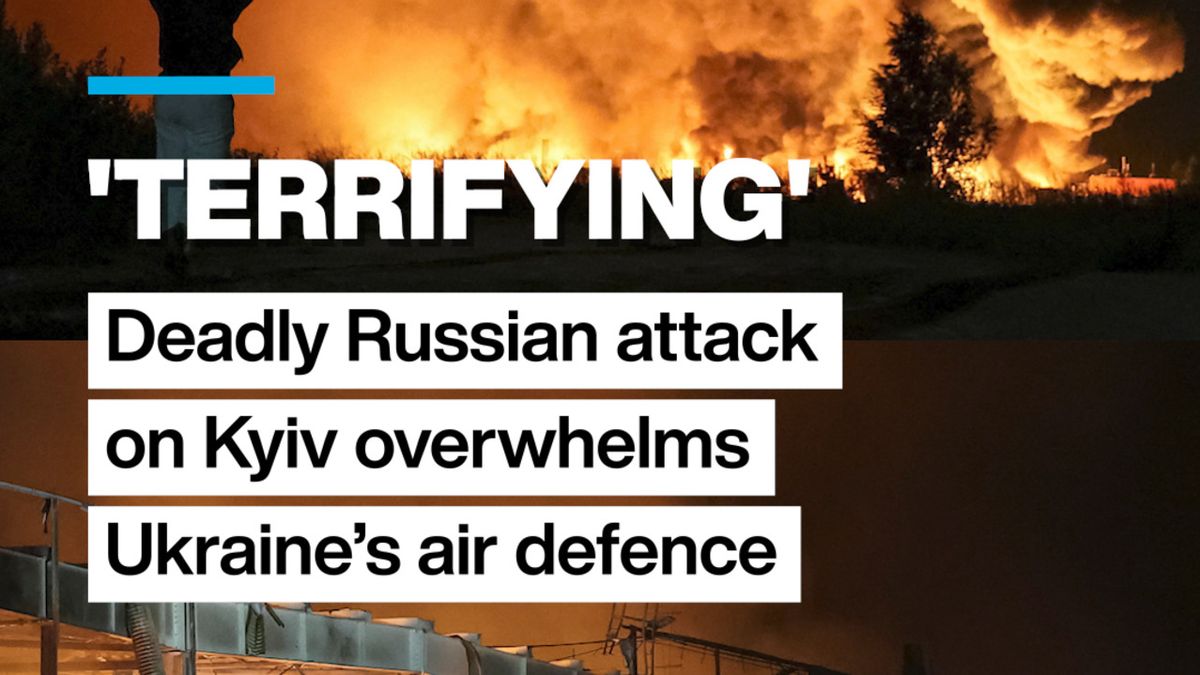
Kyiv and its surrounding region recently endured a brutal Russian missile attack that claimed at least 17 lives, with eight fatalities occurring at a busy railway station. While Ukrainian air defenses managed to intercept most drones, they were critically unable to stop a single Russian ballistic missile, a failure directly attributed to a severe shortage of US-made interceptors. This event marks a stark escalation, revealing a dangerous vulnerability in Ukraine's protective shield over its capital.
Russia's strategy is clear: to relentlessly probe and exploit any perceived weakness in Ukraine's air defense network. By launching a combination of drones and ballistic missiles, Moscow aims to overwhelm and deplete Ukraine's limited interceptor stockpiles. The core power dynamic here is one of attrition. Ukraine is reliant on a steady, timely supply of sophisticated Western air defense systems and their expensive munitions. The United States, as the primary supplier, faces its own calculus of production capacity, domestic defense needs, and the political will to sustain aid at the required tempo. This creates a critical vulnerability: the moment the supply chain falters, or political consensus wavers, the direct consequence is felt on the ground in Ukrainian cities. Russia understands that a missile not intercepted is not just a direct hit, but a psychological blow and a strategic depletion of a finite resource. The 'cost' of defending Ukrainian skies is immense, both in financial terms and in the sheer volume of interceptors needed to counter daily barrages.
The most immediate and devastating cost of this strategic vulnerability is borne by ordinary Ukrainian citizens. Seventeen lives lost, including those at a railway station – a hub of daily life, travel, and connection – underscore the indiscriminate nature of these attacks. For the people of Kyiv, each siren, each explosion, is a reminder of their precarious existence under a sky that can no longer be guaranteed safe. Beyond the immediate casualties, there is the pervasive psychological toll: the constant fear, the disruption of livelihoods, and the destruction of homes and infrastructure. Businesses struggle to operate, children's education is interrupted, and the fabric of community life is frayed. These are the human consequences of decisions made in distant capitals about aid packages and production lines, consequences that rarely feature prominently in official communiqués.
What remains largely unstated by powerful actors is the true depth of the West's production limitations and the political tightrope walk involved in sustaining aid. Western governments often emphasize the *volume* of aid pledged, but less on the *speed* of delivery relative to Ukraine's consumption rate. There's a quiet acknowledgment that the industrial capacity of Western defense manufacturers, scaled down after decades of relative peace, struggles to meet the demands of a high-intensity conflict. Furthermore, the political debates within donor nations, particularly in the US, about the allocation of resources, often delay critical shipments. For Russia, this delay is a strategic victory. For Ukraine, it means lives lost. The downplayed truth is that the West's commitment, while significant, is constrained by its own internal politics and industrial base, creating a gap that directly translates into Ukrainian casualties and strategic setbacks. No government wants to admit that its support, however well-intentioned, might be insufficient to fully protect its ally's population.
Moving forward, the focus will be on the pace and scale of Western military aid, specifically air defense systems and interceptors. Readers should watch for any shifts in political rhetoric in Washington and European capitals regarding military assistance, as these will directly impact Ukraine's ability to defend its cities. Simultaneously, observe Russia's targeting patterns: will they continue to exploit this perceived vulnerability, seeking to further deplete Ukrainian reserves and break civilian morale? Finally, the resilience of Kyiv's population and Ukraine's ability to adapt its defense strategies in the face of these challenges will be critical indicators of the conflict's trajectory. The skies above Kyiv serve as a stark barometer of global geopolitical will and industrial capacity.
Source referenced: FRANCE24
This brief was synthesized by our Editorial Engine and reviewed by The Ground Narrative team.