TRENDING

Sunday, 20 September 2026
----------------------
9 Rabi' Al-Thani 1448 AH
A massive Pride march in Hamburg defied a deadly jihadist attack in Berlin, highlighting Europe's struggle to balance open societies with persistent extremist threats. The event underscores the complex power dynamics between state security, radicalized individuals, and collective citizen resilience.
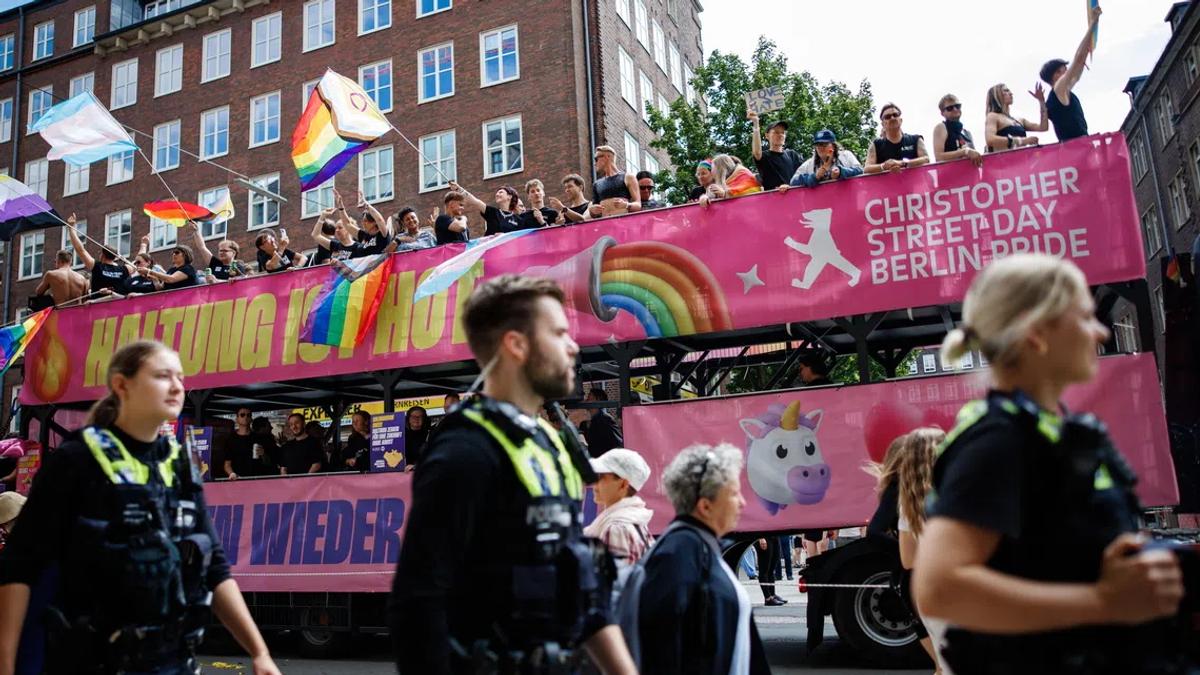
A week after a deadly jihadist attack on a Pride parade in Berlin, Germany's northern city of Hamburg saw approximately 300,000 people gather for its own Pride march. The Hamburg demonstration, marked by rainbow flags and a heavy police presence, was a clear act of solidarity and defiance following the Berlin incident where a 21-year-old man, Abdul Rahman Ballout, drove a van into a crowd, killing a 65-year-old Polish woman and injuring 31 others. Ballout, a German citizen with Lebanese roots, was known to authorities and had reportedly pledged allegiance to the Islamic State group.
The power dynamics at play in these events reveal a fundamental tension for modern European states: how to uphold the principles of an open, liberal society while confronting a persistent, diffuse threat of radicalized violence. The German state, like many of its European counterparts, possesses vast security apparatuses, yet its power is tested by individual actors motivated by extremist ideologies. The very act of public assembly, a cornerstone of democratic freedom, becomes a vulnerability. The state's response, deploying significant police forces, is an assertion of its monopoly on force and its commitment to public safety. However, this visible security also implicitly acknowledges the erosion of an assumed sense of safety, transforming public spaces into zones requiring active protection. For extremist groups like ISIS, the power lies not in direct territorial control in Europe, but in the ideological reach to inspire individuals to commit acts of terror, thereby sowing fear and challenging social cohesion without needing complex logistical networks. The mass turnout in Hamburg, conversely, represents the collective power of citizens to reclaim public space and assert their values, pushing back against the narrative of fear.
The most immediate human cost is borne by the victims and their families. The 65-year-old Polish woman killed in Berlin, and the 31 injured, represent the direct physical toll of this violence. Beyond the immediate casualties, however, lies a deeper, more pervasive human cost. The LGBTQ+ community and its allies, who participate in Pride marches to celebrate identity and advocate for rights, are forced to do so under the shadow of potential violence. This instills a psychological burden, a constant undercurrent of fear that can chip away at the joy and freedom of expression. For ordinary citizens, the necessity of heavy police presence at public events, while reassuring in its intent, subtly alters the experience of shared public life, reminding everyone that their safety is no longer a given. This erosion of spontaneous, unburdened public interaction is a significant, if often unquantified, cost to the social fabric.
What often remains understated in official statements and public discourse is the persistent challenge of "homegrown" radicalization and the limitations of state intelligence and policing in preventing lone-actor attacks. Abdul Rahman Ballout was a German citizen, known to the criminal justice system, and had even attempted to travel to Lebanon in 2025 to fight for ISIS. This history highlights a critical vulnerability: how individuals known to authorities can still escalate to deadly violence. Governments often emphasize their counter-terrorism successes, but the reality of preventing every inspired act of terror, especially from individuals already on their radar, is far more complex and politically sensitive. There's a reluctance to openly discuss the systemic gaps that allow such individuals to operate, or the profound difficulty of deradicalization and reintegration for those who have embraced extremist ideologies. The narrative of resilience, while important for public morale, can sometimes overshadow the deeper, unresolved questions about societal integration, the spread of extremist narratives online, and the efficacy of current monitoring strategies.
Looking ahead, several dynamics warrant close observation. European states will continue to grapple with the delicate balance between robust security measures and the preservation of civil liberties. The public's tolerance for increased surveillance or restrictions on public assembly will be tested, particularly if such attacks persist. We should watch for how extremist groups adapt their tactics, potentially shifting from large-scale plots to inspiring more lone-actor incidents, which are harder to detect and prevent. The political discourse surrounding immigration, integration, and national identity in Germany and across Europe will likely intensify, with potential implications for social cohesion and policy. Finally, the continued power of collective public action, as demonstrated in Hamburg, will be a crucial indicator of civil society's resilience against attempts to instill fear and division. The ongoing tension between the state's capacity to protect and the individual's right to freely assemble will define the character of public life in the coming years.
Source referenced: STRAITSTIMES
This brief was synthesized by our Editorial Engine and reviewed by The Ground Narrative team.


