TRENDING

Thursday, 17 September 2026
----------------------
6 Rabi' Al-Thani 1448 AH
Amid escalating US tariffs, the EU floated an associate‑member status for Canada. The move reshapes trade, security and political leverage for both sides while ordinary Canadians and Europeans bear the hidden costs.
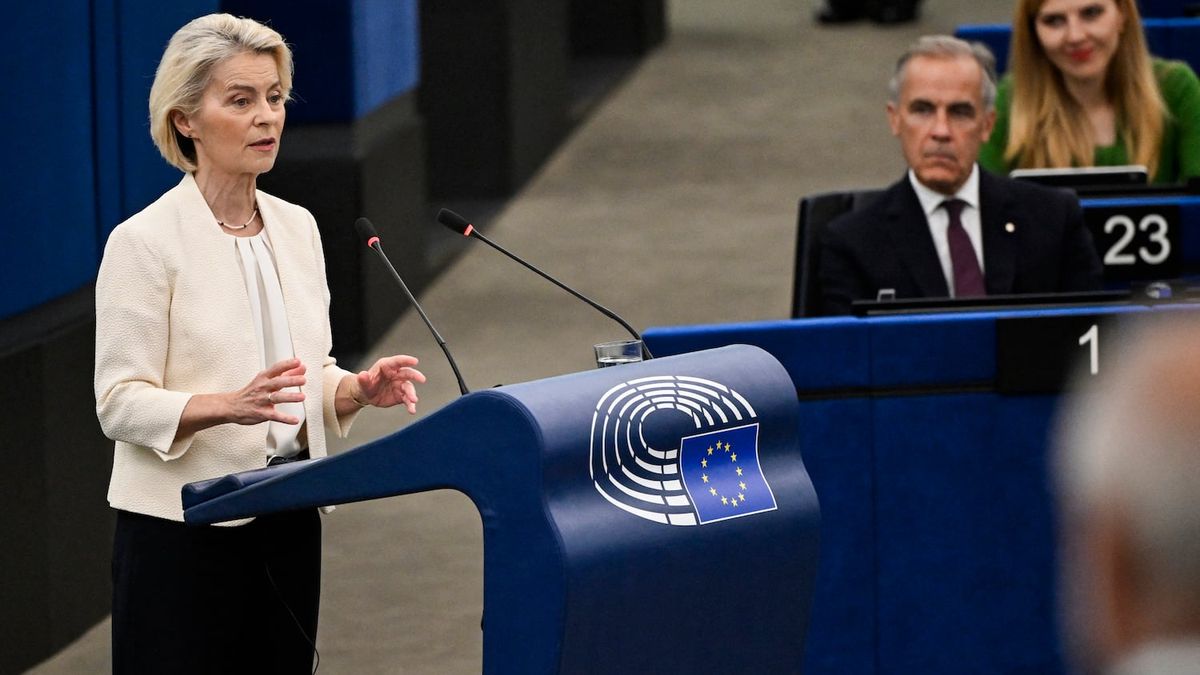
European Commission President Ursula von der Leyen announced, during her State of the Union address, that the EU would explore making Canada its first associate member. The proposal, discussed alongside Prime Minister Mark Carney, would extend the existing Canada‑EU free‑trade agreement, grant visa‑free mobility for Canadians, and deepen cooperation on defence, critical minerals and AI. The idea surfaces as the United States, under President Donald Trump, has slapped $20 billion in tariffs on Canadian goods and threatened to turn Canada into a 51st U.S. state.
The initiative is a calculated response to three intersecting pressures. First, the EU seeks to diversify its economic partners after a decade of reliance on the U.S. market; an associate‑member status offers a legal framework to lock in supply‑chain links for critical minerals and AI research without the political strings of full accession. Second, Canada’s government, bruised by American tariffs, is pivoting toward Europe to preserve export revenues and protect domestic industries, especially in automotive and aerospace sectors that depend on trans‑Atlantic supply chains. Third, the move serves a diplomatic signal: by deepening ties with a fellow liberal democracy, the EU can blunt U.S. leverage over both partners and reinforce a rules‑based order that Trump’s administration routinely undermines. The proposal still requires unanimous approval from all 27 EU members, a hurdle complicated by ten states that have yet to ratify the 2017 Canada‑EU trade deal, fearing preferential treatment for Canadian investors.
While officials trade diplomatic soundbites, the real impact lands on workers and communities on both sides of the Atlantic. In Canada’s auto sector, tariff retaliation has already forced factories to delay shifts and consider layoffs; an expanded EU partnership could stabilize demand but also bring competition from European manufacturers seeking cheaper Canadian labour. Indigenous communities near critical‑mineral sites face heightened extraction pressure as Europe eyes a reliable source for batteries and renewable‑energy technologies, risking further environmental degradation and loss of traditional lands. Across the EU, small‑ and medium‑sized enterprises fear that visa‑free mobility may tilt the labour market toward higher‑paid Canadian professionals, squeezing local hiring. Finally, American farmers already squeezed by retaliatory duties risk losing a secondary market for their grain if Canadian‑EU trade deepens, potentially driving down farm incomes in the Midwest.
Official statements stress that the associate‑member proposal is “not a partnership against anyone else.” What remains under‑reported is the strategic hedge against U.S. economic coercion. By embedding Canada into EU regulatory frameworks—particularly in digital standards and defence procurement—the bloc creates a parallel market that can operate independently of Washington’s policy swings. Moreover, the EU’s internal dissent over the proposal masks a budgetary calculus: member states wary of Canadian investment benefits are also concerned about the fiscal cost of extending social‑security coordination and migration support to a non‑EU citizenry. Finally, the narrative omits the political capital von der Leyen hopes to gain ahead of the 2027 European Parliament elections; a bold foreign‑policy move can bolster her image as a decisive leader in a fragmented Union.
The proposal will be tested at the Canada‑EU summit in October, where negotiators must reconcile divergent views on market access, investment safeguards and migration rules. Watch for EU member‑state ratifications of the 2017 trade deal—each approval or veto will signal the bloc’s appetite for deeper integration with a non‑European partner. In Washington, the Trump administration’s tariff policy will either soften, prompting a recalibration of Canada’s pivot, or intensify, forcing the EU to decide whether to act as a counter‑balance or to accommodate U.S. pressure. Finally, domestic political reactions in Canada—particularly from provinces reliant on U.S. trade—will shape how far Ottawa can push the associate‑member agenda without igniting a backlash at home.
The unfolding dance between Brussels, Ottawa and Washington illustrates how trade, security and migration are being repurposed as tools of geopolitical bargaining, with ordinary citizens caught in the cross‑currents.
Editor's Note: Analysis based on publicly reported statements and known trade dynamics; specific negotiation details remain confidential.
Source referenced: FOREIGNPOLICY
This brief was synthesized by our Editorial Engine and reviewed by The Ground Narrative team.