TRENDING

Saturday, 7 November 2026
----------------------
27 Jumada Al-Awwal 1448 AH
The 15th International Forum on Energy for Sustainable Development concluded in Xi'an, China, with a call for stronger international energy cooperation. This event, hosted by China for the first time, highlights the nation's growing influence in shaping the global clean energy landscape.
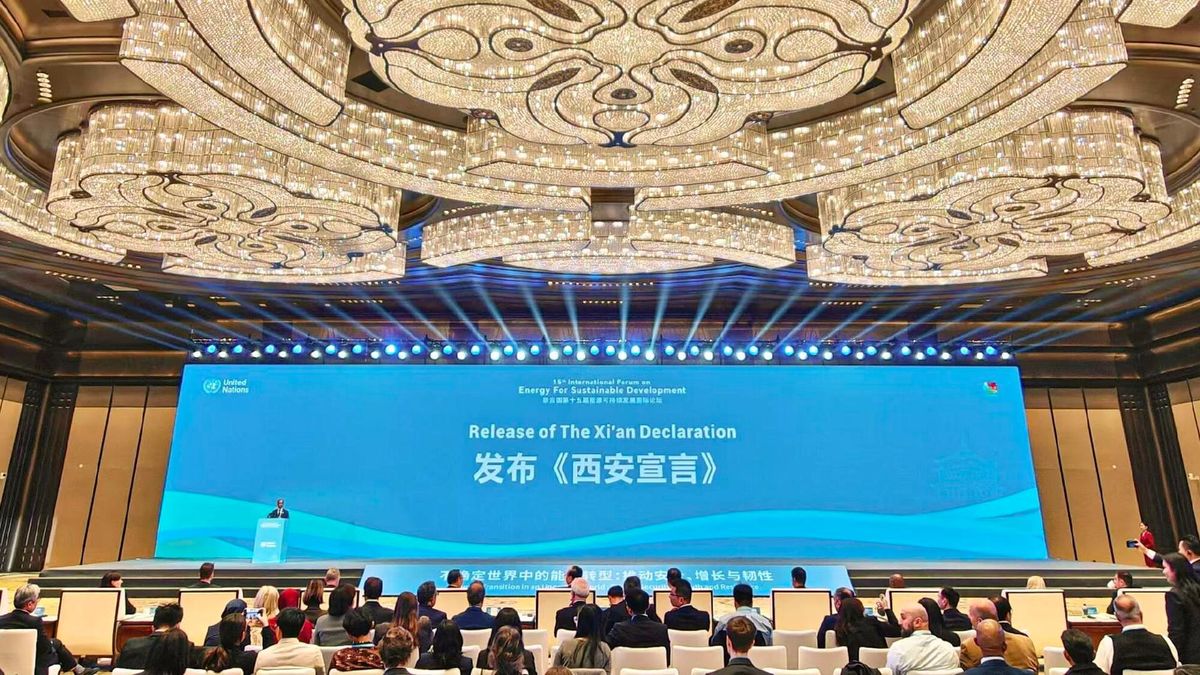
The 15th International Forum on Energy for Sustainable Development recently convened in Xi'an, China, bringing together approximately 300 delegates from various nations. This marked the first time the significant event was hosted by China, culminating in the signing of the Xi'an Declaration. The declaration issued a collective call for stronger international energy cooperation, with delegates frequently highlighting China's advancements in clean energy technologies and emphasizing the critical need for global collaboration to accelerate the worldwide energy transition.
The forum in Xi'an was not merely a diplomatic gathering; it was a carefully orchestrated display of China's ascendant power in the global energy landscape. By hosting an event of this magnitude and securing a declaration on international cooperation, Beijing reinforced its narrative as a responsible global actor and a key solution provider for the climate crisis. This positioning is not accidental; it is built on decades of strategic investment and industrial policy.
China has cemented its role as the world's undisputed manufacturing powerhouse for clean energy technologies. From solar panels and wind turbines to electric vehicles and lithium-ion batteries, the vast majority of the world's green tech components originate from Chinese factories. This industrial dominance translates directly into economic leverage. Nations seeking to decarbonize their economies often find themselves reliant on Chinese supply chains, which offer unparalleled scale and cost-effectiveness. This reliance creates a new form of interdependence, shifting the locus of energy security concerns from fossil fuel producers to green tech manufacturers.
The choice of Xi'an as the host city is also significant. Historically a starting point of the ancient Silk Road, Xi'an is now a crucial hub for China's Belt and Road Initiative (BRI), a global infrastructure development strategy. Hosting an energy forum here subtly links China's green energy leadership with its broader vision for global connectivity and economic influence. Through the BRI, China has financed and built numerous energy projects, including renewable ones, across Asia, Africa, and Latin America, further solidifying its role as a preferred partner for developing nations seeking to modernize their energy grids.
For China, this leadership in clean energy is a strategic imperative. It addresses its own energy security concerns by reducing reliance on imported fossil fuels, stimulates its domestic economy, and creates high-value export industries. Furthermore, by setting the agenda for
The Xi'an Declaration is an agreement signed at the 15th International Forum on Energy for Sustainable Development, calling for stronger international energy cooperation to advance the global energy transition. It was hosted by China for the first time, highlighting its growing role in global energy discussions.
China is a dominant force in manufacturing key clean energy technologies like solar panels, wind turbines, and batteries, giving it substantial influence over global supply chains and the pace of the energy transition. This position offers both opportunities for collaboration and potential dependencies for other nations.
Beyond the direct financial investment, the shift carries human costs including environmental damage from critical mineral mining, potential labor exploitation in supply chains, and economic dislocation in traditional energy sectors. There's also the risk of technological dependence on dominant manufacturing nations, impacting long-term economic sovereignty.
Editor's Note: The analysis is based on interpreting the stated goals of the Xi'an Declaration against broader geopolitical and economic realities of the global energy transition.
Source referenced: CGTN
This brief was synthesized by our Editorial Engine and reviewed by The Ground Narrative team.