TRENDING

Saturday, 7 November 2026
----------------------
27 Jumada Al-Awwal 1448 AH
Over 3,200 migrants were rescued off the Canary Islands in just six days of November 2026, highlighting the escalating desperation driving journeys across one of the world's deadliest sea routes. This surge places immense pressure on Spain's reception services and spotlights the complex interplay of poverty, instability, and European border policies.
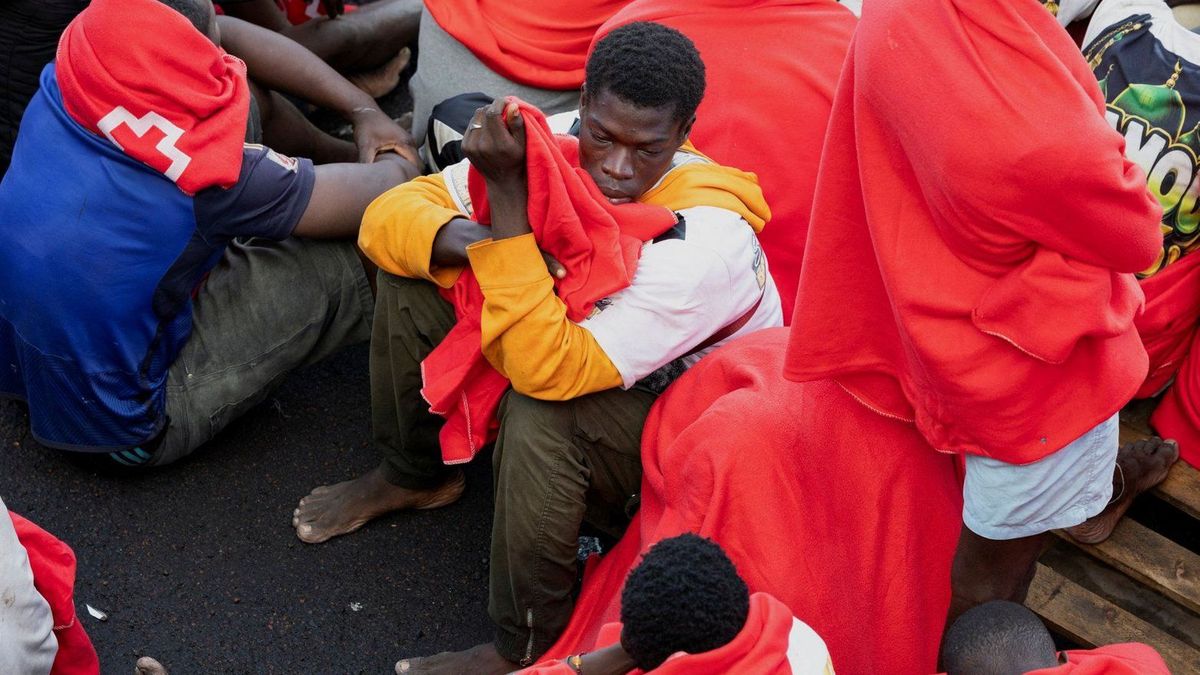
In the first week of November 2026, more than 3,200 migrants were rescued from the treacherous waters of the Atlantic Ocean, arriving in Spain's Canary Islands. These individuals, primarily from West Africa, undertook one of the planet's most dangerous migration routes, overwhelming local emergency and reception services on the Spanish archipelago. The sudden surge underscores a persistent humanitarian crisis at Europe's southern maritime frontier.
The mass movement of people from West Africa to the Canary Islands is not a random occurrence but a direct consequence of deeply entrenched power imbalances and structural forces. On one side are the powerful push factors in West Africa, driven by economic desperation, political instability, and environmental degradation. On the other, the perceived pull of Europe, coupled with increasingly militarized land borders, funnels desperate individuals onto the perilous sea.
In West African nations, a confluence of factors creates immense pressure to migrate. Many countries face persistent poverty and high unemployment rates, particularly among a burgeoning youth population. Economic models, often reliant on raw material exports and vulnerable to global market fluctuations, offer limited prospects for upward mobility. This is exacerbated by the impacts of climate change, which are devastating traditional livelihoods like agriculture and fishing, especially in coastal and Sahel regions. Prolonged droughts, desertification, and erratic weather patterns render vast areas unlivable and unproductive, forcing communities to seek alternatives. Furthermore, political instability, including coups, corruption, and the spread of extremist violence across the Sahel, displaces populations and shatters any hope for a stable future. These conditions create a fertile ground for sophisticated human smuggling networks to flourish, offering the illusion of a pathway to a better life for a significant fee, often exploiting the very desperation they capitalize on.
Europe's role in this dynamic is multifaceted. The continent represents a beacon of economic opportunity and stability, a stark contrast to the conditions many migrants leave behind. However, European Union policies, particularly those focused on border externalization and deterrence, inadvertently shape the routes migrants take. As land routes through the Maghreb have become more heavily policed and dangerous, the Atlantic route to the Canary Islands has re-emerged as a primary, albeit deadly, alternative. Spain, as the immediate recipient of these arrivals, bears the brunt of the humanitarian and logistical challenge. Its government is caught between international obligations to rescue and process asylum seekers and the domestic political pressures to control borders and manage resources. This often leads to diplomatic efforts with West African countries, offering aid or cooperation in exchange for stricter border controls and repatriation agreements, effectively outsourcing border management to less wealthy nations. The underlying power dynamic is clear: Europe seeks to manage the symptoms of migration at a distance, rather than addressing the root causes or providing sufficient legal pathways, thereby perpetuating a cycle of dangerous journeys and human suffering.
The human cost of the Canary Islands migration route is immeasurable, borne primarily by the individuals undertaking the journey, but also by the communities they leave behind and the islanders who receive them.
For the migrants themselves, the journey is an act of profound desperation and courage. They risk everything – their life savings, their physical safety, and their very lives – on unseaworthy vessels, often overcrowded and ill-equipped for the open Atlantic. Exposure to the elements, lack of food and water, engine failures, and capsizing are constant threats. The Atlantic route is notorious for its high fatality rate, with countless lives lost at sea, their stories often untold and their bodies unrecovered. Survivors frequently arrive traumatized, suffering from severe dehydration, hypothermia, burns from fuel, and psychological distress. Many carry the scars of exploitation by smugglers, who often extort money, subject them to violence, or abandon them at sea.
Upon arrival, the immediate human cost shifts to the Canary Islands. Local emergency services, including coast guards, medical personnel, and aid workers, are stretched to their limits. The sheer volume of arrivals strains resources for medical care, food, shelter, and processing. Temporary reception centers quickly become overcrowded, leading to substandard living conditions and further distress for vulnerable individuals. The local population, while often demonstrating compassion, can also experience strain on public services, particularly in smaller island communities. This can lead to social tensions, fueled by misinformation and the perception of a disproportionate burden on the islands' infrastructure and economy, which is heavily reliant on tourism.
The human cost extends far beyond the shores of the Canary Islands. In West African communities, families often pool their resources, selling assets or taking on debt, to fund a loved one's journey. This creates immense pressure on the migrant to succeed, as their success is seen as the family's only hope for a better future through remittances. When journeys fail, families are left with devastating grief, financial ruin, and the crushing weight of lost hope. The absence of young, productive individuals also impacts the social and economic fabric of their home communities, creating a vacuum that further exacerbates underdevelopment and perpetuates the cycle of migration.
While the immediate crisis of migrant arrivals dominates headlines, several critical aspects of this complex issue are often downplayed or omitted from official narratives and public discourse. These untold stories reveal deeper systemic failures and inconvenient truths about global power dynamics.
Governments, particularly in Europe, tend to frame the migrant influx as a border control issue, emphasizing security and deterrence. What is often downplayed is the historical and ongoing role of European nations in perpetuating the very conditions that drive migration. Colonial legacies continue to impact economic structures in West Africa, leaving many nations reliant on resource extraction and vulnerable to external market forces. Current trade agreements, often favoring European agricultural and industrial products, can stifle local industries and undermine food security in African countries. This creates a cycle where European prosperity is, in part, built on economic structures that limit opportunities elsewhere, thus fueling the desire for migration.
Another untold story is the paradox of European border policy. While EU nations invest heavily in externalizing their borders – funding African states to prevent departures, establishing detention centers, and increasing maritime surveillance – these measures often fail to stop migration. Instead, they push migrants onto more dangerous and clandestine routes, making the journey deadlier and more profitable for smugglers. The lack of safe, legal pathways for asylum seekers and economic migrants forces individuals into the hands of criminal networks. By focusing almost exclusively on deterrence, Europe inadvertently creates a system that prioritizes border integrity over human safety, while simultaneously empowering the very criminal enterprises it claims to combat.
Many official statements from European and African governments alike often understate the profound impact of climate change as a driver of migration. While economic hardship is cited, the direct link between changing weather patterns, crop failures, desertification, and the collapse of livelihoods is frequently overlooked or presented as a secondary concern. For countless communities in West Africa, climate change is not a distant threat but an immediate reality that renders their land unproductive and their traditional ways of life unsustainable. Acknowledging climate change as a primary migration driver would necessitate a much broader, more costly, and politically challenging response, including significant international climate finance and adaptation support, which many powerful nations are reluctant to fully commit to.
The vast, illicit industry of human smuggling is often discussed in terms of its criminality, but its intricate connections and economic power are frequently underestimated. This is not merely opportunistic crime; it is a sophisticated, multi-billion-dollar enterprise often intertwined with other illicit trades like drug trafficking and arms dealing. The profits generated from human desperation are immense, fueling corruption and destabilizing regions. Governments struggle to dismantle these networks because they are deeply embedded, adaptable, and often operate with impunity due to weak governance and porous borders in transit countries. The focus on intercepting migrants at sea often overshadows the more challenging and politically sensitive task of disrupting these powerful, transnational criminal organizations at their source and along their routes.
As the situation in the Canary Islands continues to unfold, several key developments bear close observation, revealing the future trajectory of this complex humanitarian and geopolitical challenge.
Firstly, monitor the EU's internal cohesion and its approach to migration. Will the surge in arrivals prompt a more unified, humane, and comprehensive European migration policy, or will it further exacerbate divisions and fuel anti-immigrant sentiment, particularly in Spain and other frontline states? The debate over burden-sharing and the future of asylum laws will intensify, with potential implications for national elections across the continent.
Secondly, pay close attention to Spain's diplomatic engagements with West African nations. Will these efforts lead to genuine partnerships focused on sustainable development and addressing root causes, or will they remain primarily transactional, centered on border externalization and repatriation agreements? The effectiveness of these collaborations in stemming departures, while respecting human rights, will be a critical indicator.
Thirdly, observe the adaptability of smuggling networks. As one route becomes more difficult or dangerous, these criminal organizations quickly pivot to new methods and pathways. Any significant change in European or African border enforcement will likely lead to an evolution in smuggling tactics, potentially opening up even more perilous journeys or shifting pressure to different transit countries.
Finally, watch for any acknowledgment or policy shifts regarding climate change as a migration driver. As the impacts of environmental degradation become undeniable, will European and international bodies begin to integrate climate adaptation and resilience into their migration strategies, offering legal frameworks and support for those displaced by environmental collapse? This would signify a fundamental shift from a purely security-focused approach to one that addresses the underlying planetary forces at play.
Source referenced: ALJAZEERA
This brief was synthesized by our Editorial Engine and reviewed by The Ground Narrative team.