TRENDING

Saturday, 7 November 2026
----------------------
27 Jumada Al-Awwal 1448 AH
China's top legislator met separately with Gabon's transitional president and Austria's chancellor, showcasing Beijing's multi-faceted global engagement strategy. These meetings highlight China's pursuit of resource security and its efforts to cultivate European relationships amid complex geopolitical shifts.
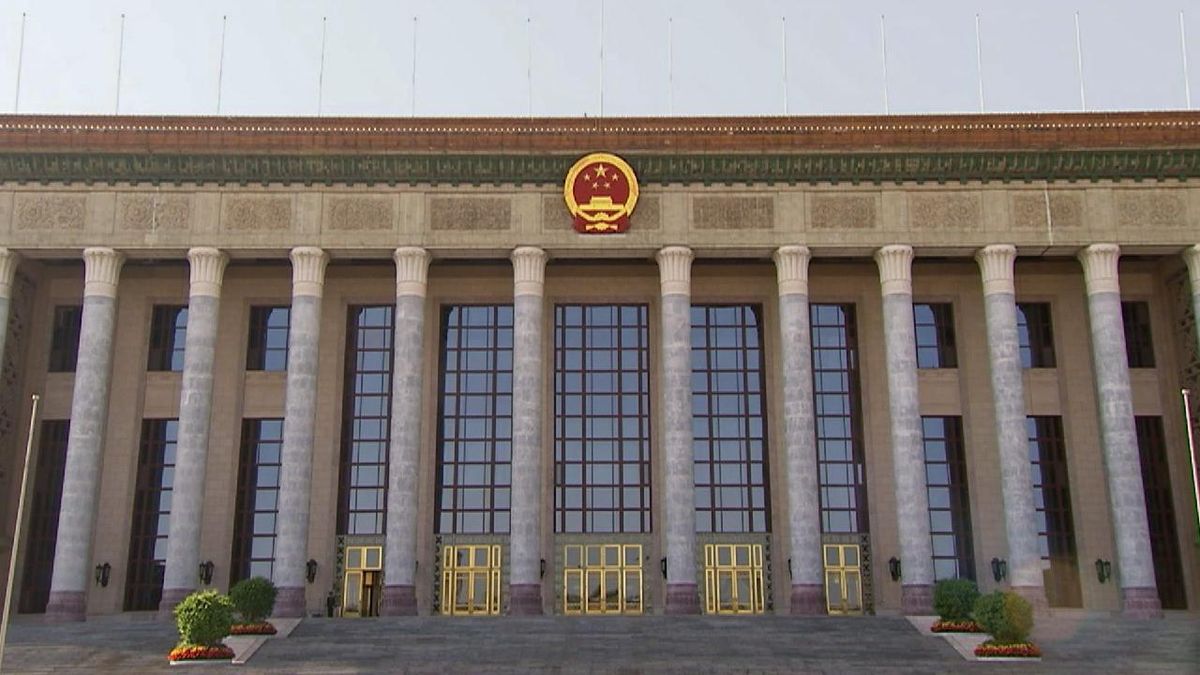
In a display of China's expansive diplomatic reach, Zhao Leji, chairman of the Standing Committee of the National People's Congress (NPC), recently held separate high-level meetings in Beijing. He first met with Gabonese President Brice Clotaire Oligui Nguema, who assumed power following a military coup in August 2023. Shortly after, Zhao engaged with Austrian Chancellor Christian Stocker. Both meetings emphasized strengthening bilateral relations, expanding cooperation across various sectors, and fostering closer parliamentary and people-to-people ties, underscoring Beijing's strategic engagement with diverse global partners.
These seemingly disparate meetings reveal a calculated and multi-layered approach to China's global power projection. Beijing's engagement with Gabon and Austria is not merely about bilateral pleasantries; it is a strategic maneuver designed to secure vital resources, expand political influence, and subtly reshape international norms.
For Gabon, China's engagement with President Nguema is a significant diplomatic win for a regime that came to power through extra-constitutional means. In the aftermath of the August 2023 coup, many Western nations adopted a cautious or even condemnatory stance, often imposing sanctions or freezing aid. China, adhering to its long-standing principle of non-interference in internal affairs, offers a different path. By engaging with Nguema, Beijing provides a crucial measure of international legitimacy to a transitional government eager to stabilize its rule and secure economic lifelines. The focus on cooperation in mining and fishery is no accident. Gabon is rich in natural resources, including oil, manganese, and timber, all crucial for China's industrial growth and energy security. By deepening ties, China secures access to these resources, often through infrastructure-for-resources deals, while simultaneously expanding its influence in a strategically important region of Africa. This approach also subtly challenges the Western-led narrative on democratic governance, presenting China as a reliable partner regardless of a nation's political system.
The meeting with Austrian Chancellor Stocker serves a different, yet equally critical, strategic purpose. Austria, as a member of the European Union, represents an avenue for China to cultivate relations within the bloc, which has often presented a more unified, and at times critical, front towards Beijing. The EU has recently engaged in discussions about
China's engagement with Gabon's post-coup government helps legitimize the new regime internationally while securing access to Gabon's rich natural resources like mining and fishery. This aligns with China's 'non-interference' policy, allowing it to maintain economic ties regardless of a nation's political system.
By meeting with Austria, an EU member, China aims to foster goodwill within the European Union, maintain strong economic ties, and potentially soften the EU's collective stance on China. Austria's reaffirmation of the 'one-China policy' also serves as a diplomatic win for Beijing.
In Gabon, citizens face potential lack of democratic accountability, opaque resource deals, and environmental impacts from extraction. In Europe, the focus on economic ties risks compromising democratic values and a unified EU stance on human rights and geopolitical issues, affecting public trust and long-term stability.
Source referenced: CGTN
This brief was synthesized by our Editorial Engine and reviewed by The Ground Narrative team.