TRENDING

Saturday, 7 November 2026
----------------------
27 Jumada Al-Awwal 1448 AH
The recent US midterm elections have dramatically reshaped the political landscape, handing control of Congress to the Democrats and creating a 'lame duck' presidency for Donald Trump. This shift immediately triggered a stock market downturn, particularly in the burgeoning AI sector, as regulatory concerns collide with economic growth ambitions.
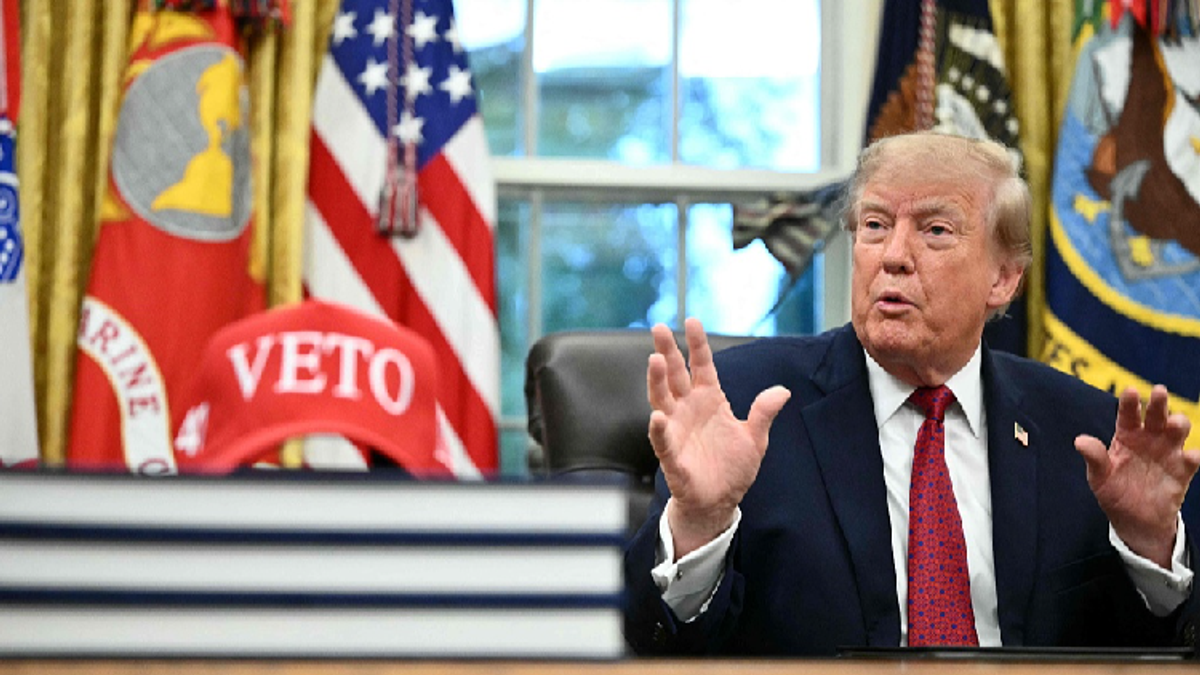
In November 2026, the United States experienced a significant political upheaval as the Democratic Party secured control of both the Senate and the House of Representatives in the midterm elections. This outcome effectively rendered President Donald Trump a "lame duck," facing a constrained legislative agenda for the remainder of his term. The immediate aftermath saw a stark contrast between celebratory Democrats and a volatile stock market. Wall Street, particularly the tech sector, experienced a significant downturn, with the Nasdaq plunging over 5% and the Philadelphia Semiconductor Index sinking more than 12%. This market reaction was directly attributed to concerns that the new Democratic majority would move to regulate or even pause the rapid development of artificial intelligence (AI) infrastructure, citing high electricity and water consumption, alongside low employment potential. This stance stands in direct opposition to President Trump's fervent support for accelerating AI development, which he views as a critical driver of US economic growth.
Adding to the complexity, the Republican defeat was widely linked to the economic fallout from Trump's previous policies. His "Tariff President" agenda, which promised to protect American industries, ultimately resulted in higher prices for consumers. More critically, a costly war against Iran, initiated during his presidency, debilitated the Middle East, disrupted trade flows through the Strait of Hormuz, and led to significantly higher fuel prices domestically. These economic pressures, particularly the rising cost of living, were cited as key factors in the electorate's decision to flip traditionally Republican states to the Democrats, signaling a public demand for a change in economic direction.
The recent US midterm elections have fundamentally altered the balance of power in Washington, setting the stage for a period of intense legislative gridlock and ideological clashes. The Democrats, now holding both chambers of Congress, are poised to challenge President Trump's agenda, particularly concerning economic policy and the burgeoning AI sector. This shift represents a direct response to public discontent over economic hardship, a powerful force that has historically shaped American political outcomes.
At the heart of the new political battle lies the future of artificial intelligence. President Trump has consistently championed aggressive AI development, viewing the sector's estimated $1 trillion annual capital expenditure from major hyperscalers as a vital economic engine, compensating for weaknesses elsewhere in the economy. For Trump, a booming stock market, fueled by tech innovation, has always been a validation of his presidency. His rhetoric frames AI as "superintelligence" – a frontier to be conquered, not constrained.
Conversely, the newly empowered Democrats are signaling a strong intent to rein in the tech industry. Figures like Senator-elect Abdul El-Sayed and Representative Yassamin Ansari have explicitly called for pauses or bans on advanced AI development, citing concerns over resource consumption (electricity, water) and the potential for low job creation. This stance aligns with a broader Democratic narrative against perceived "oligarchs" and tech billionaires, reflecting a desire to assert public control over powerful private interests. The market's immediate negative reaction underscores the perceived threat of regulatory intervention to the industry's profitability and growth trajectory. This is not merely a policy debate; it is a fundamental disagreement over the role of government in shaping technological progress and economic distribution.
The midterm results also reflect a public referendum on President Trump's previous economic and foreign policies. His "Tariff President" approach, while intended to protect domestic industries, largely failed to deliver on its promises, instead passing on increased costs to American consumers. The more significant factor, however, was the costly war with Iran. This conflict, far from being an abstract geopolitical maneuver, had tangible economic consequences for ordinary Americans. The disruption of trade through the Strait of Hormuz, a critical choke point for global oil supplies, directly translated into higher fuel prices at the pump. These elevated energy costs then cascaded through the economy, driving up the price of everyday essentials and contributing to a broader cost-of-living crisis.
Vice President JD Vance's post-election attribution of the Republican defeat to the Iran war highlights the direct link between foreign policy decisions and domestic political outcomes. For many voters, the promise of ending "forever wars" was replaced by a new, costly conflict that directly impacted their household budgets. This demonstrates a crucial power mechanic: while leaders may pursue grand strategic objectives, the ultimate arbiter of their success often lies in the everyday economic realities faced by the electorate. Businesses, as the raw intelligence notes, abhor policy chaos, and citizens resent being squeezed for essentials. Trump's two flagship policy endeavors—tariffs and the Iran war—created precisely this environment of instability and economic strain, ultimately contributing to his party's midterm humbling.
The new political reality promises legislative gridlock. With a Democratic Congress and a Republican President, vetoes, subpoenas, and government shutdowns are likely to become common tools in the ongoing power struggle. For the Democrats, their victory provides an opportunity to advance their agenda and demonstrate their capacity to govern, positioning themselves for the next presidential election cycle. For Trump, despite his "lame duck" status, his actions will be driven by a desire to protect his legacy, rally his base, and potentially set the stage for future political endeavors. His immediate reaction, blaming the market crash on "Dumocrats," signals a continued combative approach, prioritizing political narrative over policy consensus. The core question for both sides remains political survival and the ability to project strength and effectiveness to their respective bases, even if it means sacrificing compromise for confrontation.
The shift in power dynamics in Washington, driven by voter discontent, has profound implications for ordinary citizens, who often bear the brunt of political and economic decisions made by powerful actors. The raw intelligence points to several direct human costs already incurred and potential future ones.
Perhaps the most immediate and widespread human cost stemmed from President Trump's previous economic policies. His "Tariff President" agenda, while framed as a measure to protect American jobs and industries, translated into higher prices for imported goods. These tariffs, rather than being absorbed by foreign producers, were often passed on to American consumers, increasing the cost of everything from electronics to clothing. This created a silent tax on households, eroding purchasing power and making everyday life more expensive.
Even more impactful was the Iran war. While the conflict played out thousands of miles away, its economic repercussions were felt directly at home. The disruption of trade through the Strait of Hormuz, a vital artery for global oil shipments, caused a significant spike in fuel prices. For millions of Americans, higher fuel prices meant increased costs for commuting, transporting goods, and heating their homes. This wasn't merely an inconvenience; it was a fundamental squeeze on household budgets, forcing families to make difficult choices between essentials. The raw intelligence explicitly states that "higher fuel prices at the pumps as well as their knock-on effects on the cost of living were the main factors behind even devoutly Republican states such as Texas and Kansas flipping to the Democrats." This underscores how geopolitical conflicts, often perceived as distant, can directly translate into kitchen-table economic pain, influencing electoral outcomes and shaping the lives of millions.
The new political landscape introduces significant uncertainty for those involved in the burgeoning AI sector. While AI development promises innovation and new opportunities, a potential "full-on pause" or stringent regulation, as advocated by some Democrats, could lead to job insecurity or a slowdown in hiring within the tech industry. Conversely, if AI development continues unchecked, concerns about job displacement due to automation could become a reality for workers in other sectors. The human cost here is the anxiety and instability that comes with rapid technological change coupled with unpredictable regulatory environments. Furthermore, the massive buildout of AI infrastructure, particularly data centers, has a localized human cost. These facilities consume enormous amounts of electricity and water, placing strain on local grids and natural resources. Communities hosting these data centers might face increased utility costs, environmental impacts, and competition for essential resources, often without seeing significant local employment benefits due to the highly automated nature of these operations.
Beyond direct economic impacts, the constant political infighting, allegations of self-enrichment, and the promise of "witch hunts" and subpoenas contribute to a broader human cost: the erosion of public trust in institutions. When political leaders are perceived to be prioritizing personal gain or partisan warfare over the well-being of their constituents, it fosters cynicism and disengagement. This deepens the existing polarization within American society, making it harder to find common ground on critical issues and ultimately hindering effective governance that serves the public good.
Behind the headlines and official statements, powerful actors often downplay, omit, or reframe narratives to serve their political or economic interests. The recent US midterm elections and their aftermath are no exception, revealing several layers of unspoken truths and strategic omissions.
The Democratic Party's sudden and vocal concerns about AI's resource consumption (electricity, water) and low employment potential, while valid, also serve a convenient political purpose. What is often downplayed is the broader context of their stance against "American oligarchs" and tech billionaires. While environmental and social concerns are genuine, targeting the AI industry also allows the Democrats to tap into a populist vein, positioning themselves as champions against powerful corporate interests. This narrative allows them to critique the economic power of tech giants without necessarily addressing the deeper structural issues of wealth inequality or the complexities of technological advancement. The market's "bloodbath" in tech stocks, triggered by Alphabet's lackluster results even before the elections, suggests that concerns over AI monetization and sustainability were already simmering beneath the surface, predating the Democrats' amplified rhetoric. The political shift merely provided a convenient platform to articulate these pre-existing anxieties.
President Trump's immediate reaction to the market downturn – blaming the "Dumocrats" – is a classic example of downplaying his own role in the economic environment that led to his party's defeat. He conveniently omits or minimizes the long-term, tangible economic pain inflicted by his tariff policies and the Iran war. His focus on stock market valuations as the sole metric of economic success ignores the higher prices at the pump and in grocery stores that directly impacted ordinary Americans. By shifting blame, Trump attempts to deflect accountability for policies that demonstrably contributed to the cost-of-living crisis, which in turn fueled the Democratic victory. Furthermore, the raw intelligence hints at "allegations that he used the office of the US President to enrich himself, his family and his associates to the tune of billions of dollars." This crucial omission from public discourse, or at least its lack of robust defense, speaks to a deeper erosion of ethical standards in governance, which, while not directly causing the market crash, certainly contributed to the public's disillusionment and desire for change.
The term "lame duck president" often implies a leader stripped of all power and influence. However, this downplays the significant executive authority that President Trump still wields. While Congress can obstruct legislative initiatives, a president retains considerable power over foreign policy, executive orders, judicial appointments, and regulatory agencies. Trump could still use these levers to push his pro-AI agenda, influence the ongoing Iran war, or reshape trade policies through executive action. The narrative of a completely powerless president serves to simplify a much more complex reality, potentially underestimating the continued impact he can have on domestic and international affairs, even without a congressional majority.
While the raw intelligence focuses on US domestic politics and economy, the implications of the Iran war, for example, extend far beyond American borders. The debilitation of the Middle East and the disruption of trade through the Strait of Hormuz have global economic consequences, affecting energy prices and supply chains worldwide. Similarly, shifts in US AI policy will reverberate across the global technology landscape, impacting international innovation, competition, and geopolitical rivalries in the race for technological supremacy. These broader global repercussions are often downplayed in a domestically focused political narrative, yet they represent significant untold stories for citizens worldwide.
The coming two years in Washington promise a period of intense political maneuvering and policy uncertainty, with far-reaching consequences for both the United States and the global landscape. Citizens should closely monitor several key areas to understand the unfolding power dynamics and their human cost.
First, the legislative battles between the Democratic Congress and President Trump will be paramount. Expect frequent clashes over policy, characterized by vetoes, subpoenas, and the looming threat of government shutdowns. How these confrontations play out will determine the feasibility of passing significant legislation, particularly on economic and social issues. The ability of either side to compromise, or their willingness to engage in prolonged political warfare, will directly impact the stability of governance and the delivery of public services.
Second, the future of AI policy will be a critical watchpoint. Will the Democrats push for aggressive regulation or even a moratorium on advanced AI development, as some leaders have suggested? How will the powerful tech industry respond to such pressures? Will President Trump attempt to use executive orders or other presidential powers to circumvent congressional opposition and accelerate AI progress? The outcome of this debate will not only shape the technological frontier but also influence investment, job creation, and the ethical guardrails around a rapidly evolving technology. Look for specific legislative proposals, industry lobbying efforts, and judicial challenges.
Third, keep a close eye on key economic indicators. While oil prices have moderated since the election results, the underlying stability of the Middle East and the ongoing status of the Iran war will directly impact global energy markets and, consequently, fuel prices at the pump. Any escalation or de-escalation in the region will have immediate effects on household budgets. Furthermore, monitor inflation rates and the broader stock market, especially the performance of tech and AI-related companies, as these will reflect investor confidence in the face of political uncertainty and potential regulatory changes. The effectiveness of Trump's "hamstrung tariff architecture" and the weaponization of trade flows will also continue to shape global supply chains and consumer prices.
Finally, the political landscape will quickly pivot towards the 2028 presidential election cycle. Watch for the emergence of new presidential aspirants from both Republican and Democratic parties. The issues that dominated the midterms – economic hardship, the cost of living, the role of big tech, and foreign policy entanglements – will undoubtedly form the core of their campaign platforms. How these issues are framed and debated will offer insights into the evolving priorities of the American electorate and the future direction of the nation's power structures. The next two years will not merely be a period of gridlock, but a crucial testing ground for the narratives and policies that will define the next era of American politics.
The US midterm elections led to a significant stock market downturn, particularly in tech and AI sectors. Investors reacted to concerns that the new Democratic-controlled Congress would implement regulations or pauses on advanced AI development, impacting industry growth and profitability.
Democrats have voiced concerns over the high electricity and water consumption of AI infrastructure, as well as its low employment potential. They also align these concerns with a broader critique of 'oligarchs' and tech billionaires, advocating for greater public oversight and regulation of the industry.
The costly war against Iran, initiated during President Trump's term, significantly impacted the midterm election results. Disruptions to trade through the Strait of Hormuz led to higher fuel prices and a general increase in the cost of living, which was a major factor in voters turning against the Republican Party.
Source referenced: CGTN
This brief was synthesized by our Editorial Engine and reviewed by The Ground Narrative team.