TRENDING

Thursday, 17 September 2026
----------------------
6 Rabi' Al-Thani 1448 AH
Yemen's fragile truce has collapsed, dragging the nation back into intense conflict as regional powers escalate their proxy war. Civilians bear the brunt of renewed missile strikes and a looming humanitarian catastrophe.
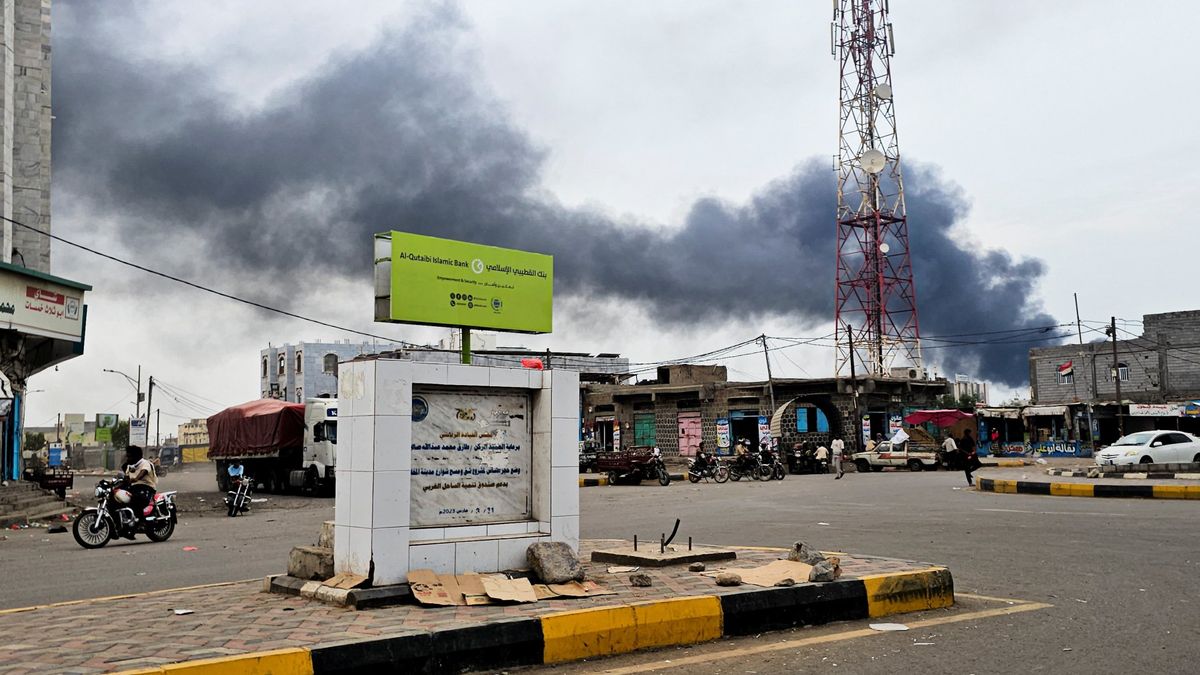
Recent ballistic missile attacks by Yemen's Houthi forces targeted the vital Red Sea port city of al-Makha and residential areas in Marib, following earlier strikes that killed at least seven people and wounded dozens in al-Makha. These assaults, coupled with a Houthi drone strike in Shabwa, have been met with swift retaliation from Yemeni government forces and the Saudi-led coalition, marking a dangerous unraveling of the 2022 truce and reigniting one of the world's most devastating conflicts.
The renewed violence in Yemen is not an isolated civil conflict but a critical theater in a wider regional power struggle, explicitly linked by reports to a 'war launched by the United States and Israel against Iran.' The Houthis, backed by Iran, serve as a key proxy, using their military capabilities to disrupt Saudi interests and global shipping lanes in the Red Sea. This strategy allows Iran to project influence and exert leverage against its adversaries without direct confrontation. For the Houthis, demonstrating their capacity to strike deep into Saudi territory and control strategic areas is crucial for their political survival and legitimacy. Conversely, the Saudi-led coalition's intervention, initiated in 2015, aims to restore the internationally recognized Yemeni government and counter Iranian expansion. The recent escalation, including Saudi airstrikes and ground offensives, signals a renewed commitment to this objective, likely intensified by the broader regional tensions. The economic dimension is also critical: Houthi threats to Red Sea shipping and attacks on Saudi oil facilities are designed to inflict economic pain, disrupt global energy markets, and force international attention, thereby increasing pressure on Saudi Arabia and its allies.
As the conflict reignites, it is ordinary Yemenis who pay the immediate and most brutal price. The reported casualties in al-Makha—seven dead and thirty wounded—are a stark reminder of the direct human toll, particularly as residential areas become targets. Beyond immediate fatalities, a renewed large-scale conflict, as warned by the UN, threatens to exacerbate an already catastrophic humanitarian crisis. Yemen has endured years of war, leading to widespread displacement, severe food insecurity, and the collapse of essential services. Attacks on critical infrastructure like the port of al-Makha and Hodeidah directly impede the flow of humanitarian aid, food, and medicine, further crippling an economy already in ruins. For millions, the return to full-scale war means deeper poverty, greater scarcity, and an even more precarious existence, far removed from the geopolitical calculations of powerful states.
Official statements from powerful actors often frame the conflict in Yemen as a matter of national security or countering aggression, downplaying the deeper, systemic dynamics at play. What is frequently omitted or obscured is the full extent of external military and financial support flowing to both sides. The precision and scale of Houthi missile and drone capabilities, for instance, point to significant external backing, just as the Saudi-led coalition relies on advanced weaponry and intelligence from its international partners. This sustained external involvement fuels the conflict, allowing it to persist far beyond what local resources would permit. Furthermore, the narrative often sidesteps the fundamental failure of a purely military approach. Despite years of intense fighting and immense human suffering, a decisive military victory for any single faction remains elusive. Powerful states continue to prioritize proxy gains and regional influence over genuine political solutions, trapping Yemen in a cycle of violence where the human cost is consistently overlooked in favor of strategic advantage.
Readers should closely monitor several key indicators. Any further Houthi actions against commercial shipping in the Red Sea will likely trigger a more robust international military response, potentially involving additional naval deployments from global powers. The UN's stark warning about a 'broader regional confrontation' suggests that direct military engagements between regional adversaries or their proxies outside Yemen's borders are a real possibility. On the humanitarian front, observe the impact of renewed fighting on aid delivery and access to vulnerable populations; any significant disruption will signal a deepening crisis. Finally, despite the escalation, watch for any quiet diplomatic efforts, potentially mediated by regional actors like Oman or the United Nations, to de-escalate the conflict or revive elements of the 2022 truce, however fragile they may be.
Source referenced: ALJAZEERA
This brief was synthesized by our Editorial Engine and reviewed by The Ground Narrative team.


