TRENDING

Monday, 21 September 2026
----------------------
10 Rabi' Al-Thani 1448 AH
World leaders gather at the UN General Assembly, ostensibly to address global crises, but the institution itself faces a crisis of relevance and funding. Amid escalating conflicts and a fractured global order, the gap between rhetoric and reality widens, leaving ordinary citizens to bear the brunt.
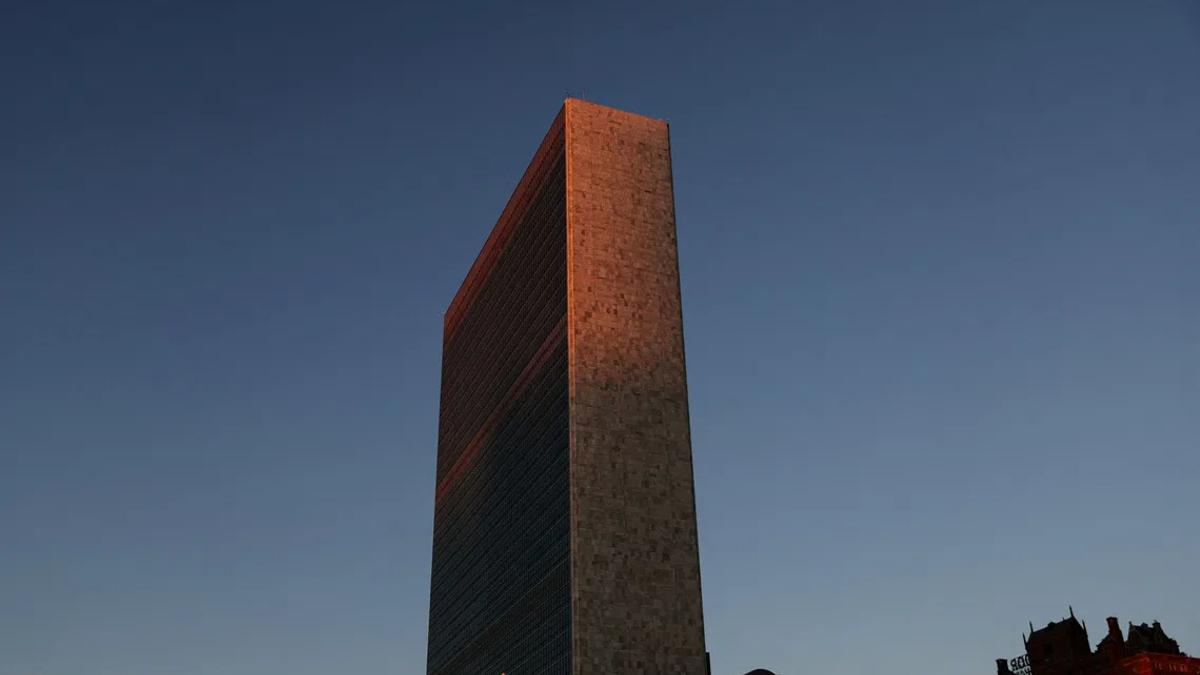
World leaders have convened at the United Nations General Assembly in New York amidst a backdrop of escalating global conflicts, institutional strain, and a contentious debate over the future of artificial intelligence. The gathering sees discussions dominated by the ongoing wars in the Middle East and Ukraine, while the UN itself grapples with significant funding shortfalls, challenges to its authority, and leadership uncertainties, particularly with US President Donald Trump's continued skepticism and financial demands. Notable absences, like Chinese leader Xi Jinping opting for bilateral talks with Trump, underscore the shifting landscape of global diplomacy.
The UNGA meeting exposes the deep fissures in the post-World War II international order, revealing a system increasingly challenged by powerful states prioritizing national interests over collective action. The United States, under President Trump, wields significant financial leverage, using funding cuts and withdrawals from UN bodies as tools to demand reforms and assert its unilateral vision, even while owing over a billion dollars. This approach weakens the UN's operational capacity and moral authority, making it harder to address crises. China, by having its leader bypass the UNGA for direct talks with the US, signals a preference for great-power bilateralism over multilateral forums, further sidelining the UN's role in global governance.
In the Middle East, the "US-Israeli war on Iran" (as described in the intelligence) illustrates a complex web of military and economic power. The conflict, driven by geopolitical rivalry and proxy engagements, directly impacts global energy markets and shipping lanes. The UN Security Council's paralysis over Ukraine, due to Russia's veto power, highlights how the structural design of the UN itself can be weaponized by permanent members, rendering the body ineffective in its primary mandate of maintaining international peace and security. The debate over AI governance, with UN Secretary-General Guterres advocating for global guardrails against Trump's dismissal of risks, reflects a fundamental power struggle over who defines and controls emerging technologies that will reshape human society.
While leaders take the rostrum, the human cost of these power struggles falls disproportionately on those without a voice at the highest tables. In Ukraine, civilians endure a four-year war, facing an uncertain winter, disrupted food supplies, and energy insecurity, consequences of a conflict the UN Security Council cannot resolve. In the Middle East, the "US-Israeli war on Iran" fuels global inflation, making basic necessities more expensive for families worldwide, while Houthi threats to shipping directly impact the cost of goods. The denial of a visa to Palestinian President Mahmoud Abbas, forcing him to address the assembly via video, is a stark symbol of how political power can silence or marginalize entire populations, preventing direct representation for those most affected by the region's conflicts. The Sudanese people, caught in a conflict that receives only a "sidelines" meeting, represent countless others whose suffering remains peripheral to the main agenda of powerful states.
What is largely downplayed or omitted by the powerful actors is the systemic erosion of international law and multilateral institutions. While leaders speak of peace and security, their actions — from unilateral funding cuts and withdrawals to the weaponization of veto power and the denial of diplomatic access — actively undermine the very frameworks designed to achieve these goals. The narrative often focuses on individual conflicts, but rarely on how the *failure* of the global governance system itself, exacerbated by the actions of its most powerful members, perpetuates these crises. President Trump's dismissal of AI risks as a "hoax" also downplays the profound, potentially catastrophic societal implications of unregulated technological advancement, framing it instead as a partisan or conspiratorial issue, thereby avoiding accountability for establishing global safeguards. The ongoing US debt to the UN, despite a partial payment, quietly signals a deeper, sustained disinvestment in collective global problem-solving.
Readers should watch for the outcome of the UN Secretary-General succession race at the end of 2026, as the next leader's vision and ability to navigate a fractured world will be critical for the UN's future relevance. Observe whether the US continues its pattern of selective engagement and financial pressure on the UN, and how other major powers like China and the EU respond to this challenge to multilateralism. In the Middle East, monitor the trajectory of the "US-Israeli war on Iran" and Houthi actions, as these directly impact global energy prices and shipping stability. For Ukraine, the focus will be on any potential diplomatic breakthroughs, however unlikely, and the humanitarian situation as winter approaches. Finally, the global community's ability to establish any form of international consensus or "guardrails" on AI development will be a crucial indicator of whether humanity can collectively manage its most powerful technological creations.
Source referenced: STRAITSTIMES
This brief was synthesized by our Editorial Engine and reviewed by The Ground Narrative team.


