TRENDING

Monday, 21 September 2026
----------------------
10 Rabi' Al-Thani 1448 AH
Ukraine’s massive drone raid on Moscow coincided with Russia’s tightly‑controlled parliamentary vote, helping United Russia claim a decisive win. The episode reveals how war, propaganda and repression intertwine to shape ordinary Russians’ choices.
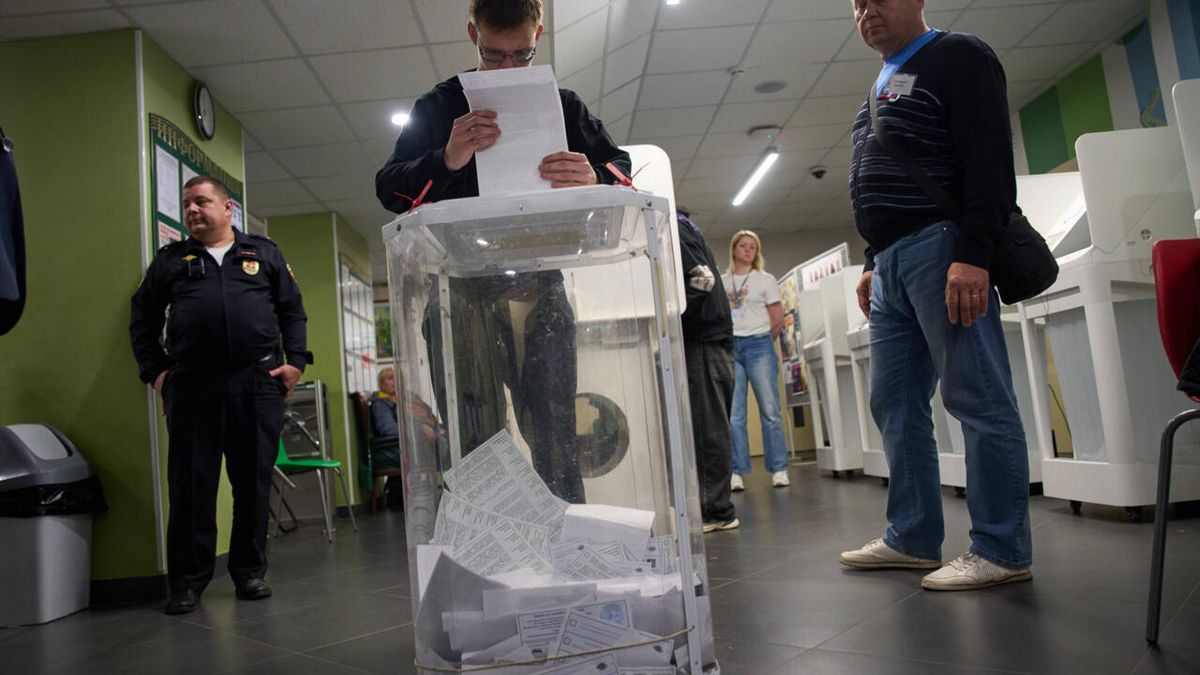
On September 20, 2026, Ukraine launched its largest coordinated drone assault on Moscow, killing three civilians and damaging an oil refinery. The attack unfolded on the final day of Russia’s parliamentary election, a vote the Kremlin has framed as a referendum on the war in Ukraine. Exit polls showed United Russia on track to secure about 57.5% of the vote, comfortably ahead of the token opposition parties allowed to run.
The election is less a competition than a ritual of legitimacy. United Russia’s dominance is secured by a legal framework that bars genuine anti‑war candidates, controls media narratives, and deploys security forces to suppress dissent. The drone strike provided a convenient narrative hook: the Kremlin could portray the vote as a unified response to external aggression, reinforcing the link between patriotism and support for the ruling party.
At the same time, the Russian security apparatus counts on the threat of “enemy” attacks to justify tighter surveillance, cyber‑restrictions on voting infrastructure, and harsher penalties for “fake news.” The Defense Ministry’s claim of downing nearly 2,000 drones and eight cruise missiles feeds a feedback loop—military successes are presented as protecting the democratic process, while any irregularities are blamed on foreign sabotage.
Economic pressure also plays a role. Sanctions and war‑related strain have eroded living standards, but the state channels public frustration into a narrative of external threat, diverting blame from domestic mismanagement. By allowing a handful of systemic opposition parties (Communists, LDPR, New People, Just Russia) to win a few seats, the Kremlin creates an illusion of pluralism while keeping real power firmly in United Russia’s hands.
Ordinary Russians bear the brunt of this calculus. Voters in Moscow and the regions faced the anxiety of air‑raid sirens, smoke‑filled skies, and the knowledge that a single misstep—such as voicing anti‑war sentiment—could lead to imprisonment. The three civilians killed in the drone strike are a stark reminder that the war’s violence can spill over into daily life, even on election day.
Opposition activists, like Yabloko leader Nikolai Rybakov, risk long prison terms for merely criticizing the conflict; two senior party figures were already sentenced before the vote. Families of detained activists live under constant surveillance, and the broader public confronts a climate where voting “against” the state can be interpreted as treason. The reported cyber‑attacks on voting systems, while officially downplayed, likely added to voter uncertainty and eroded confidence in the electoral process.
Official statements focus on the “unity” of the Russian people and the “repulsion” of the drone attack, but they omit the Kremlin’s strategic use of the incident to cement domestic support. The timing of the raid was not accidental; Kyiv’s decision to strike on election day was a calculated gamble to expose Russia’s vulnerability and force a propaganda response.
What receives little attention is the way the state leverages the attack to justify a new wave of repression: intensified internet censorship, expanded powers for the security services, and a surge in “patriotic” education campaigns in schools. Moreover, the narrative that the election proved popular support for the war masks the underlying economic distress—rising inflation, food shortages, and a shrinking labor force—that could eventually translate into dissent if not continually redirected.
Watch for three developments. First, the Kremlin’s response to the drone raid—whether it escalates strikes on Kyiv or tightens internal security—will shape the conflict’s intensity in the coming months. Second, any measurable shift in vote shares toward the systemic opposition could signal growing war fatigue, prompting the regime to adjust its propaganda or repression tactics. Finally, the international community’s reaction to the election—especially sanctions tied to election‑related human‑rights abuses—may influence Russia’s economic resilience and its willingness to gamble on further electoral theatrics.
In a system where the ballot is both a tool of control and a stage for opposition, the interplay between external attacks and internal narratives will continue to define how ordinary Russians navigate a war that increasingly reaches into their neighborhoods and polling stations.
Editor's Note: Analysis based on publicly available reports; some details of internal security measures remain opaque.
Source referenced: FRANCE24
This brief was synthesized by our Editorial Engine and reviewed by The Ground Narrative team.