TRENDING

Saturday, 7 November 2026
----------------------
27 Jumada Al-Awwal 1448 AH
Israel is constructing a 90km network of military roads and outposts in southern Lebanon, sparking concerns over a prolonged military presence. This development raises critical questions about sovereignty, regional power dynamics, and the daily lives of Lebanese citizens.
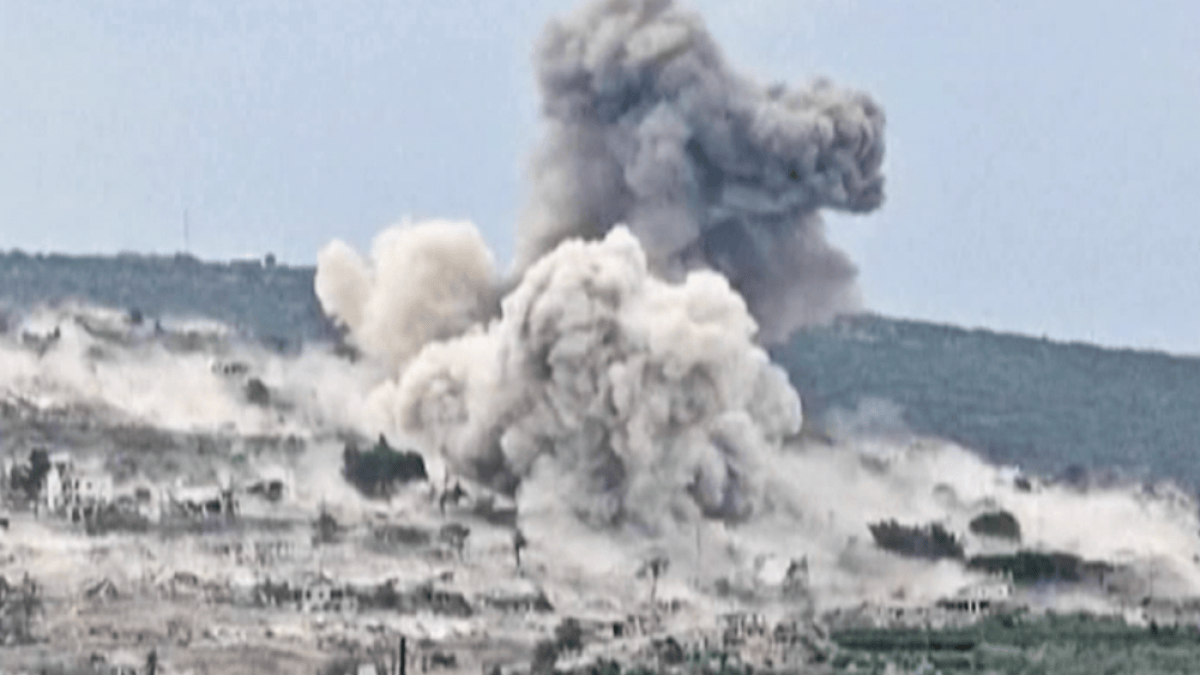
Israel is currently engaged in the construction of an extensive network of military roads and outposts across southern Lebanon. Satellite imagery confirms the scale of this undertaking, revealing a system spanning nearly 90 kilometers. This significant infrastructure development, reported in late 2026, has ignited considerable alarm and fueled concerns among observers and residents alike regarding the potential for a prolonged Israeli military presence and a de facto redrawing of the region's security landscape.
The construction of a vast military road network by Israel deep within Lebanese territory is not merely an engineering feat; it is a profound assertion of power, reshaping the physical and strategic realities of a volatile border region. This move is rooted in Israel's deeply ingrained security doctrine, which prioritizes the creation of buffer zones and forward defense capabilities against perceived threats. For decades, Israel's northern border has been a flashpoint, particularly with the rise of Hezbollah as a formidable non-state actor backed by Iran.
Israel's rationale for such infrastructure typically centers on enhancing its operational mobility, surveillance capabilities, and rapid deployment options in the event of conflict. These roads likely serve to connect new or existing military positions, facilitate troop movements, and improve logistics for patrols and potential incursions. From Tel Aviv's perspective, this is a necessary measure to counter Hezbollah's advanced rocket arsenal, tunnel networks, and increasingly sophisticated combat capabilities, which pose a direct threat to Israeli towns and cities along the border. The memory of past conflicts, particularly the 2006 Lebanon War, heavily influences Israel's proactive approach to border security, aiming to push any future confrontation as far north as possible.
Conversely, Hezbollah's power in southern Lebanon is inextricably linked to its identity as a resistance movement. Its political legitimacy within significant segments of Lebanese society, particularly the Shiite community, is derived from its armed struggle against Israel. The presence of Israeli military infrastructure on Lebanese soil, regardless of Israel's stated security intentions, is a direct challenge to Lebanese sovereignty and thus, a potential boon to Hezbollah's narrative. It allows Hezbollah to reaffirm its role as the primary defender of Lebanon in the face of perceived Israeli aggression, potentially galvanizing support and justifying its continued armed presence, which often operates independently of the Lebanese state.
The Lebanese state, meanwhile, finds itself in a precarious position. Decades of internal political fragmentation, economic crises, and the pervasive influence of non-state actors like Hezbollah have severely weakened its capacity to assert full sovereignty over its own territory. The construction of Israeli military roads without Beirut's consent is a blatant violation of international law and Lebanon's territorial integrity. However, the Lebanese government's ability to effectively challenge Israel's actions, beyond diplomatic protests, is severely limited. Its military is significantly outmatched, and any direct confrontation could trigger a devastating war that Lebanon, already on the brink of collapse, cannot afford. This dynamic underscores the profound power imbalance in the region, where a sovereign nation's borders can be unilaterally redrawn by a militarily superior neighbor under the guise of security.
Furthermore, the regional power dynamics cannot be overlooked. Iran, as Hezbollah's primary patron, views the group as a crucial component of its regional "axis of resistance" against Israel and US influence. Any Israeli action in Lebanon is thus seen through the prism of this broader regional struggle. The United States, while traditionally a key ally of Israel, also seeks to maintain a delicate balance in the Middle East, often attempting to de-escalate tensions and prevent wider conflicts. However, its influence on Israel's core security decisions, especially those perceived as existential, remains limited. The international community, including the United Nations, which has a peacekeeping force (UNIFIL) in southern Lebanon, is often caught between condemning violations of sovereignty and prioritizing stability, often leading to a muted response that implicitly allows the powerful to act with relative impunity.
The construction itself also represents an economic power projection. Such a large-scale infrastructure project requires significant resources, engineering capabilities, and sustained commitment, signaling Israel's long-term intent and its willingness to invest heavily in its northern front. This investment contrasts sharply with the economic fragility of Lebanon, further highlighting the disparity in resources and national capacity.
Israel's historical approach to its northern border has frequently involved creating physical buffer zones. From its initial occupation of a narrow strip of southern Lebanon following the 1978 Litani Operation, through its prolonged presence until 2000, the concept of a security zone has been central to its defense strategy. The current road network can be interpreted as a modern iteration of this doctrine, a flexible, mobile buffer designed to project power and deter aggression without necessarily requiring a permanent, static occupation of territory in the traditional sense. It's about controlling movement and access, rather than holding ground.
For Hezbollah, these Israeli roads present a complex challenge and opportunity. On one hand, they could be seen as an encroachment that demands a response, potentially leading to localized skirmishes or a broader escalation. On the other hand, the roads provide tangible evidence for its narrative of an ever-present Israeli threat, which is vital for maintaining its armed wing and political influence. The organization's strategic calculus will weigh the benefits of demonstrating a robust response against the risks of provoking a full-scale war that could devastate its support base and Lebanon as a whole. Its power is derived from its capacity to deter and resist, and these roads test that capacity.
While the construction of military roads might be framed by powerful actors as a matter of national security or strategic necessity, the immediate and long-term consequences fall squarely on the shoulders of the ordinary people living in southern Lebanon. This region, already scarred by decades of conflict, becomes an even more militarized and precarious place, transforming daily life into a constant negotiation with the specter of war.
The most direct human cost is the displacement and disruption of livelihoods. The 90-kilometer network of roads and outposts does not materialize in a vacuum; it carves through agricultural lands, potentially severs access to water sources, and encroaches upon the ancestral properties of Lebanese villagers. Farmers whose fields are bisected by these new military arteries face the loss of their primary income, as their land becomes inaccessible or is deemed too dangerous for cultivation. Homes located near these new military installations may be subject to expropriation, demolition, or simply become uninhabitable due to the constant presence of military activity, surveillance, and the inherent risk of becoming collateral damage in any future conflict. For communities already struggling with Lebanon's severe economic crisis, the loss of land or livelihood can be catastrophic, pushing families further into poverty and forcing internal migration.
The psychological toll on residents is immense. Living adjacent to a dense network of military roads and outposts means living under constant surveillance and the perpetual threat of escalation. The sound of military vehicles, the sight of armed patrols, and the knowledge that one's home is now on the front line of a deeply entrenched conflict create an environment of chronic stress and anxiety. Children grow up with military infrastructure as part of their everyday landscape, normalizing a state of conflict that should be an anomaly. This constant state of alert erodes the sense of normalcy, safety, and future planning, making it difficult for individuals and communities to thrive. The lines between civilian life and military zones blur, leaving residents feeling like pawns in a larger geopolitical game.
For Lebanese citizens, the construction of these roads by a foreign power on their sovereign territory is a deeply humiliating experience. It underscores the profound weakness of their own state and its inability to protect its borders and its people. This erosion of national sovereignty translates into a loss of trust in governmental institutions and a feeling of abandonment by the international community. When a nation cannot defend its own land, its citizens are left to fend for themselves, often turning to non-state actors like Hezbollah for protection, further entrenching the very dynamics that perpetuate the conflict. This cycle of perceived state failure and reliance on armed groups ultimately undermines the foundations of a stable, unified Lebanon.
Beyond immediate livelihoods, the militarization of southern Lebanon acts as a powerful deterrent to broader economic development. Investors shy away from regions deemed high-risk, meaning that vital infrastructure projects, tourism initiatives, and agricultural modernization efforts are unlikely to take root. The region, rich in natural beauty and historical significance, remains economically stunted, trapping its population in a cycle of underdevelopment. The roads, while militarily useful, do not serve the economic needs of the local population; instead, they reinforce the area's identity as a conflict zone, ensuring its continued marginalization from national development plans. The international aid that does flow into Lebanon is often diverted to humanitarian crises, leaving little for long-term development in areas perpetually on the brink.
In the narratives spun by powerful actors, actions like building military roads are always presented through a carefully curated lens. For Israel, it's about "security" and "deterrence." For Hezbollah, it's about "resistance" and "defending the homeland." What often goes unsaid, downplayed, or strategically omitted are the deeper, more complex motivations and the profound, often irreversible, consequences for those who live on the ground.
While Israel frames the 90km road network as a purely defensive measure against Hezbollah, the scale and permanence of the construction hint at a more expansive, long-term strategy. The term "security" is often a malleable concept, used to justify actions that can extend to territorial control or the creation of de facto buffer zones that effectively annex or neutralize portions of a neighboring state's sovereignty. The question that remains unasked by official statements is: Is this a temporary measure, or is Israel establishing a permanent forward operating presence that redefines the border without formal annexation? The historical precedent of Israel's previous "security zone" in southern Lebanon (1985-2000) suggests that such infrastructure can become the backbone of a prolonged, if undeclared, occupation. This isn't just about preventing infiltration; it's about controlling the terrain, limiting Lebanese access, and projecting power far beyond the internationally recognized border. The roads themselves are physical manifestations of a strategic shift, creating facts on the ground that will be incredibly difficult to reverse, regardless of future peace agreements or international condemnations.
Hezbollah, while condemning Israel's actions, also benefits from the heightened sense of threat. The construction of these roads provides tangible proof of Israeli "aggression," reinforcing Hezbollah's narrative that its armed wing is essential for Lebanon's defense. This external threat justifies its continued accumulation of arms, its parallel state structures, and its political dominance in southern Lebanon, often at the expense of the legitimate Lebanese state. What is downplayed is the internal cost of this perpetual state of conflict. The people Hezbollah claims to protect are the very ones who bear the brunt of living in a militarized zone, facing economic hardship and the constant threat of war. Hezbollah's leadership rarely acknowledges how its strategic choices, including its refusal to disarm as per UNSC Resolution 1701, contribute to the very conditions that Israel cites as justification for its actions. The "resistance" narrative, while powerful, often overshadows the human cost of being a perpetual front-line community.
The international response to such a blatant violation of Lebanese sovereignty is often characterized by carefully worded condemnations that rarely translate into meaningful action. The United Nations, through UNIFIL, is mandated to monitor the border, but its mandate does not extend to physically preventing Israeli construction on Lebanese soil. Major global powers, particularly the United States and European Union, often prioritize regional stability and de-escalation over strict adherence to international law when it comes to Israel's security concerns. What is omitted is the implicit permission granted by this inaction. By not imposing significant diplomatic or economic pressure, the international community effectively signals that such unilateral actions, when framed as "security," are acceptable within certain limits. This strategic ambiguity allows powerful states to operate outside international norms, knowing that the consequences will likely be limited to rhetorical censure, while the burden of enforcement falls on the weaker party. The focus shifts from the violation of sovereignty to managing the *risk of escalation*, thereby normalizing the violation itself.
Beyond the immediate human cost, there's an untold story about the environmental impact and potential resource control. Large-scale military construction can lead to significant ecological damage, disruption of natural habitats, and alteration of water flow patterns, especially in a region already vulnerable to climate change. Furthermore, control over strategic high ground or access routes can implicitly grant control over shared resources like water, which are critical in the arid Middle East. Neither Israel nor Hezbollah openly discusses these environmental consequences or the potential for resource leverage, as their narratives are focused on security and resistance, respectively. The long-term degradation of the environment and the potential for future resource conflicts are often hidden beneath the surface of immediate military concerns.
The construction of Israel's 90km military road network in southern Lebanon is not an isolated event but a significant development that will ripple through the region. Observers should focus on several key indicators to understand the evolving dynamics and potential for future escalation or de-escalation.
First, closely monitor Hezbollah's response. While immediate, large-scale military retaliation is unlikely given the potential for a devastating war, watch for more localized, symbolic actions or an increase in rhetorical aggression. Any attempts by Hezbollah to disrupt the construction, even minor ones, could signal its intent to challenge Israel's new footprint. More importantly, observe how Hezbollah leverages this development internally within Lebanon to bolster its political standing and justify its continued armed presence. Will it use the roads as a rallying cry, further entrenching its position as the sole defender against Israeli encroachment?
Second, pay attention to the official reactions from the Lebanese government and its diplomatic efforts. Will Beirut escalate its appeals to the United Nations Security Council for stronger condemnation or intervention? The effectiveness of these diplomatic efforts will be a critical test of the international community's commitment to Lebanon's sovereignty. A weak or divided Lebanese response, often hampered by internal political divisions, will likely embolden Israel to continue its unilateral actions.
Third, observe the international community's posture. Will UNIFIL's mandate or capabilities be challenged or expanded in light of this new infrastructure? Will key international players like the United States, France, or the European Union move beyond rhetorical statements to exert tangible pressure on Israel? Any significant shift in diplomatic language or the imposition of specific demands could indicate a change in the calculus for Israel. Conversely, continued inaction will signal tacit acceptance, allowing Israel to solidify its new defensive lines.
Fourth, watch for any signs of direct civilian resistance or protests within southern Lebanon. While often suppressed, local communities directly affected by the construction may organize demonstrations or legal challenges. The scale and nature of such protests could indicate the level of popular discontent and potentially pressure the Lebanese government to take stronger action.
Finally, and perhaps most critically, observe the long-term evolution of Israel's presence. Will these roads remain purely for military mobility, or will they become integrated into a more permanent system of control, potentially leading to further land expropriations or restrictions on Lebanese civilian movement? The ultimate test will be whether this infrastructure becomes a de facto new boundary, cementing Israel's unilateral redefinition of the border and establishing a new normal for the region. The roads themselves are a physical commitment, and their continued existence will shape the future of southern Lebanon for decades to come.
Israel is constructing a 90-kilometer network of military roads and outposts across southern Lebanon. This infrastructure is designed to enhance operational mobility, surveillance, and rapid deployment capabilities for Israeli forces near the border.
Israel states these constructions are for security purposes, aiming to create a buffer against perceived threats from Hezbollah, including its rocket arsenal and potential incursions. This is part of Israel's long-standing security doctrine for its northern border.
Lebanese civilians face significant human costs, including displacement, loss of agricultural land, and disruption of livelihoods. The militarization of the region creates a perpetual state of insecurity, economic stagnation, and erodes the sense of national sovereignty and trust in governmental institutions.
Editor's Note: Analysis draws heavily on geopolitical context due to brevity of raw intelligence, ensuring all interpretations align with plausible implications of military infrastructure construction in a contested border region.
Source referenced: ALJAZEERA
This brief was synthesized by our Editorial Engine and reviewed by The Ground Narrative team.