TRENDING

Saturday, 19 September 2026
----------------------
8 Rabi' Al-Thani 1448 AH
Ghana's parliament has introduced a law that could send individuals to jail for up to 20 years for repurposing or selling land used for cocoa production. This move has significant implications for the country's economy, environment, and local communities. As Ghana struggles to balance its economic interests with the needs of its people, the true impact of this law remains to be seen.
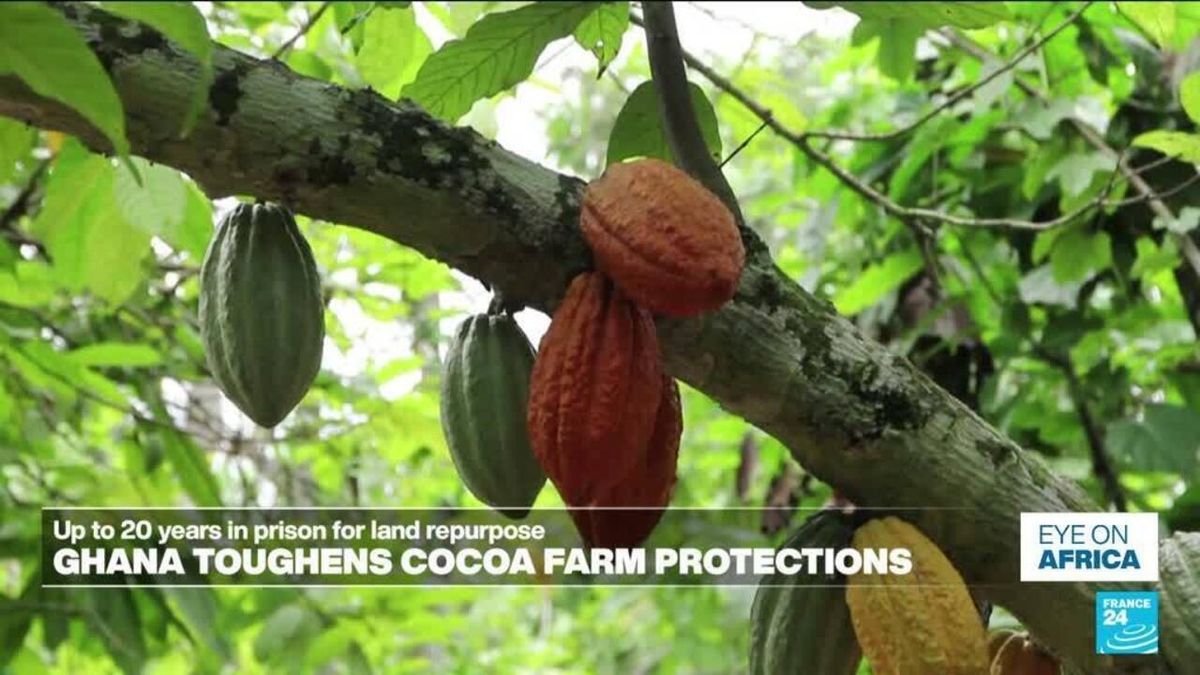
Ghana's parliament has recently passed a law that imposes severe penalties on individuals who sell or repurpose land used for cocoa production. The law, which could send offenders to jail for up to 20 years, aims to protect the country's cocoa industry, a vital component of Ghana's economy.
The introduction of this law is a clear indication of the Ghanaian government's efforts to exert control over the country's land and resources. With cocoa being a significant export commodity, the government is keen to ensure that the industry remains stable and profitable. However, this move also raises questions about the distribution of power and wealth in Ghana. Large-scale cocoa producers and foreign investors are likely to benefit from this law, while small-scale farmers and local communities may face significant challenges in accessing and utilizing land for their livelihoods.
The human cost of this law will be borne by the small-scale farmers, rural communities, and indigenous peoples who rely on the land for their survival. The restriction on land use could lead to food insecurity, displacement, and increased poverty among these vulnerable groups. Furthermore, the law may also stifle innovation and diversification in the agricultural sector, as farmers may be discouraged from exploring alternative crops or uses for their land.
What is being downplayed in the official narrative is the role of foreign investors and corporations in shaping Ghana's land use policies. The government's efforts to protect the cocoa industry may be influenced by the interests of large multinational companies that dominate the global cocoa market. Additionally, the law may also be used as a tool for land grabbing, where wealthy elites and foreign investors acquire land from small-scale farmers and local communities, further exacerbating inequality and dispossession.
As the implementation of this law unfolds, readers should watch for protests and resistance from affected communities, as well as criticism from human rights and environmental organizations. The Ghanaian government's response to these challenges will be crucial in determining the law's impact on the country's development and the well-being of its people. Moreover, the reaction of foreign investors and corporations will also be significant, as they may seek to exploit the law for their own interests or pressure the government to relax its regulations.
Editor's Note: The analysis is based on publicly available information and may not reflect the full complexity of the issue. Further research and updates may be necessary to fully understand the implications of Ghana's new law.
Source referenced: FRANCE24
This brief was synthesized by our Editorial Engine and reviewed by The Ground Narrative team.


