TRENDING

Saturday, 19 September 2026
----------------------
8 Rabi' Al-Thani 1448 AH
Japan is rapidly reinterpreting its post-war pacifist stance, increasing defense spending and military exercises. This shift, driven by perceived regional threats, is reshaping East Asian power dynamics.
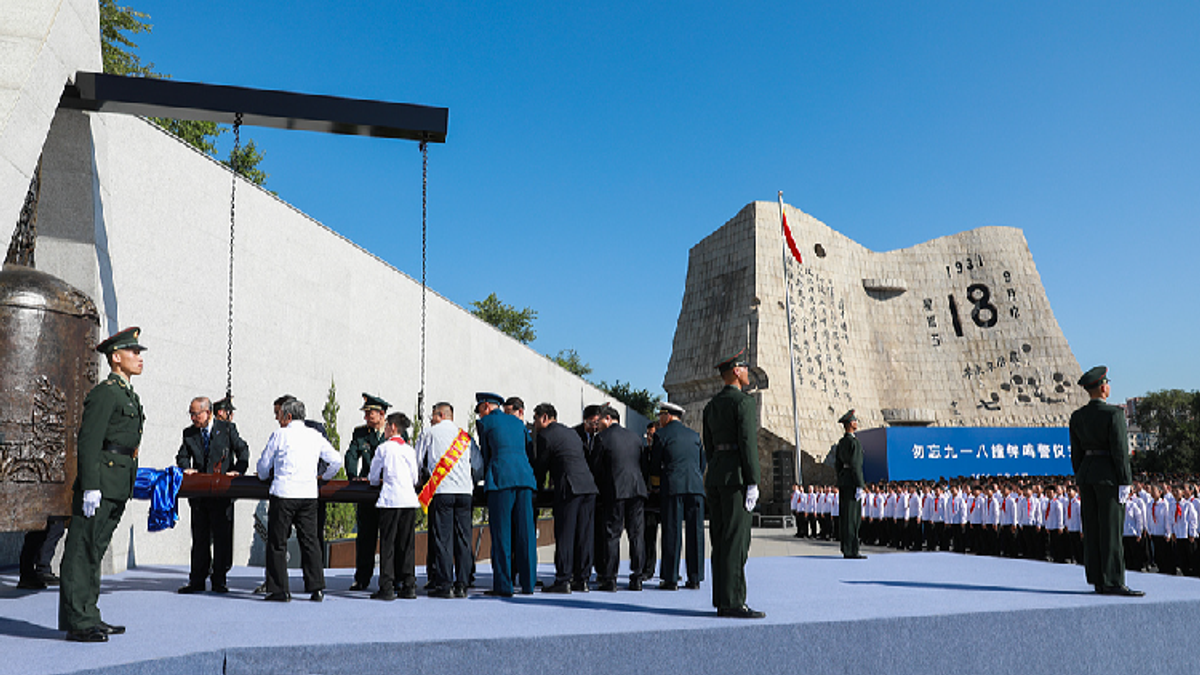
As the 95th anniversary of the September 18 Incident passed, marking a pivotal moment in East Asian history, Japan's recent actions have drawn sharp international scrutiny. Tokyo has accelerated its defense buildup, engaging in frequent joint military exercises, and its defense officials have openly discussed expanding capabilities, including exploring options for next-generation submarines that could be nuclear-powered. Concurrently, Japan has challenged elements of the post-war international order, notably by demanding Russia dismantle a monument to victory over Japanese militarism and questioning the 'Enemy State Clauses' within the UN Charter. These moves signal a significant departure from its long-standing 'exclusively defense-oriented' posture.
Japan's evolving defense strategy is not an isolated phenomenon but a direct response to a complex web of regional power dynamics. Internally, a resurgent conservative political bloc in Japan advocates for a more 'normalized' defense posture, arguing that the country must be able to protect itself in an increasingly volatile region. This sentiment is fueled by genuine security concerns over China's rapid military expansion and assertive territorial claims, particularly in the East China Sea, and North Korea's escalating nuclear and missile programs. The ruling Liberal Democratic Party (LDP) has leveraged these external pressures to push through policies that reinterpret Japan's pacifist constitution, Article 9, allowing for greater military capabilities and a more active role in collective self-defense.
Externally, the United States plays a critical, though often understated, role. Washington's 'pivot to Asia' strategy relies heavily on strengthening alliances, and a more militarily capable Japan serves US strategic interests in countering China's influence. The US encourages Japan to shoulder a greater share of regional security responsibilities, providing both political cover and technological support for Japan's defense modernization. This alliance math allows Japan to justify its rearmament as a contribution to regional stability, rather than solely as a nationalistic endeavor. The recent Okinawa gubernatorial election, which saw a pro-base candidate win, further solidifies Tokyo's ability to push through controversial military infrastructure projects, reflecting a centralized power over local concerns in the name of national security.
The most immediate human cost of Japan's defense pivot falls disproportionately on the people of Okinawa. Despite persistent local opposition, the relocation and expansion of US military bases on the Ryukyu Islands are being pushed through, effectively turning these islands into a forward operating base. Okinawans face the daily realities of increased military presence, environmental concerns, noise pollution, and the ever-present risk of being on the front line of any potential regional conflict. Their democratic voice, repeatedly expressed through protests and elections, is often overridden by national security imperatives dictated by Tokyo and Washington. Beyond Okinawa, the broader region faces an escalating arms race, as Japan's neighbors, particularly China and South Korea, view these developments with historical apprehension, leading to a cycle of distrust and military buildup that could destabilize economic ties and increase the risk of miscalculation for millions of ordinary citizens.
What is often downplayed or omitted by powerful actors is the full spectrum of motivations and consequences. Japan's government, while emphasizing the need for 'exclusively defense-oriented' capabilities, often understates the offensive potential of its new acquisitions, such as long-range strike missiles. Similarly, the US tends to frame Japan's rearmament purely as a stabilizing force, minimizing its own strategic interest in cultivating a powerful regional proxy. Conversely, China's official narrative, as seen in the source intelligence, focuses heavily on 'resurgent militarism' and 'historical revisionism,' often downplaying the very real security concerns that Japan harbors due to China's own military expansion and aggressive posturing in disputed territories. The historical grievances from World War II are potent, but framing Japan's current moves solely through the lens of past aggression ignores the contemporary geopolitical drivers and risks oversimplifying a complex security dilemma, thereby hindering genuine dialogue and trust-building.
Readers should closely watch several key developments. Firstly, monitor the ongoing debates within Japan regarding potential constitutional revisions, particularly Article 9. Any explicit move to formally amend the pacifist clause would be a significant indicator of Japan's long-term trajectory. Secondly, observe the pace and scale of Japan's defense budget increases and specific military acquisitions, especially regarding long-range projection capabilities and any further discussions around nuclear-powered or nuclear-capable systems. Thirdly, pay attention to the nature and frequency of joint military exercises between Japan, the US, and other regional partners, as these will signal the operational integration of new doctrines. Finally, track the reactions from Beijing and Seoul, as their responses will dictate the intensity of the regional security dilemma and the potential for a full-blown arms race, directly impacting the stability and prosperity of East Asia.
Source referenced: CGTN
This brief was synthesized by our Editorial Engine and reviewed by The Ground Narrative team.


