TRENDING

Thursday, 17 September 2026
----------------------
6 Rabi' Al-Thani 1448 AH
A new US-brokered deal proposes Hamas disarmament and Israeli withdrawal from Gaza, sparking cautious optimism but deep questions about its implementation. The agreement's success hinges on defining 'genuine disarmament' and addressing the region's complex power dynamics.
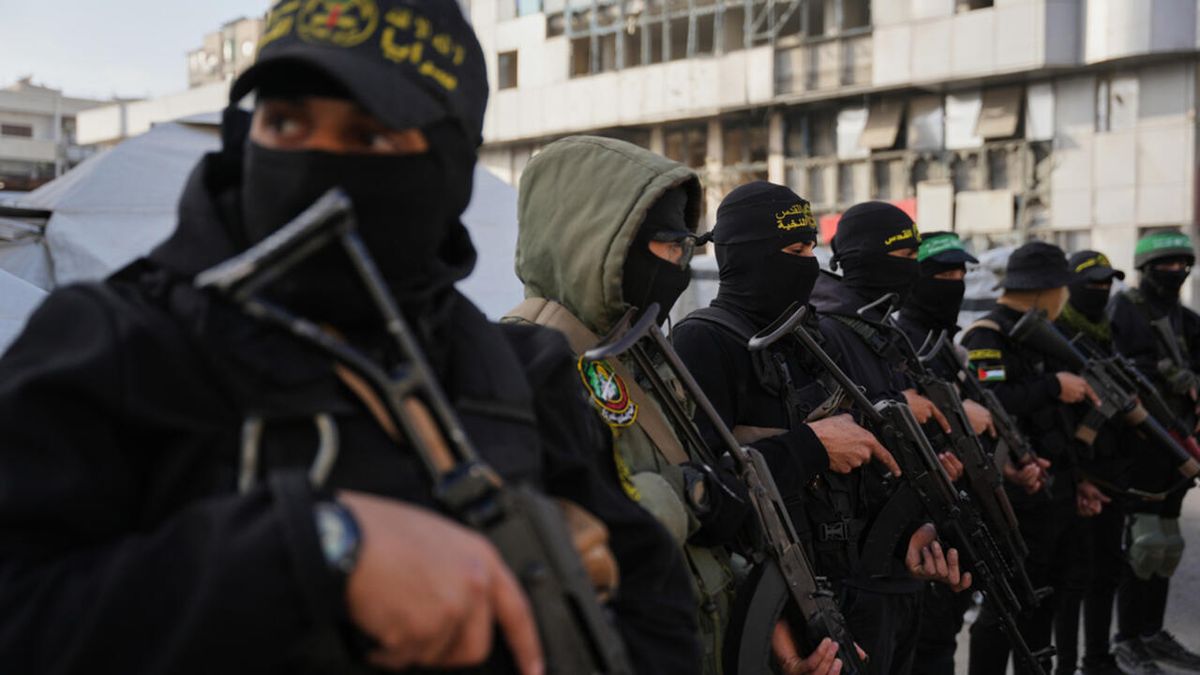
Hamas has reportedly agreed to disarm its military wing as part of a US-brokered deal that would also see Israel withdraw from the Gaza Strip. This development, announced by US President Donald Trump, is presented as a crucial "first step" following a recent ceasefire. While Israel has remained officially silent on the agreement, a political source indicated that its withdrawal is strictly contingent on what it deems "genuine disarmament" by the Palestinian group.
For Hamas, agreeing to disarm represents a monumental concession, likely born from severe internal and external pressures after prolonged conflict and the devastating humanitarian situation in Gaza. This move could be a tactical pivot to regain political legitimacy, secure a governing role in a post-conflict landscape, or simply ensure its survival in a drastically altered environment. The critical ambiguity lies in the interpretation of "disarmament" – whether it implies a complete dismantling of its military capabilities or a strategic reduction and re-alignment of its power.
Israel's official silence is a calculated strategic posture. It allows the government to project an image of openness to peace on the international stage, while internally maintaining a hardline stance on the definition and verification of "genuine disarmament." This provides Israel with significant leverage, enabling it to control the narrative, dictate the pace of any withdrawal, and avoid any perception of weakness. The Israeli government's core incentive is long-term security and the prevention of future attacks, a critical factor for its political survival and public support. The broader regional context, marked by US and Saudi strikes in Iraq and concerns over shipping in the Strait of Hormuz, suggests a US desire to de-escalate one volatile front to focus resources elsewhere, or to consolidate alliances against other regional adversaries.
For the United States, President Trump's active involvement in brokering this deal is inextricably linked to domestic political considerations, particularly ahead of midterm elections. A successful "peace deal" in the Middle East offers a significant foreign policy victory, bolstering his administration's image and reasserting US influence in a region where other global powers are increasingly active. The US seeks a degree of stability, but also an outcome that aligns with its strategic interests and those of its key allies.
The most profound impact of any such agreement falls squarely on the population of Gaza. Years of blockade, recurrent conflicts, and now the uncertainty of a significant power shift leave them in a precarious position. Will disarmament genuinely lead to comprehensive reconstruction, freedom of movement, and economic opportunity, or will it merely usher in a new form of control and continued hardship? The specific terms of the deal regarding governance, border crossings, and the flow of humanitarian aid will be the true determinants of their future. Their lives remain, as they have for decades, subject to the decisions made by powerful actors far removed from their daily realities.
Israeli citizens, while seeking lasting security, also bear the psychological burden of perpetual conflict and the inherent fragility of any peace agreement. The success or failure of this deal directly impacts their sense of safety and the long-term stability of their nation. Beyond the immediate parties, the fundamental issues of displacement and the rights of Palestinian refugees are unlikely to be fully addressed in the initial scope of such an agreement, ensuring that underlying tensions persist.
A critical element often downplayed or omitted in official statements is the precise definition of "genuine disarmament." This phrase serves as a significant loophole. What constitutes genuine disarmament? Who will verify it? Israel can, and likely will, interpret this broadly, potentially using any perceived shortfall as a pretext to maintain military presence, delay withdrawal, or re-engage militarily. This ambiguity grants Israel substantial control over the implementation timeline and conditions of its exit.
Equally crucial, and often sidelined in initial announcements, is the question of the power vacuum that would emerge if Hamas truly disarms. Who will govern Gaza? The Palestinian Authority, which currently holds limited legitimacy and operational capacity in the Strip? An international transitional force? This question of post-Hamas governance is central to long-term stability and is likely a key, albeit unspoken, component of the deal's underlying agenda.
Furthermore, while presented as a humanitarian and peace initiative, the timing of President Trump's involvement, coinciding with midterm elections and broader regional military actions, suggests a strategic play to project strength and secure political capital, rather than solely a humanitarian endeavor. It is also vital to question if this is a comprehensive "peace plan" addressing the core issues of settlements, borders, Jerusalem, and refugees, or a narrower agreement focused on immediate de-escalation in Gaza. History shows that narrow deals often falter because they fail to address the root causes of conflict.
As this deal unfolds, several key areas warrant close attention. First, the verification mechanisms for Hamas's disarmament will be paramount; their credibility will determine the entire agreement's viability. Second, Israel's official response – whether it formally endorses the deal or continues its strategic silence – will signal its true intentions. Third, the arrangements for post-Hamas governance in Gaza, particularly the role (or absence) of the Palestinian Authority, will shape the future political landscape. Finally, observe the reactions of regional actors like Iran and Egypt, and whether the deal genuinely unlocks substantial humanitarian aid and reconstruction efforts for Gaza, or if these remain tools of political leverage.
Source referenced: FRANCE24
This brief was synthesized by our Editorial Engine and reviewed by The Ground Narrative team.


