TRENDING

Thursday, 17 September 2026
----------------------
6 Rabi' Al-Thani 1448 AH
Fed Chair Kevin Warsh broke his own rule with a record‑short press conference, signaling a shift in how monetary policy is communicated. The move reshapes power dynamics between the central bank, the media, and everyday borrowers.
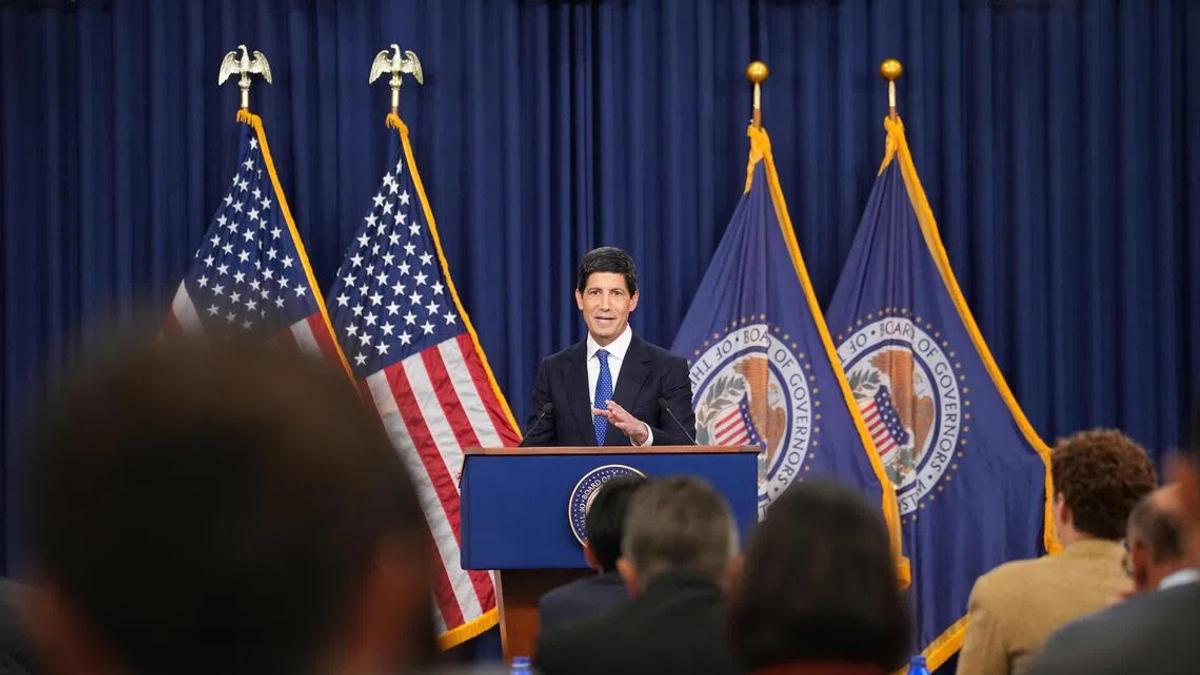
On September 16, 2026, Federal Reserve Chair Kevin Warsh held the briefest post‑meeting press conference in the Fed’s modern history—just about 30 minutes. The meeting concluded with the Fed raising interest rates for the first time in over three years, and Warsh deliberately avoided any forward‑looking language. In a visible procedural tweak, the briefing room’s seating was reordered alphabetically, pushing traditional power‑players like *The Wall Street Journal* and *Reuters* to the back while giving *Agence France‑Presse* a front‑row seat. Warsh has also pledged to keep press conferences only through the end of the year and has set up a task force to review the Fed’s communication strategy.
Warsh’s restraint is a calculated response to the information‑pricing function of monetary policy. By limiting forward guidance, the Fed reduces the market’s ability to pre‑emptively price future rate moves, thereby preserving the central bank’s leverage over inflation expectations. The shortened statements and the new seating order also re‑balance media influence: outlets that traditionally dominate the narrative lose front‑row proximity, diluting their capacity to shape the immediate news cycle. This shift serves two incentives. First, it protects the Fed from political backlash—especially from a president eager to criticize rate hikes—by keeping the public discourse less sensational. Second, it curtails the market’s reliance on nuanced Fed commentary, forcing investors to base decisions on the raw policy action rather than interpretive cues, which can stabilize bond yields and reduce speculative volatility.
The most immediate victims of the rate hike are borrowers: homeowners with adjustable‑rate mortgages, small‑business owners dependent on credit lines, and students facing higher loan payments. A 0.25 percentage‑point increase translates into tens of billions of dollars in additional debt service across the United States, disproportionately affecting lower‑income households that already shoulder a larger share of their income on debt. Rural communities, where banking options are limited and interest‑rate sensitivity is higher, feel the pinch even more acutely. Meanwhile, the Fed’s decision to mute its messaging leaves these groups without clear guidance on whether the tightening will continue, amplifying uncertainty about future cash‑flow planning.
Warsh’s public commitment to “talk less” masks a deeper institutional motive: control over the narrative pipeline. By reshuffling the press‑room layout, the Fed subtly re‑engineers which journalists get the first line of sight, potentially favoring outlets that are less likely to frame the policy as politically charged. The newly formed communications task force hints at a longer‑term experiment—perhaps even phasing out press conferences altogether—in favor of more controlled releases like terse statements or algorithm‑driven data feeds. What is omitted from official statements is the political calculus: Warsh is navigating a fraught relationship with a president who has publicly lambasted the Fed for “stifling growth.” By limiting the forum for debate, the Fed reduces the ammunition available to political opponents, while still delivering the hard‑nosed policy needed to curb inflation.
Watch for three signals in the coming months. First, the frequency and length of future Fed communications: any extension beyond the end‑of‑year deadline or a return to longer briefings could indicate a shift back toward more transparent guidance. Second, the market’s reaction to the new seating order—if major outlets regain front‑row access, we may see a resurgence of narrative‑driven volatility. Third, the outcome of the communications task force: a recommendation to replace press conferences with digital briefings would reshape how monetary policy is consumed, potentially widening the gap between policymakers and the public. For ordinary citizens, the key takeaway is that the Fed’s silence is not a sign of calm; it is a strategic lever that can amplify or mute the real‑world cost of borrowing.
Editor's Note: Analysis based on publicly reported Fed actions and standard monetary‑policy theory; specific internal motivations of the task force are inferred.
Source referenced: STRAITSTIMES
This brief was synthesized by our Editorial Engine and reviewed by The Ground Narrative team.