TRENDING

Sunday, 8 November 2026
----------------------
28 Jumada Al-Awwal 1448 AH
A CGTN tour of Lahore shows Chinese electronics and home goods everywhere, revealing the deeper power play of CPEC and the hidden costs for Pakistani shoppers and workers.
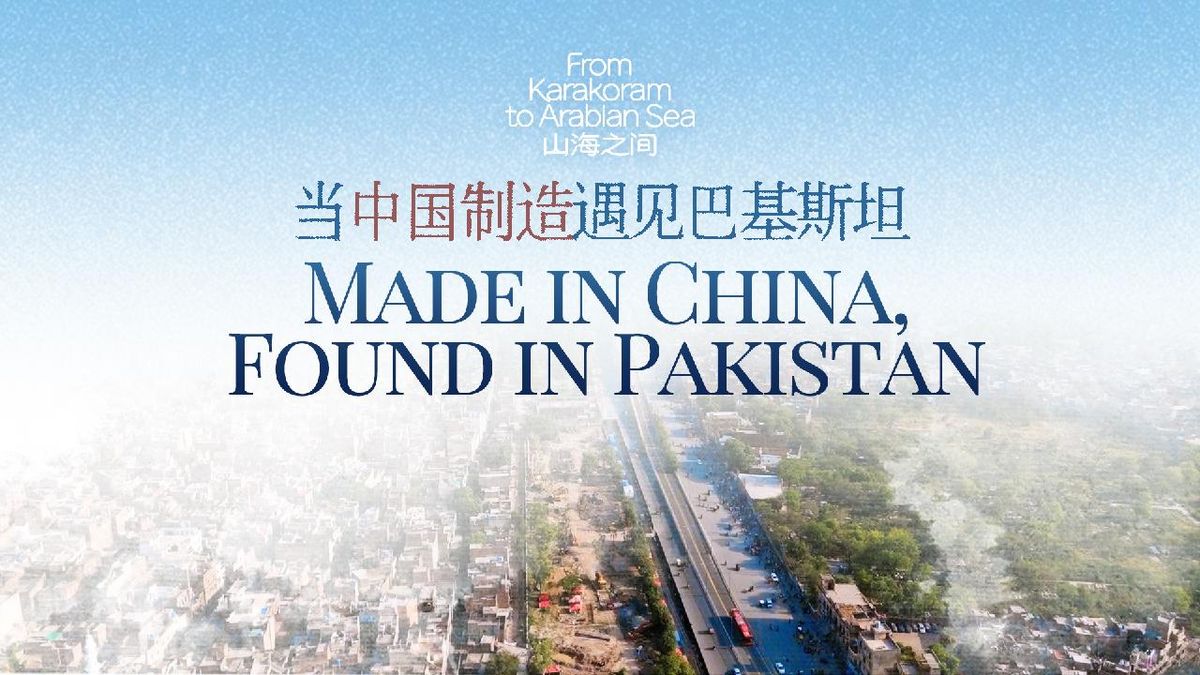
In a recent CGTN episode, reporter Danial Khan walked through Lahore’s Shah Alam Market and Hafeez Center, documenting the overwhelming presence of Chinese smartphones, accessories, and household items. The segment highlighted how brands from China have become staples in Pakistani daily life, from low‑cost phones to furniture designed for local tastes. The footage underscores the tangible reach of the China‑Pakistan Economic Corridor (CPEC) beyond highways and ports, into the very stalls where ordinary citizens shop.
CPEC, a flagship component of China’s Belt and Road Initiative, couples massive infrastructure loans with preferential trade terms. Pakistani authorities have accepted billions in Chinese financing for highways, energy plants, and the Gwadar port, often at interest rates that tie repayment to future export revenues. This financial architecture creates a de‑facto market gateway: Chinese manufacturers gain duty‑free or low‑tariff access to Pakistani ports, allowing them to ship consumer goods at prices local producers cannot match.
Chinese state‑owned logistics firms, such as COSCO and China Railway, operate dedicated freight corridors that cut shipping times from Shenzhen to Karachi to under two weeks. The speed and reliability of these services make it feasible for small traders in Lahore to import bulk electronics weekly, turning what once required months of paperwork into a near‑instant supply chain. The logistical advantage is a direct outcome of CPEC’s integrated transport network, which the Pakistani government promotes as a catalyst for economic growth.
Chinese firms are not merely dumping generic products; they are tailoring designs to Pakistani preferences. For example, mobile phone cases feature Urdu script, and furniture lines incorporate traditional carved motifs. This localization is driven by joint ventures between Chinese manufacturers and Pakistani distributors, who share market intelligence and co‑brand products. The strategy deepens consumer reliance on Chinese supply chains while marginalising local manufacturers lacking similar R&D capacity.
Both governments have political incentives to showcase CPEC’s visible benefits. In Pakistan, senior officials tout the influx of affordable goods as proof of development, while in China, the success of export‑driven corridors validates the Belt and Road narrative. Elite business circles on both sides profit from commission‑based import agreements, creating a feedback loop where policy praise masks underlying asymmetries.
Artisan furniture makers in Lahore report a 30 % drop in orders since Chinese‑styled pieces flooded the market. Their workshops, many operating out of single‑room homes, cannot compete with the economies of scale enjoyed by factories in Guangdong. The loss of income forces some families to abandon craft traditions, eroding cultural heritage and pushing workers into informal, lower‑paid jobs.
The surge in Chinese goods has spurred rapid expansion of warehousing and distribution centers in the outskirts of Lahore. Workers in these facilities often face long hours, limited safety equipment, and wages below the national minimum. Labor NGOs note that the demand for speed in the supply chain pressures employers to cut corners, raising occupational health risks.
Official statements from Islamabad celebrate CPEC’s “win‑win” nature, yet they rarely address the cumulative debt service obligations that now consume a growing share of Pakistan’s fiscal budget. Analysts warn that if export revenues from Gwadar and other projects fall short, the government may need to divert funds from social programs to meet loan repayments, a reality seldom highlighted in public discourse.
The rapid construction of logistics hubs and the influx of cheap, often non‑durable goods contribute to waste management challenges. Lahore’s municipal services are already strained, and the increase in electronic waste from short‑life‑cycle phones exacerbates pollution. Government reports downplay these impacts, focusing instead on job creation statistics.
By embedding Chinese supply chains into everyday Pakistani life, China gains leverage beyond the macro‑level infrastructure deals. The ability to influence consumer markets translates into soft power that can be mobilised in diplomatic negotiations. Pakistani officials rarely acknowledge how this dependence could limit policy autonomy, especially in forums where China and the West clash.
- Debt renegotiation talks: Monitor any upcoming bilateral meetings where Pakistan seeks to restructure CPEC‑linked loans, as concessions could reshape trade terms.
- Local industry response: Watch for policy proposals aimed at protecting domestic manufacturers, such as tariff adjustments or subsidies for small‑scale artisans.
- Consumer finance trends: Track the growth of installment‑based sales for Chinese electronics, which may signal rising household indebtedness.
- Environmental regulation: Observe whether Pakistani authorities introduce stricter e‑waste management rules in response to mounting electronic trash.
- Geopolitical signaling: Any shift in Pakistan’s stance toward China in multilateral forums (e.g., SCO, UN) could reveal how deep the strategic dependence has become.
By following these indicators, readers can gauge whether the visible flood of Chinese products is a fleeting consumer fad or a deeper restructuring of Pakistan’s economic sovereignty.
CPEC provides low‑tariff ports, fast logistics and financing that let Chinese manufacturers ship consumer goods cheaply, making them ubiquitous in Pakistani markets.
While prices are low, many buyers use high‑interest installment plans, leading to debt, and the products often have short lifespans, contributing to electronic waste.
Editor's Note: Analysis based on publicly available reports and the CGTN episode; specific debt figures may evolve.
Source referenced: CGTN
This brief was synthesized by our Editorial Engine and reviewed by The Ground Narrative team.